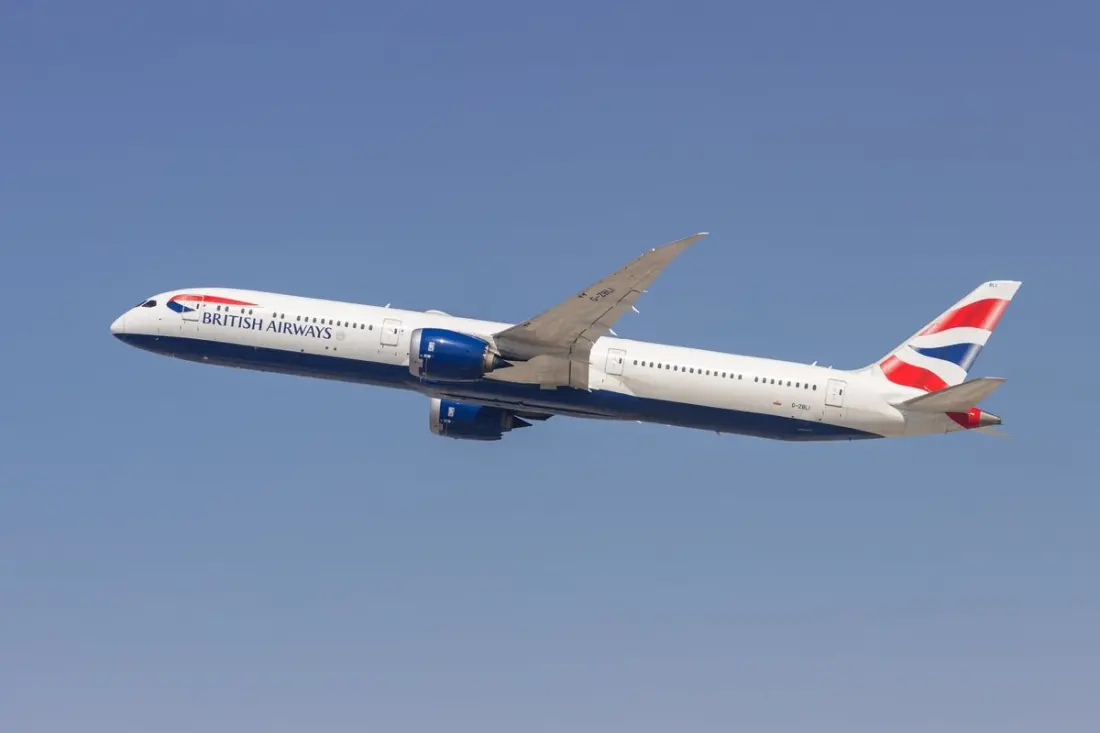
A British Airways flight from London Heathrow to Boston had a tense moment mid-Atlantic this week when the crew triggered a general emergency code four hours into the crossing. Flight BA239, a Boeing 787-10 Dreamliner, transmitted squawk 7700 while cruising at 38,000 feet over Greenland, following what aviation outlets reported as a drop in oil quantity on one of its two Rolls-Royce Trent 1000 engines.
The pilots followed standard procedure: they descended to 28,000 feet, slowed the aircraft and turned toward Canada in case a diversion became necessary. Maintenance teams, messaging the cockpit via ACARS data links, reportedly suggested landing at Keflavik in Iceland. In the end, the crew judged the situation manageable and resumed the original route. The jet, which had left Heathrow at 7.05pm for the seven-and-a-half-hour run, touched down safely at Boston Logan around 11pm local time — roughly an hour late — with no injuries reported.
British Airways confirmed the aircraft arrived normally and that customers disembarked as usual, saying crew had identified a minor technical issue and followed established procedures, and apologising for the delay. A spokesperson reiterated that safety is always the airline's highest priority.
There's a twist, though. According to aviation news site AirLive, the same airframe — registration G-ZBLC — had an oil scare just two weeks earlier. On 14 November, while flying to Dubai, the oil quantity on one engine reportedly fell to zero, forcing an emergency diversion to Athens. Two engine-oil incidents on the same plane inside a fortnight is the kind of pattern aviation watchers will be following closely, even though the Rolls-Royce Trent 1000 has long had a well-documented history of durability issues that have grounded Dreamliners across the industry in past years.
For travellers, the takeaway is reassurance rather than alarm. This is how the system is meant to work: a crew spots a warning, transmits the emergency code out of caution, descends and plots a diversion route, then continues once the situation is assessed as safe. Nobody was hurt, the delay was about an hour, and BA handled rebooking as standard. If you're booked on a transatlantic flight and see your aircraft squawking an emergency code on a tracker app, it's usually precautionary — not a sign of disaster. Frequent flyers on the Heathrow-Boston route shouldn't change plans on the back of this one incident, though it's a fair reminder that flight tracking tools like FlightAware now let nervous flyers watch their own journey unfold in real time.