Day four of a John Muir Trail thru-hike is supposed to be about momentum: Mount Whitney is behind you, Forrester Pass is ahead, and the high Sierra is doing its usual spectacular thing. For one hiker writing on The Trek, it instead became a lesson in what happens when real life catches up with you by satellite text.
The trouble started with a Garmin inReach message. These satellite communicators are standard kit on the JMT, where phone signal simply doesn't exist for most of the route, and texting means pecking out letters one at a time. The news that came through was heavy: his son Ben, whose colon cancer had been declared clear after surgery and a dozen rounds of chemotherapy, had undergone an accelerated follow-up scan — and the cancer was back, now at Stage Four. Minutes later came a second message. His wife Lee, who had assured him she'd recovered from recent appendix surgery before he left, was heading to the emergency room with a neighbour over painful incision complications.
He asked if he should leave the trail. The reply: not yet. A fast exit from that stretch, past Whitney Portal's side routes, would realistically have meant a helicopter anyway — and his own breathing was worrying him. He'd been unable to catch his breath after fifteen minutes of casual frisbee tossing at 10,000 feet, and small slopes that he'd cruised the day before were leaving him gasping. So he made breakfast, packed up, and kept walking north toward Tyndall Creek.
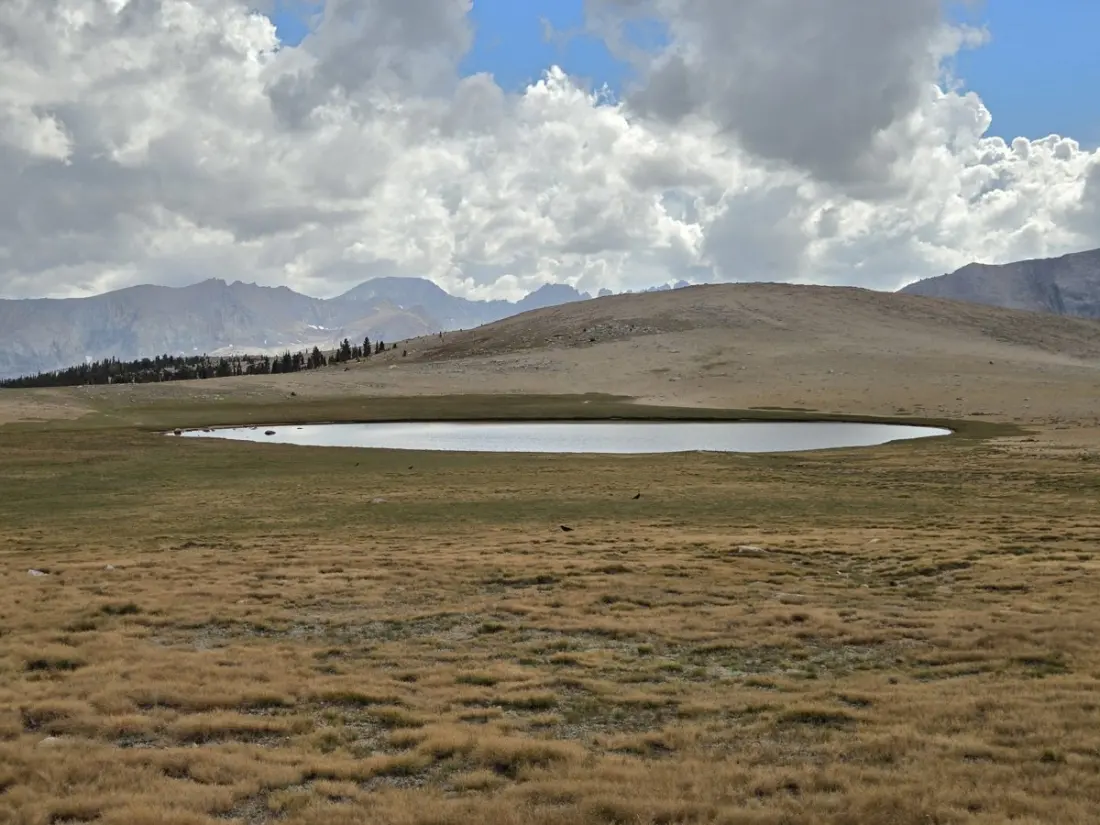
What followed is familiar to anyone who's hiked sick at altitude: the body works in levels. Flat and downhill sections were manageable; any climb triggered coughing fits and gasping. But as the morning went on, strength crept back. The route passes through forest, then opens onto the Bighorn Plateau, a wide expanse of grass and sweeping mountain views where ravens forage between the trail and the peaks. Storm clouds grumbled all day but only delivered sprinkles — which he credits, half-joking, to carrying his rain poncho in a jacket pocket as a rain-prevention device.
At Tyndall Creek the intended campsite on the far side was full, so he and his companion Sam took the first available pair of spots and chatted with a 35-year-old Portland pharmacist waiting for his father and a knee-injured family friend to come over Forrester Pass. The day ended with a recitation of Poe's "The Raven" that doubled as a breathing test — one coughing fit, one memory lapse, passable.
Why does this matter to travellers? Because long treks in remote places strip away your control. There's no mobile coverage, no quick exit, and no pause button when family news arrives. Stories like this are a good reminder to set up a satellite communicator before a trip like the JMT, agree in advance on what warrants pulling you off trail, and accept that some days out there are simply about putting one foot in front of the other.
Story via The Trek.