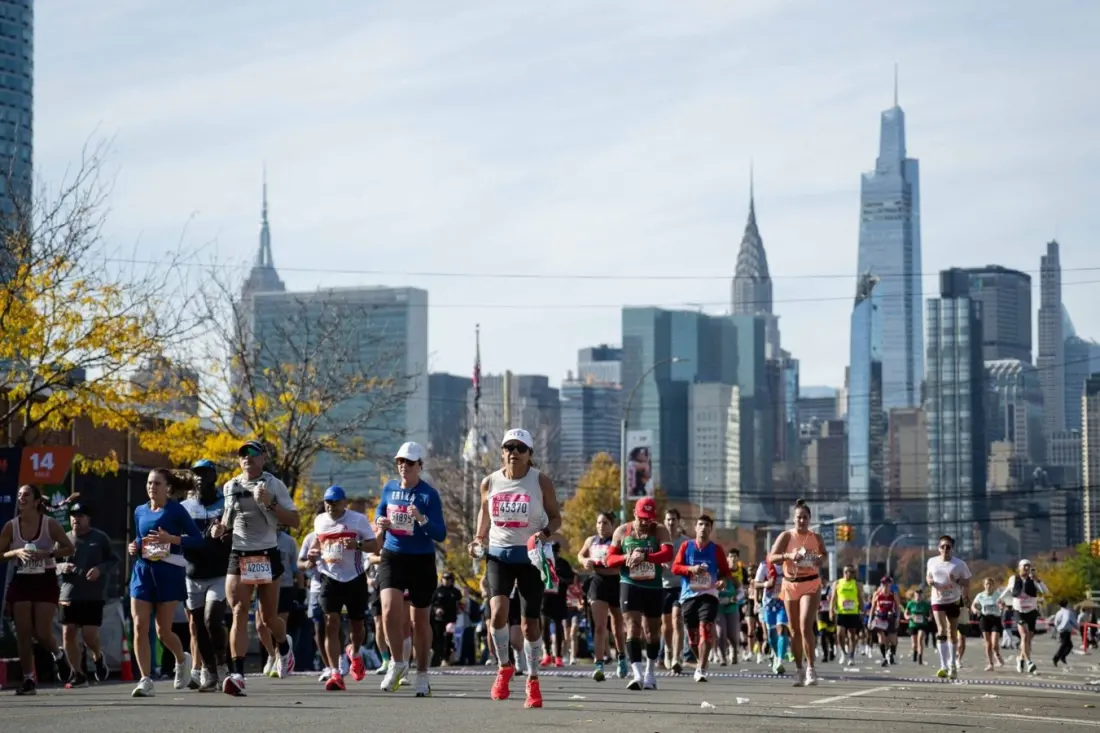
Fifty years after the New York City Marathon left Central Park and spread across all five boroughs, the race is bigger, louder and stranger than ever. Nearly 60,000 runners now finish what drew about 2,000 entrants in 1976 — only 88 of them women — and the anniversary edition delivered everything the course is famous for, from a pre-dawn Staten Island start to the long slog into Central Park.
The logistics alone are a mini-adventure. Runners board buses to Staten Island before sunrise, often sharing the F train with revellers still in Halloween costumes, and wait in the cold for a start line on the Verrazzano-Narrows Bridge. Brooklyn absorbs nearly half the 26.2 miles, with bands on Fourth Avenue in Bay Ridge and raucous crowds through Williamsburg. Then comes the race's great leveller: the Queensboro Bridge. It's silent, unsupported and leg-sapping — the stretch where personal-best ambitions go to die before the thunderous welcome onto First Avenue in Manhattan. After Harlem, it's Central Park South and the finish.
The 50th running produced suitably varied stories. Sweden's Andreas Almgren won the men's race in 2:06:01 in the first marathon he'd ever run; Kenya's Sheila Chepkirui took the women's title for the second time in three years; American Jess McClain chased down two-time champion Hellen Obiri in the final strides for second. Marcel Hug collected an eighth wheelchair crown, while Catherine Debrunner won hers by more than eight minutes.
But the back of the pack tells the better tale. Ultra-endurance figure Rich Roll, 60, finished months after spinal fusion surgery, having trained on just two five-mile run-walks a week — and spent the day pacing Purple Heart recipient Cedric King, a double amputee. British ultrarunner William Goodge crossed the line to complete his 50th marathon in 23 days, one per US state, setting a Guinness World Record and raising money for Stand Up To Cancer. Dave Obelkevich, 83, lined up for his 49th consecutive five-borough race, and 78-year-old James Thomas closed things out around 11:20 p.m., finishing number 43.
For travellers, this is the rare sporting event where spectating is arguably as good as competing. Marathon Sunday is routinely called one of New York's best days: crowds line bridges, avenues and park gates for hours, and the last finishers get a reception as warm as the winners'. If you're in the city in early November, plan a viewing route — Williamsburg for the party atmosphere, First Avenue for volume, Harlem for gospel choirs, Central Park for the finale. Just bring layers and patience with subway crowds; the whole city runs on cheering that day.