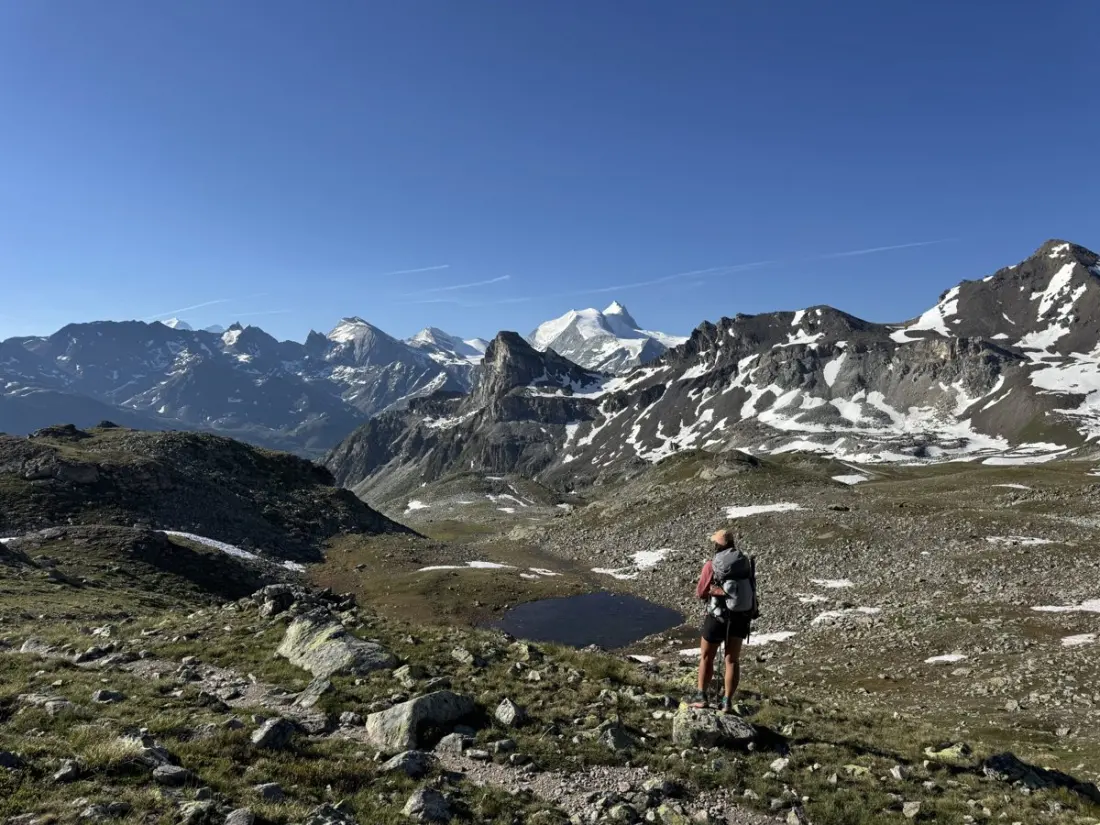
Linking Chamonix at the foot of Mont Blanc with Zermatt beneath the Matterhorn, the Walker's Haute Route is one of the Alps' great long-distance treks. It runs roughly 137 miles through France and Switzerland, climbs around 45,930 feet in total, and typically takes 10 to 14 days of demanding mountain hiking. Unlike the ski version of the Haute Route, this is a walking route, crossing a string of high passes on foot.
A recent account from two hikers who set out in mid-July gives a good feel for what the trail is actually like. Early July is a mixed blessing: many mountain huts are still closed and snowfields linger on the upper passes, including the Glacier du Trient plateau known as the Grand Désert. The pair still packed microspikes and an ice axe bought in Chamonix as a precaution, and used them on steep snow traverses above the Trient Valley. Their timing also collided with a heat wave pushing 100°F, a reminder that alpine weather can swing to extremes in either direction.
The rewards are the sort that keep long-distance hikers coming back to the Alps: wildflower meadows, turquoise glacial lakes, ibex on the rocks, whistling marmots, and close-up views of Mont Blanc, the Weisshorn and finally the Matterhorn. Highlights from their first days include the climb to Col de Balme on the Swiss border, the alternative high route over the Fenêtre d'Arpette past the Glacier du Trient, and wild camps below the passes, including one with Mont Blanc glowing orange at sunset. Not every moment is glamorous: the first day alone covers 11.4 miles with over 4,200 feet of gain, ticks are already active in summer, and camping rules are strict in protected areas, so planning means checking snow maps and bivouac restrictions.
Logistics are refreshingly simple. Getting to the start is a scenic four-hour train journey from the Mattertal valley via Visp, Martigny and Vallorcine, and Chamonix itself has affordable hiker fare — the writers found a full dinner with unlimited salad for around €18. Trail life runs on a rhythm of bakeries and mountain buvettes: a petit déjeuner buffet in Champex-Lac, apricot tart and cured ham sandwiches at the Buvette du Glacier below the Fenêtre d'Arpette climb. Huts and refuges can be booked ahead for those who'd rather not carry a tent.
Who is this for? Fit hikers comfortable with sustained climbs, snow crossings and multi-day self-sufficiency. It's a step up from the Tour du Mont Blanc in difficulty and commitment, but shares the same alpine village charm and train-accessible start points. Hiking mid-July means solitude and dramatic snow scenery; late July through early September brings open huts, cleared passes and busier trails. Either way, this is one of the few walks in the world where the finish line is the Matterhorn.
The Trek