
Most Luxor itineraries read the same: Karnak, Luxor Temple, Valley of the Kings, done. But travellers with an extra day or even a free afternoon on the West Bank have options that trade crowds for atmosphere — and often end up being the stories people tell when they get home.
Medinet Habu, the mortuary temple of Ramesses III, tops the list. It never gets the billing of Karnak, yet its walls are packed with reliefs you can actually stop and study instead of shuffling past. It works especially well after a morning at Karnak, when you've got a feel for Egyptian temples and can start noticing how differently this one stages a pharaoh's legacy.
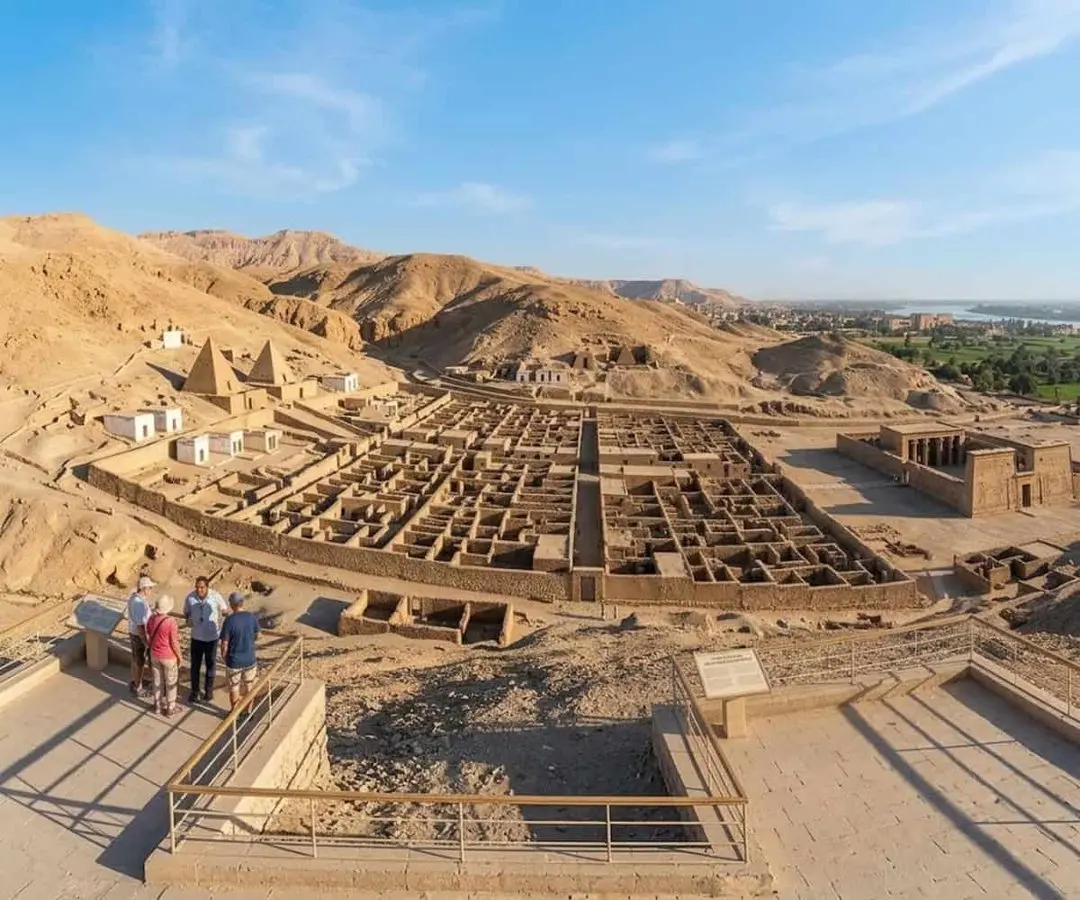
Deir el-Medina offers something entirely different: the village where the craftsmen who carved and painted the royal tombs actually lived. Visit a glowing tomb in the Valley of the Kings, then walk through the community of artists who built it, and the whole experience shifts from pharaoh-worship to something far more human.
The Tombs of the Nobles flip the script too. Forget afterlife journeys — the scenes here show farming, feasting, work and family, giving a rare picture of ordinary life in ancient Egypt. They're small, quiet, and rewarding for anyone curious about the civilisation rather than just its monuments.
Two more stops round out the list. Carter House, where Howard Carter lived and worked during the Tutankhamun dig, makes a striking contrast right after the Valley of the Kings — you move from a 3,000-year-old burial ground to the very recent story of its rediscovery. And the Ramesseum, Ramesses II's partially collapsed mortuary temple, rewards imagination: standing among toppled statues and broken columns, you get the scale of the original even in ruin.
None of this means skipping the headliners on a first visit. Karnak and the Valley of the Kings absolutely earn their fame. The point is that Luxor pays back patience — seeing fewer sites properly beats cramming in a checklist, and the quieter places are often what make the city feel like a real place rather than a parade of ruins. For travellers on private itineraries, the flexibility to linger at a site like Deir el-Medina or cut a morning short is exactly the advantage.