Bhutan's government has committed Nu 400 million to Phase 8 of its rural connectivity programme, targeting mobile network and internet upgrades in five dzongkhags: Lhuentse, Trashi Yangtse, Samtse, Samdrup Jongkhar and Mongar. The rollout covers 26 gewogs (county-level administrative units), with work beginning this fiscal year and previously unreached areas expected to get signal within five to six months.
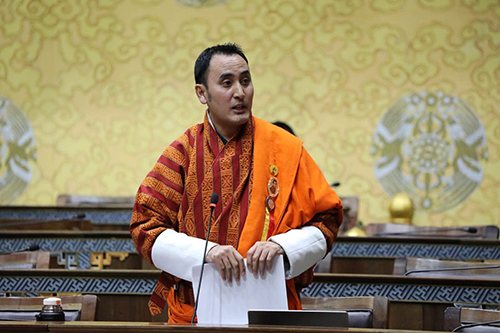
The announcement came in Parliament, where Kengkhar-Weringla MP Dorji Wangmo pressed the Ministry of Industry, Commerce and Employment on when rural residents could count on reliable service. Industry and Commerce Minister Lyonpo Namgyal Dorji defended the track record, pointing out that Phase 7 supplementary works had already upgraded 4G and voice services for more than 255 households across seven districts.
Not everyone in the chamber was celebrating. Drametse-Ngatshang MP Kinzang Wangchuk relayed a complaint familiar to anyone who has used mobile data anywhere: data packages seem to run out faster than they used to, and the public suspects something changed during network upgrades. The Minister conceded that minor disruptions are sometimes unavoidable, but put the onus squarely on telecom providers to make transitions transparent, and noted that regulator BICMA (the Bhutan InfoComm and Media Authority) will step in if service quality slips.
There was also an update on resilience at the national level: the Third International Internet Gateway (3IIG) is being built as a backup route, giving Bhutan an alternative pathway for international traffic if its existing connections are disrupted.
Why should travellers care? Eastern Bhutan — Mongar, Lhuentse, Trashi Yangtse and Samdrup Jongkhar — sees far fewer visitors than Thimphu, Paro and Punakha, partly because the infrastructure is thinner. If the promised coverage lands on schedule, that changes the calculus: trekkers, homestay guests and road-trippers heading across the Trashigang and Mongar corridors will be able to navigate, book lodging on the fly and stay reachable in villages that were previously dead zones. Samtse, meanwhile, borders the Indian state of West Bengal and could become easier to combine with overland routes. Anyone planning a trip in the next year should check coverage maps before setting out, as the upgrades are still rolling out district by district.
It's also a useful snapshot of how Bhutan manages telecom quality: complaints raised in Parliament, a named regulator empowered to intervene, and public commitments on timelines. For a country that famously balances modernisation against its Gross National Happiness agenda, incremental infrastructure like this is exactly how change tends to arrive.
Credit: The Bhutanese