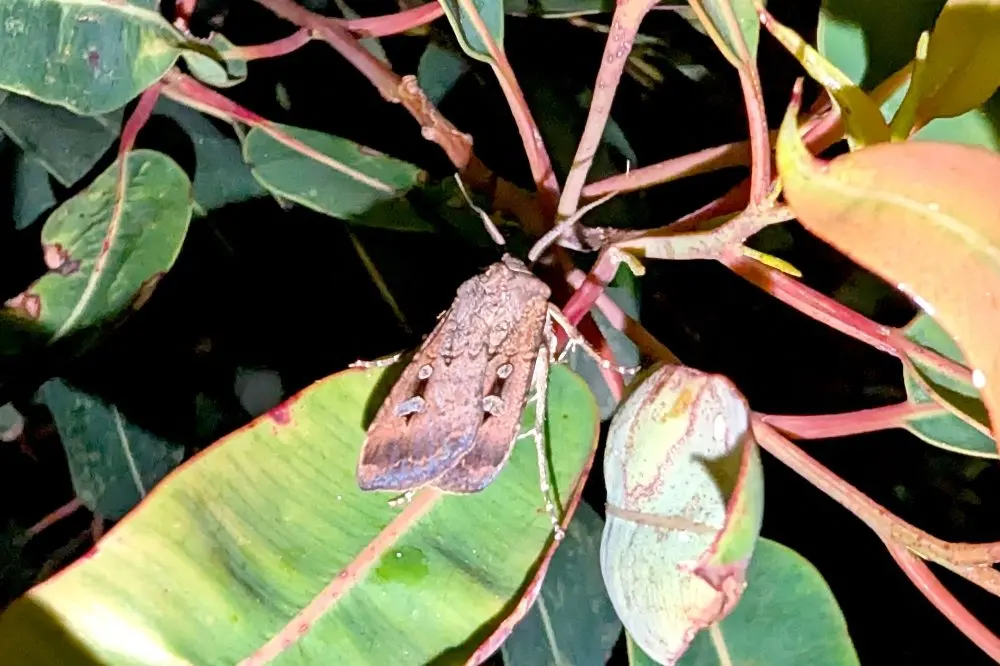
Every spring, billions of Bogong moths once rose from the inland plains of eastern Australia and flew hundreds of kilometres to shelter in the alpine caves of the Great Dividing Range. Swarms so dense they could blot out the stars and moon — and famously scrambled weather radar during the 2000 Sydney Olympics, when forecasters mistook a moth cloud for incoming rain. Then, from 2017, drought, pesticides and habitat loss triggered a collapse that wiped out an estimated 99.5 per cent of the population. Caves that should have been carpeted in moths held barely any at all.
Now they're back. Researchers are reporting the kind of swarms not seen since before the crash, with moths clustering so thickly on cave walls that the rock underneath is invisible — described by one entomologist as a dense 'tilting' mat of insects that stays put through the summer heat before returning downhill to breed.
The comeback has delighted conservationists like Zoos Victoria's Marissa Parrott, who described 'happy tears' in her office as the swarms returned. But there's tension in the good news: a severe El Niño is forecast to push summer temperatures sharply higher, and scientists worry the rebound could be short-lived.
Why should a traveller care? For one, this is a genuine natural spectacle unfolding in the Snowy Mountains and Victorian high country, where the moths summer in caves above the treeline. For another, the moths are ecological linchpins: they pollinate plants and feed the critically endangered mountain pygmy possum, a tiny marsupial found nowhere else in the world. Seeing the alpine region this spring means seeing a food web quietly repairing itself.
The Bogongs also carry a remarkable scientific story. Last year researchers tethered moths in front of projected star fields and proved the insects navigate by the Milky Way — the first invertebrates ever shown to use celestial navigation on long journeys. Each moth makes the trip to the caves only once in its life, with no elder to show it the way.
Timing matters if you want to catch the migration. The moths move through the lowlands in spring and settle in the high country from roughly November, before heading back down as autumn cools. Local optics companies in towns like Boulder Creek, South Australia, have even built a small tourism tradition around the annual flight. Watch for updates from parks services and conservation groups, since moth numbers now swing with the weather — and this summer's El Niño could test the comeback hard.