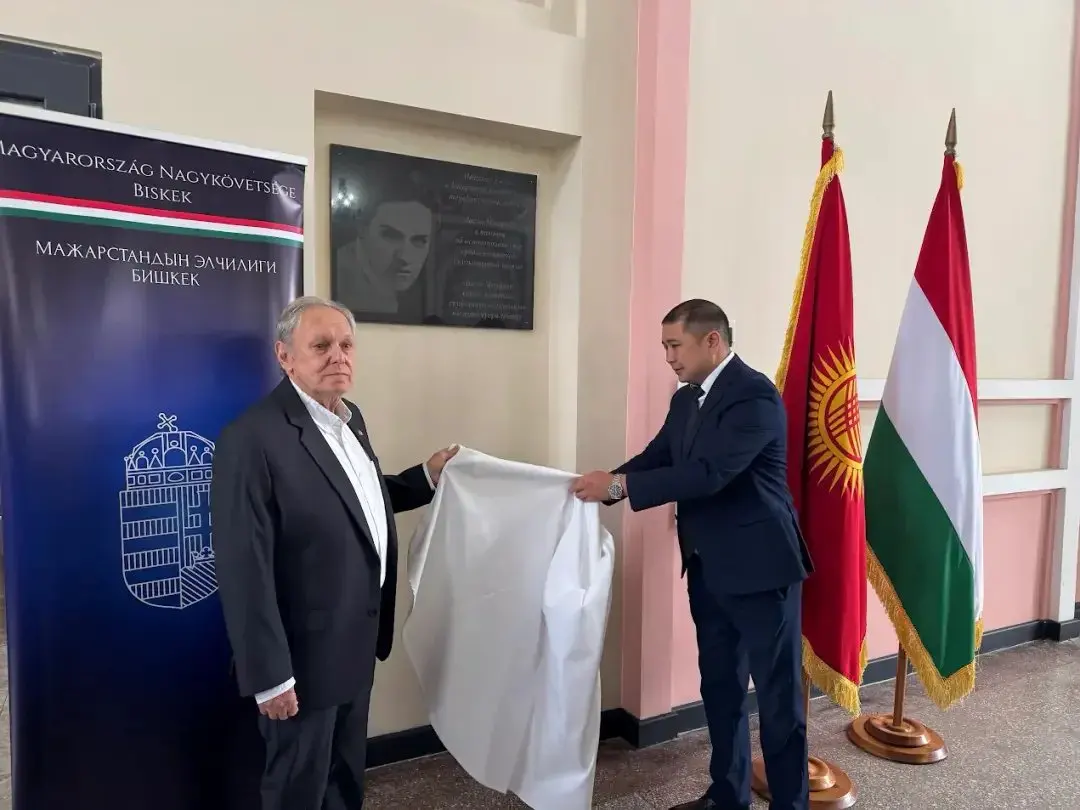
A modest ceremony at Bishkek-2 railway station carried real weight for anyone interested in the history of Central Asia's capitals: a memorial plaque was unveiled there to Laszlo Meszaros, the Hungarian sculptor, architect and graphic artist who helped kickstart professional sculpture in Kyrgyzstan before his life was cut short in 1938, at just 33.
Meszaros arrived in Frunze, as Bishkek was then called, in 1936 as an emigrant. In barely two years he left a permanent imprint on the city. His designs and hands-on work shaped interiors at three buildings travellers still pass today: Bishkek-2 railway station, the former Government House that now houses the Presidential Administration, and the National Bank. He also laid out a public garden in the city centre.
His influence went beyond buildings. Meszaros set up what is considered the first art boarding studio in Central Asia and produced a gallery of sculpted portraits of local residents, works now kept at the Gapar Aitiev Kyrgyz National Museum of Fine Arts — a good excuse to step inside if you're sightseeing in Bishkek.
The unveiling drew Hungary's Chargé d'Affaires in Kyrgyzstan, officials from the Ministry of Culture, Bishkek City Hall, members of the diplomatic corps and local artists. The guest of honour was Meszaros's grandson, filmmaker Nyika Jancso, who made the trip from Budapest. He thanked the Kyrgyz people for keeping his grandfather's memory alive and said Bishkek has always held a special place in the family's history. The Hungarian envoy framed the plaque as a symbol of the lasting cultural ties between the two countries — a small piece of Hungary sitting in plain sight on a Kyrgyz railway station.
For travellers, this is the kind of detail that turns a walk through Bishkek into something richer. The capital is often treated as a quick stopover before the mountains, but buildings like Bishkek-2 station, the Presidential Administration and the National Bank carry stories of European artists and emigres who shaped Soviet-era Central Asia. Spotting Meszaros's touches, then visiting his portrait gallery at the Aitiev museum, makes for an easy half-day of city exploring with a cross-cultural thread running through it. It also hints at a broader point: Bishkek rewards slow looking, and its architectural history is more layered than most itineraries give it credit for.