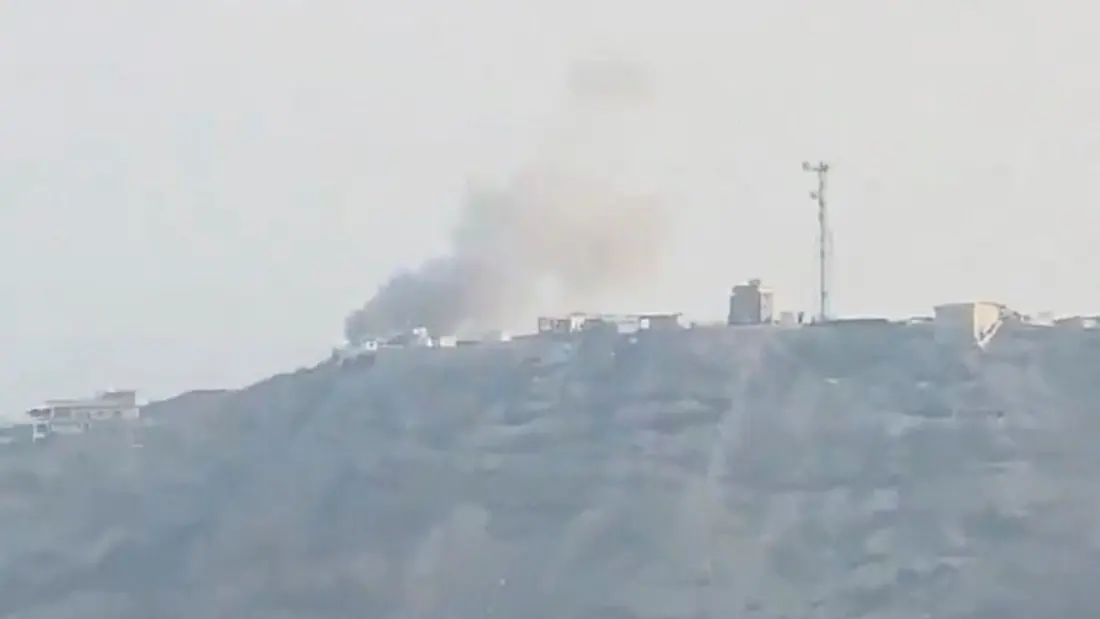
At least five people died and 16 were wounded when Houthi forces struck the Al-Maashiq presidential palace complex in Aden, the southern Yemeni seat of the country's internationally recognised, Saudi-backed government. It was the first time the compound had been hit in the current round of fighting. Yemeni officials said the dead included security guards and civilian staff, though the prime minister and cabinet escaped harm. Houthi spokesperson Yahya Saree claimed the site was actually a Saudi military operations centre — an assertion that could not be verified.
The same day, the Houthis released infrared footage purporting to show a missile closing on a Royal Saudi Air Force Eurofighter Typhoon over northern Saada province, saying the jet, reportedly flying from Taif Air Base, had been hit. The video shows a detonation near the aircraft rather than a direct strike, and the pilot appears to evade it. Riyadh has confirmed nothing, and there is no verified report of a jet downed. Observers suspect the weapon was a Barq surface-to-air missile tied to Houthi air defences and Iranian technology.
The strike on Aden fits into a wider escalation. The Saudi-led coalition says Houthi missile and drone attacks have repeatedly targeted the kingdom's airports, ports and energy sites: 20 attacks on King Khalid International Airport in Riyadh this month alone, killing 17 and injuring 333, plus a strike on Abha airport that left three dead and 28 wounded. The coalition says it has destroyed 127 weapons storage sites and launch platforms in Yemen and intercepted drones over Khamis Mushait and elsewhere in the south.
For travellers, the key line is the Houthi warning that Saudi airspace and airports are unsafe — with an exemption carved out for the airspace above Mecca and Medina. The fighting marks the end of a long lull in Yemen's civil war, which began in 2014 and pulled in a Saudi-led coalition the following year. Combat resumed last month in the shadow of the broader regional conflict, and Yemeni government forces are now pushing toward Houthi-held areas near the Bab el-Mandeb Strait, one of the world's busiest shipping chokepoints. Aid organisations warn the renewed war will deepen an already dire humanitarian crisis.
Anyone with flights routed through Saudi airspace or booked to Gulf destinations should keep an eye on airline advisories and government travel warnings, since rerouting around conflict zones can mean longer flight times and sudden schedule changes. This is also a reminder that travel insurance policies routinely exclude destinations under 'do not travel' advisories — Yemen has been off-limits for years, and parts of southern Saudi Arabia near the border carry elevated risk levels. If your itinerary touches the region, check your foreign office guidance before paying for anything non-refundable.