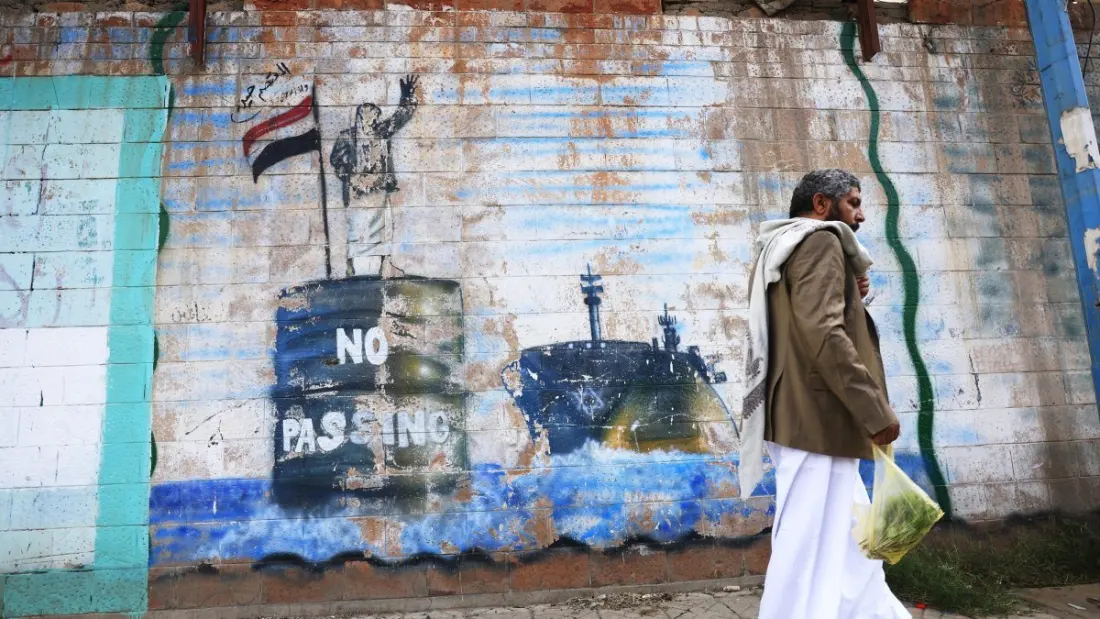
A Saudi airstrike struck the Yemeni port city of Mokha on Tuesday, according to the Houthis, who say six civilians including two children were killed. The attack came barely a week after the Iran-backed group seized control of a strait central to global energy flows — and it marks another sharp escalation in a conflict that is now rippling far beyond Yemen's borders.
The Houthi takeover of Yemen's Red Sea coast has put hundreds of fighters and civilians dead and left two of the world's most important chokepoints — the Bab el-Mandeb and the Strait of Hormuz — under the influence of Tehran and its allies. Saudi Arabia, the world's largest crude exporter, has responded with scores of airstrikes, but the group's advance has continued. Over the weekend it launched an attack on Riyadh itself, the first on the Saudi capital in years, prompting a brief civil defence alert that told residents of the country's south to stay indoors and away from open areas.
The human cost is mounting fast. Military sources on both sides told AFP that 154 people were killed in just two days of fighting and shelling across Taiz, al-Jawf, Marib and Saada governorates. The International Organization for Migration says nearly 130,000 people have been displaced across seven governorates, many for the second or third time. At a camp in Aden, a mother of four named Arwa described her situation bluntly to AFP: exhausted by heat, dust and displacement, hoping only to find shelter for her children.
The regional stakes are considerable. The wider Middle East war began in February with U.S.-Israeli strikes on Iran, and Yemen has become its most active front. Houthi forces have attacked Aramco facilities in the Red Sea port of Yanbu, and Saudi Arabia says the East-West crude pipeline was shut down after drone attacks launched from Iraq. Energy prices have risen as traders price in the risk to Red Sea shipping, which the Houthis have threatened.
International responses are stacking up. G-7 leaders demanded an immediate halt to Houthi attacks on civilian shipping and cross-border strikes, and called on Iran to stop arming the group. Britain's defence minister Luke Pollard confirmed some military support for Saudi Arabia, and France has pledged help protecting Saudi energy infrastructure — while stressing it is not joining the fight. Yemen's governing president Rashad al-Alimi asked U.S. President Donald Trump for American backing in a call described as a show of solidarity rather than a military commitment, and Crown Prince Mohammed bin Salman has reportedly pressed Trump directly to strike the Houthis. According to Fox News, Trump said the Houthis had agreed not to target U.S. interests.
For anyone with travel plans in the region, the practical picture is stark: Yemen remains off-limits as an active conflict zone, southern Saudi Arabia carries a fresh — if short-lived — official alert, and Red Sea shipping disruption may continue to affect cruise and ferry schedules and air-fuel costs well beyond the immediate combat areas. Check foreign office advisories before booking anywhere on the Arabian Peninsula or Red Sea coast, and keep an eye on energy-price knock-ons for flight costs in the coming months.
With the front lines shifting weekly and diplomacy so far failing to slow the Houthis, this is one regional story that travellers to the wider Middle East cannot afford to ignore.
Daily Sabah Travel