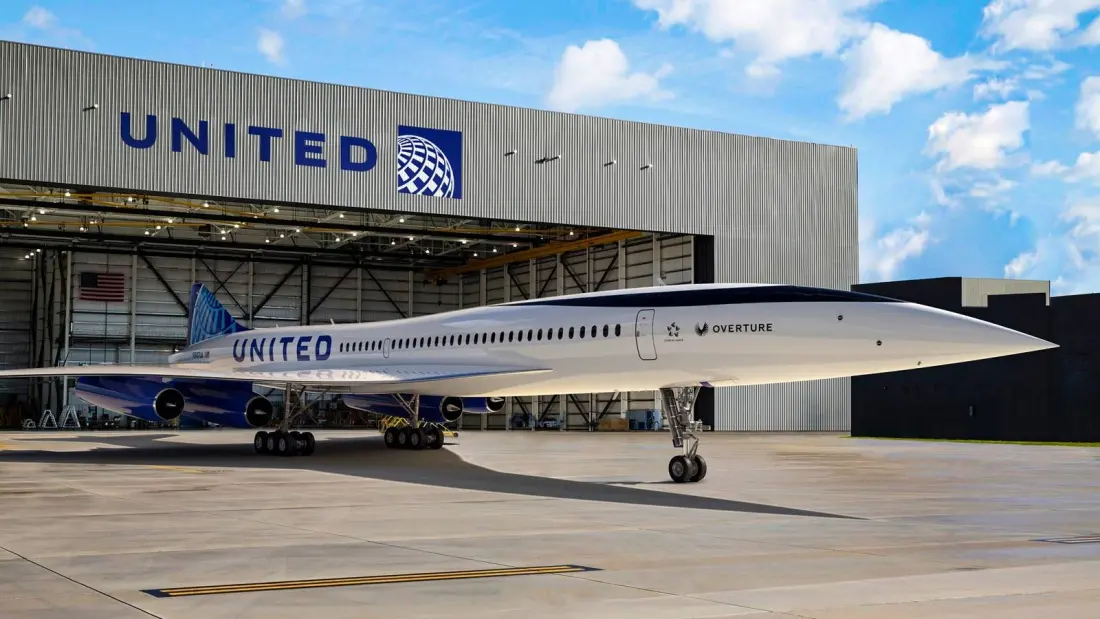
It's been over two decades since Concorde last carried a paying passenger, and a return to supersonic travel has felt like a pipe dream ever since. Boom Supersonic is now the closest anyone has come to reviving it. The Denver-based manufacturer's XB-1 test aircraft broke the sound barrier a year ago, hitting Mach 1.122, and the full-size Overture is expected to enter commercial service towards the end of this decade, with United Airlines, American Airlines and Japan Airlines among those holding options and pre-orders for 130 aircraft.
The big question is always money. Concorde was famously exclusive: a mid-1990s round-trip between London and New York averaged around $8,000 — roughly $16,900 in today's money. Compare that with current premium fares on the same route, where business class round trips on British Airways, American and Virgin Atlantic sit between roughly $2,700 and $4,500, with Delta One around $9,000. Subsonic business class is now dramatically cheaper than Concorde ever was, so a new supersonic jet has a steep benchmark to beat.
Boom's argument rests on economics rather than nostalgia. Overture is being designed 50 years after Concorde, with modern composites and materials that make it lighter, more efficient engines that cut fuel burn, and contemporary navigation infrastructure that allows smarter routing. It's also engineered to run on 100% sustainable aviation fuel from day one, addressing one of Concorde's biggest image problems. Lower operating costs, in theory, mean fares that fall within reach of today's premium-cabin travellers rather than only the super-rich.
The jet itself won't match Concorde's Mach 2 — Overture tops out around Mach 1.7 at 60,000 feet, still roughly twice the speed of today's airliners, halving journey times. It carries 60 to 80 passengers with a range of 4,250 nautical miles, and its 'boomless' cruise technology means sonic booms won't reach the ground, allowing overland flight at up to 50% faster than conventional jets. Boom claims the aircraft can turn a profit on more than 600 routes worldwide — a far broader network than Concorde ever managed.
For travellers, the realistic audience is business flyers and premium leisure passengers who value time over ticket price. Whether airlines actually commit remains the open question: Concorde once had options for around 100 aircraft from 18 airlines, yet only 14 flew commercially. Overture has a decent head start on demand, a growing global premium market behind it, and real test-flight progress — but certificates and orders still need to convert into something more concrete before you can book a supersonic window seat.