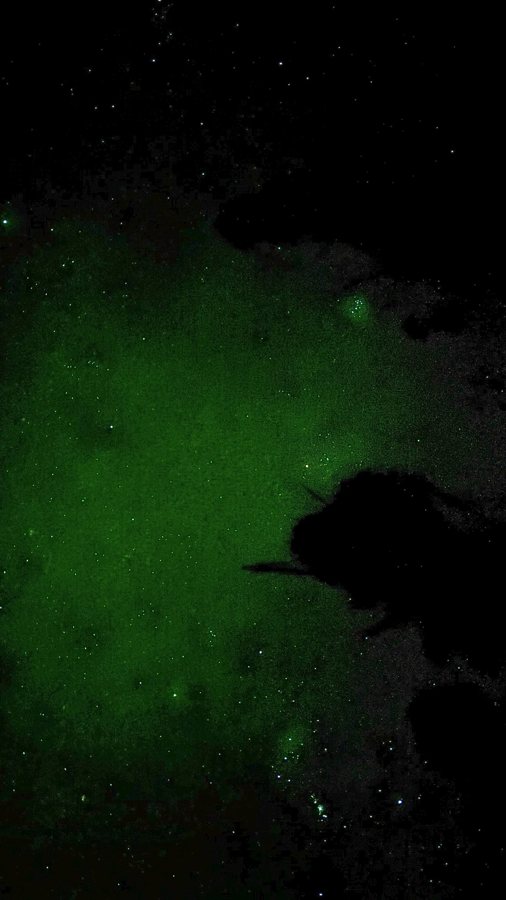
Somewhere on New Mexico's high desert, a long-distance hiker woke before 3am and decided there was no point pretending to sleep. The sky above was completely clear — no clouds, no light pollution, not even a plane crossing it. So began a pre-dawn walk described in one of the most atmospheric trail journals doing the rounds: a stretch of the Continental Divide Trail, hours from the nearest road, lit only by a headlamp and an extravagant ceiling of stars.
The account reads like a slow encounter with the desert at its most awake. Jupiter shimmers red through the thin air. Meteors cross in formation. Coyotes, which have chattered every other night for two weeks, go eerily silent. Rain is visible before it arrives — the hiker notices a star missing from the Big Dipper because a cloud has swallowed it, and the shower reaches camp minutes later.
Then the desert floor starts to glitter. The 'diamonds' scattered through the dust turn out to be spider eyes, dozens of them at a time, each dropping into its burrow when the light gets too close. A startled bird explodes from a juniper. A rabbit freezes in the beam before something — almost certainly a cougar or a bobcat — takes it in a single quiet flash, its close-set eyes fixed on the hiker from the treeline until they simply vanish. There are unexplained flashes on the horizon too, which the writer admits started the day they crossed into New Mexico and haven't stopped since.
By dawn, the mesa top is slick with rain-turned-mud so smooth the stars and their reflections merge, and Albuquerque glows orange in the east as the sun rises behind it. Cold coffee from a Gatorade bottle, cold oatmeal with peanut butter, and miles still to go.
Why should a regular traveller care? Because this is what the CDT actually offers: the darkest, quietest night skies in the lower 48, and a landscape that feels genuinely wild compared with its more trafficked cousins, the Appalachian and Pacific Crest Trails. You don't need to thru-hike 3,000 miles to sample it. The trail passes through New Mexico at its most accessible near Albuquerque and the town of Grants, and shorter sections can be day-hiked or backpacked over a weekend. Go with a good headlamp (spare batteries — the red-light mode is useless on faint trail, as this hiker learned), layers for the desert's sharp overnight temperature drop, and realistic respect for the wildlife that owns the night shift.
For anyone who has only ever experienced a city sky, a single night out here recalibrates what the word 'dark' means. Just don't be surprised if something out there is watching you back.