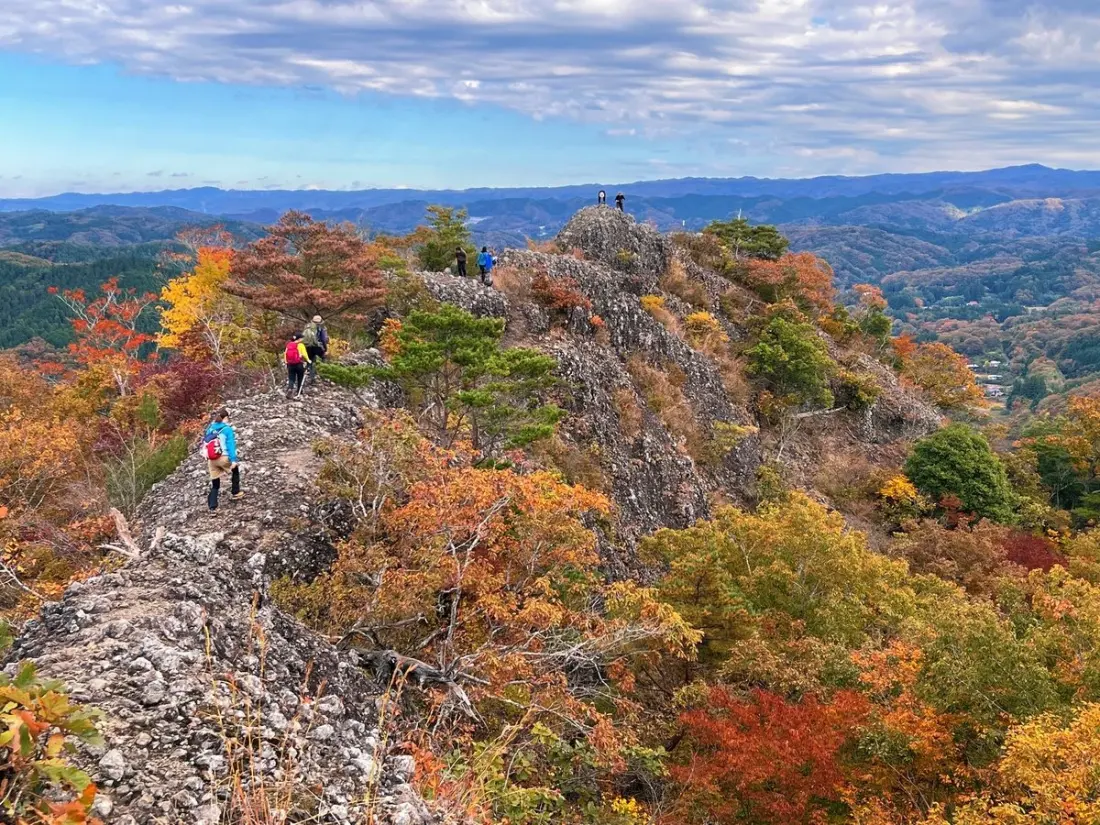
A new long-distance walking route is now fully open just a couple of hours from Tokyo. The Hitachi-no-kuni Long Trail links six cities and towns across northern Ibaraki Prefecture in a loop of roughly 350 kilometres, making it the longest loop-format long trail in Japan.
Unlike a summit-bagging hike, a long trail is built around the journey itself — walking becomes the mode of travel, not just the exercise. This route stitches together forest paths, satoyama countryside (the managed farmland-and-woodland landscapes that define rural Japan), river valleys, agricultural communities and stretches of Pacific coastline. Historic heritage sites sit along the way too, so the trail doubles as a slow tour of a region most foreign visitors skip entirely.
The philosophy behind it leans on Japan's deep tradition of walking travel, from the Kumano Kodo pilgrimage routes to the 88-temple Shikoku pilgrimage. With wellbeing and nature-focused trips trending, long trails have become one of the country's most appealing travel formats — and Ibaraki wants in.
The practical upside is significant. Ibaraki sits only one to two hours from Tokyo, so there's no domestic flight or shinkansen transfer involved. And because it's a loop, you don't have to commit to the whole thing: the trail is explicitly designed to be broken into section hikes or day hikes matched to your fitness and schedule. Walk a weekend segment now, come back for another later.
The regional pitch goes beyond scenery. Ibaraki's tourism board frames the trail as a gateway to a genuinely varied slice of Japan — from space exploration facilities to sites tied to mythology and traditional prayer, traditional crafts, and a fermentation food culture (think miso, soy sauce and sake brewing). Combine a few days of walking with stops at workshops, farm kitchens and small-town eateries, and you get the kind of slow, ground-level travel that's hard to arrange in Tokyo or Kyoto.
Who is this for? Fit hikers looking for a new multi-week challenge beyond the Kumano Kodo, weekend walkers from Tokyo wanting low-logistics day trips, and slow-travel types who'd rather meet locals and eat regional food than tick off temples. English-language infrastructure on rural Japanese trails can be patchy, so go prepared — but that relative obscurity is exactly the draw. Info and route details are available via the official site at kenpokult.com/en/.