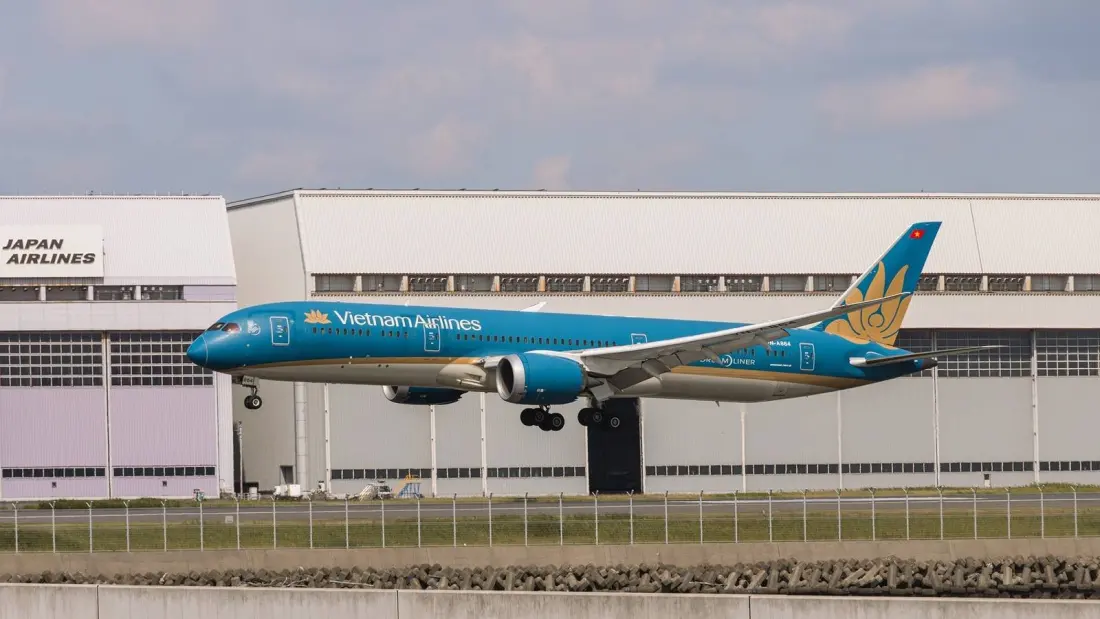
A Boeing 787-9 bound for Hanoi left Munich Airport with its tail scraping the ground — and investigators now say the brakes were applied twice during the takeoff roll. The preliminary report from Germany's Federal Bureau of Aircraft Accident Investigation (BFU) has shed new light on the August 15 incident involving Vietnam Airlines flight VN34, which was carrying 271 passengers and 16 crew on a nonstop run to Noi Bai International Airport.
According to flight recorder data, the aircraft got TOGA thrust and began accelerating normally down runway 08R. But the Enhanced Airborne Flight Recorder picked up rudder pedal movement from the left seat — brake inputs made by a captain with more than 27,000 flight hours. Braking commands climbed to a maximum of 27% from the left side and 17% from the right, with the deepest pedal press reaching 7.2 degrees out of a possible 12.5. The first officer responded by nudging thrust up from 100% to 101%, but the damage was largely done.
The 787-9, loaded with around 62 tonnes of fuel and weighing roughly 240 tonnes in total, rotated at about 163 knots instead of the calculated 175. That shortfall meant the tail struck the grass beyond the runway, wiping out 20 approach lighting lamps. Once airborne, the crew discovered four damaged tires on the left main landing gear plus fuselage damage from the tail strike. They dumped no fuel — instead returning to Munich to land heavy, with everyone deplaned safely and no injuries reported. The flight was cancelled and passengers rebooked.
The aircraft in question, registered VN-A867 and around ten years old, remains grounded in Munich while repairs are carried out. It had flown the Hanoi–Munich route without incident the previous day. The BFU investigation is ongoing, but the interim findings point squarely at those unexplained brake pedal inputs as the critical factor behind the failed departure. Why the captain pressed the pedals at all remains the open question the full report will need to answer.
For travellers, the reassuring part is how the system worked: the crew recognised something was wrong, made a precautionary return, and nobody was hurt. Incidents like this are rare — this was the kind of event that gets a full multi-agency investigation precisely because it almost never happens. Anyone flying Vietnam Airlines' long-haul routes, whether to Europe or across Asia and Oceania, is flying with a SkyTeam member operating a modern widebody fleet of 787s and A350s. The practical takeaway for passengers is mundane but useful: if your flight is cancelled after an aborted departure, airlines are obligated to rebook you, so keep your booking reference handy and head straight to rebooking counters or the app rather than joining a long queue at the gate.
We'll be watching for the final BFU report, which should explain how a veteran pilot's feet ended up on the brakes during one of the most critical phases of flight.