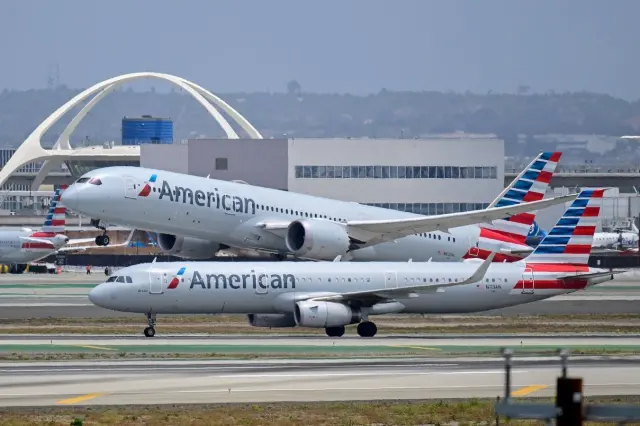
At 3:54 p.m. ET on Friday, November 13, 2026, the Federal Aviation Administration ordered every flight departing a US airport to hold on the ground. More than 4,000 planes were already airborne when the order came through, and incoming international flights were handled case by case. The halt lasted over four hours before being lifted late Friday night.
The trigger, according to reporting, was a communications problem hitting air traffic control centers nationwide. Chicago's O'Hare and Midway had already been placed under local ground stops just before the nationwide order was issued. Officials said there was no sign of a malicious attack — the FAA framed the stop as a safety precaution under what it called extraordinary circumstances. Even after departures resumed, airlines warned that delays and cancellations would drag on while they repositioned aircraft and crews.
To put this in context: before that Friday afternoon, the US had only ever seen two nationwide ground stops. The most recent was on January 11, 2023, when the FAA's Notice to Air Missions system failed overnight, grounding flights until shortly after 9 a.m. — under two hours of stoppage, but days of knock-on delays. The first, and the only one triggered by a security event rather than a technical failure, came on September 11, 2001. At 9:25 a.m. ET that morning the FAA halted departures, and twenty minutes later ordered roughly 4,500 airborne aircraft to land at the nearest airport. By 12:15 p.m., the skies over the 48 contiguous states were completely empty of commercial and private flights, and airspace only began reopening at 11 a.m. on September 13 under tightened security.
What does this mean if you're flying to or within the US? Nationwide ground stops are extremely rare — three in a quarter-century — but their effects are anything but. A stoppage that lasts hours can strand aircraft and crews out of position for days, so a short halt often means a long tail of delays and cancellations. If you're booked on a US flight when something like this happens, expect schedule disruption even if your own flight was never formally cancelled, keep an eye on your airline's app rather than the airport board, and know that in most cases airlines owe you rebooking on the next available flight, though not always cash compensation for events outside their control.
The reassuring part: in both of the technical incidents, the 2023 NOTAM failure and this month's communication outage, the system was restored quickly and there was no evidence of foul play. The 2026 stop, at just over four hours, was longer than 2023's but a fraction of the two-day shutdown that followed 9/11. For anyone mid-trip, the practical move is patience and flexibility — build buffer time into connections, and consider travel insurance if a tight itinerary can't absorb a day of disruption.