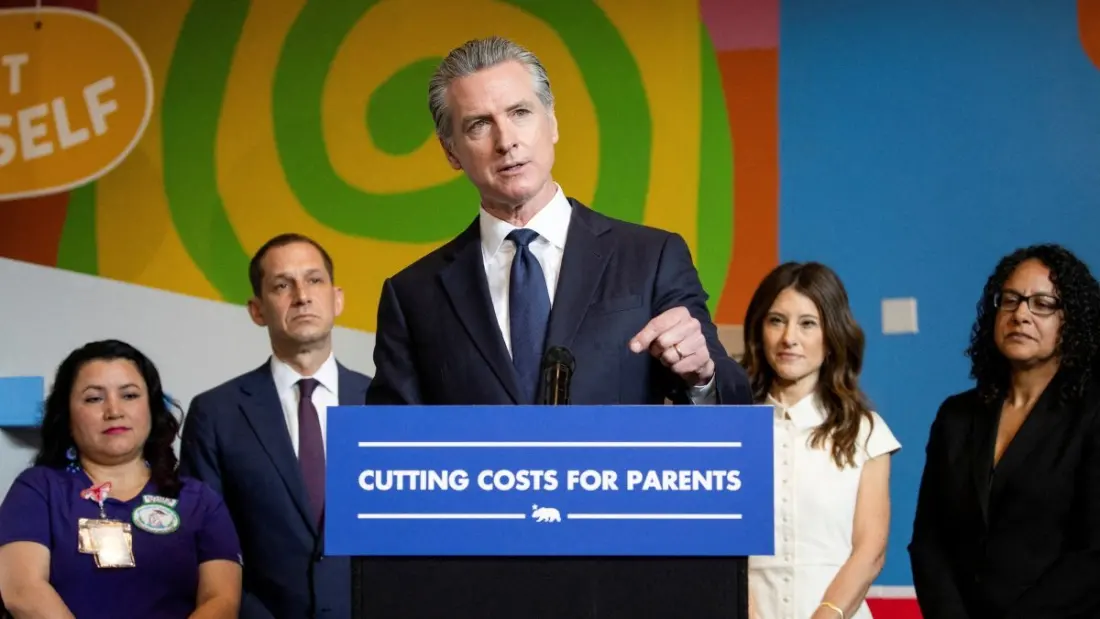
California Governor Gavin Newsom has announced that every death sentence in the state will be commuted to life imprisonment, affecting 548 death row inmates. It's a legal and political story rather than a travel one, but for anyone following US news while planning a trip to the Golden State, it's a significant moment in one of America's longest-running policy debates.
California has one of the largest death row populations in the world, yet it hasn't executed anyone in roughly two decades. Courts have continued to hand down death sentences, but the machinery of capital punishment has sat idle. Newsom's blanket commutation closes that gap: everyone affected will now serve life without the possibility of parole, which he described as the most severe punishment the state can both lawfully impose and ethically enforce.
In a letter addressed to all Californians, the governor argued that the state "cannot morally" carry out executions, calling the move one of the hardest decisions of his career. He also explained why he chose a blanket commutation rather than case-by-case clemency: picking and choosing among offenders would, in his view, create two classes of murder victims. He asked that victims be remembered separately from those who harmed them, saying offenders can now "die in prison but not by our hand."
The announcement lands at a moment when the death penalty is back in the US spotlight. Tennessee botched two attempts at a lethal injection of convicted murderer Christa Pike in September, and a plan by Defense Secretary Pete Hegseth to livestream a military firing-squad execution was cancelled by President Trump after backlash from both parties, the Catholic Church and the United Nations. The US remains one of the few wealthy countries that still retains capital punishment, so California's move stands out internationally.
Why does this matter to a traveller? If you're visiting California, the practical picture doesn't change — the state remains as welcoming as ever, and this decision affects prison policy, not tourism. But it's context worth knowing: Newsom is widely expected to run for president in 2028, and this decision will shape the political conversation you'll encounter in American media, from San Francisco coffee shops to Los Angeles talk radio. For visitors from countries that have abolished the death penalty, it's a reminder that US states diverge sharply on the issue, and California has now firmly aligned itself with the abolitionist camp — at least for as long as this governor's order stands.
This is a news brief rather than a destination guide, so there's no itinerary attached. But if the story prompts a California trip, the state's scale rewards planning: think of it as several holidays in one, from the Sierra Nevada to the Pacific coast.