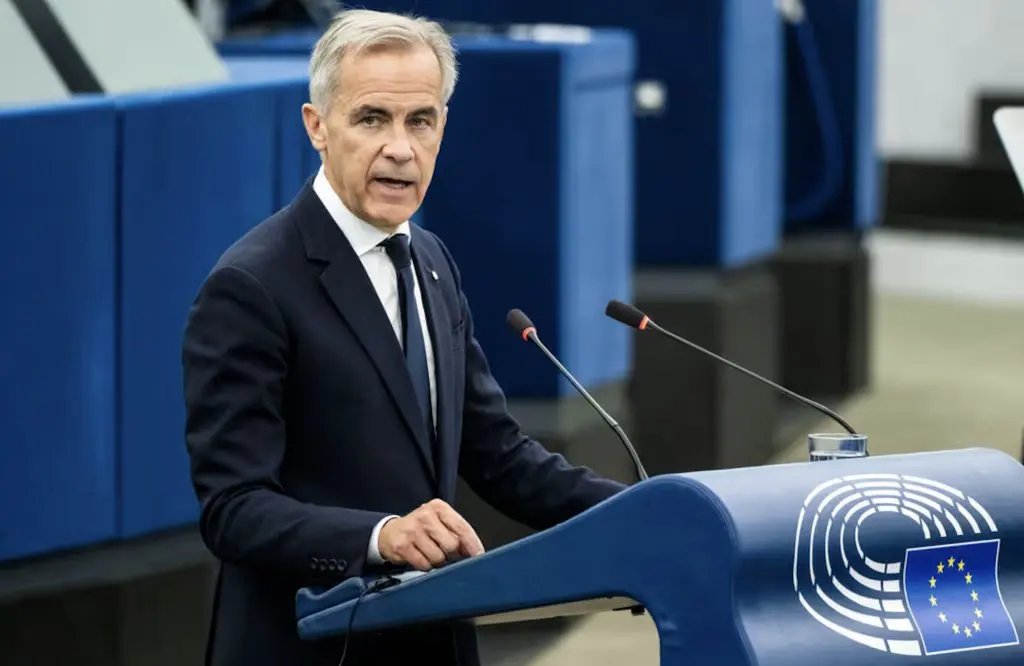
Canada and the European Union are sketching out a political relationship that has no precedent: a proposal, floated by European Commission President Ursula von der Leyen in her State of the Union address, to make Canada the EU's first ever 'associate member'. Prime Minister Mark Carney flew to Strasbourg to endorse the idea in front of the European Parliament, telling MEPs that 'Canada and Europe are each strong' but stronger together — and drawing a standing ovation.
The symbolism is big; the legal detail, so far, is not. No 'associate membership' category exists in the EU treaties, and the model closest to it — one floated earlier by German Chancellor Friedrich Merz for Ukraine — would have meant partial access to the EU budget and seats at some summits without full voting rights. Nobody is promising that exact blueprint for Canada, and Carney was relaxed about the label, saying what counts is 'the substance' of what gets built. Canada is not pursuing full EU membership, and any deal would still need backing from EU governments and approval in Ottawa's parliament.
What would actually be on the table is ambitious. Carney listed critical minerals, large-scale LNG and hydrogen supplies for Europe, defence production, artificial intelligence, computing power, space and payment systems. Von der Leyen's version — branded an 'Alliance for the Future' — adds batteries, quantum technology, cybersecurity and Arctic cooperation, plus a technology tie-up between the two defence industries. Two items stand out for ordinary people: a push for 'seamless digital trade' in goods and services, and easier routes for young Canadians and Europeans to live, work and study on the other side of the Atlantic — potentially including Canada joining Erasmus+.
The context explains the urgency. Canada-EU trade already flows under CETA, in force since 2017, which scrapped nearly all tariffs, and Canada this year became the first non-EU country to join the bloc's SAFE defence-loan programme. But Washington has reacted badly: Donald Trump called the associate membership idea 'laughable' and suggested it could be treated as a 'hostile act', hinting at 'very serious tariffs' on the EU or curtailed trade. Carney's response was blunt — no government gets to dictate Canada's partnerships — though both he and von der Leyen insisted the pact is 'for our common strength', not against the US. Concrete proposals are expected at an EU-Canada summit in Montreal next month.
Why does this matter if you're a traveller? The headline political fight may dominate coverage, but the practical outcomes — cheaper and simpler digital trade, integrated transport and payment systems, defence and energy cooperation, and above all looser mobility for young people, including possible Erasmus+ access — could gradually make Canada-Europe trips, study spells and working holidays easier. Anyone watching for a new category of transatlantic movement and exchange should follow the Montreal summit closely.