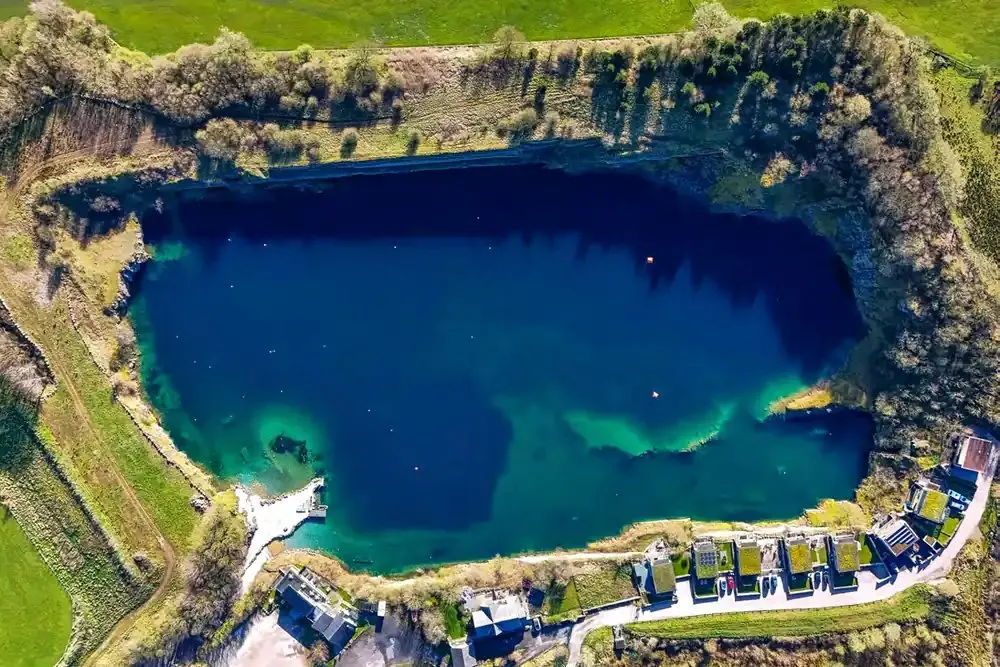
One of Britain's most popular inland dive sites has been on the market for over four years and still hasn't found a buyer. Capernwray Diving Centre, set in the flooded Jackdaw Quarry near Carnforth in Lancashire, was first listed at £3 million back in 2022. Savills re-marketed it in August 2024 without a published price, and in late September circulated a new listing to prospective buyers asking for offers over £1.6 million.
The deal has changed shape, too. This time the sale covers roughly 7.35 hectares (18 acres) of freehold land — noticeably less than the 24 acres advertised last year, which came with planning permission for 19 holiday chalets beside the quarry. The development land is excluded now, though the seller would reportedly consider a separate deal for it. A buyer gets the whole operating business: all shares in Capernwray Diving Centre Ltd, the dive shop, the Porthole Restaurant, changing facilities, a conference room seating 30 with lake views, a cylinder-testing workshop, equipment storage, and parking for around 250 cars.
So why should divers care about a property listing? Because Capernwray is a genuine institution. Opened by Carol and David Hack in 1997, it's a flooded limestone quarry dropping to about 20 metres, with shallow training platforms for newcomers and deep-water jetties for advanced courses. It's the go-to training site for much of the north-west, and open water swimmers use it too. The underwater scenery is half the appeal: a sunken Hawker Siddeley 748 aircraft, helicopters, boats and a simulated cave to explore, with perch, roach, trout and even sturgeon patrolling the water.
For regulars, the obvious question is what a new owner might do with the place — though the fact that the chalet-development land is now separate may reassure anyone worried about the dive operation being built over. For now it's business as usual, and with entries at this level of the market moving slowly, the site's future looks stable in the short term.
If you've never dived it and you're based in the north of England, it remains one of the easiest ways to keep your skills ticking over between trips: no tides, no boat, and plenty of things to look at below the surface. Anyone considering a visit should check the centre's own site for entry fees and opening hours, and note that it's a working training centre, so weekends get busy with courses. And if you've got £1.6 million lying around, there's a lake with a plane in it waiting for a new owner.
Dive Magazine