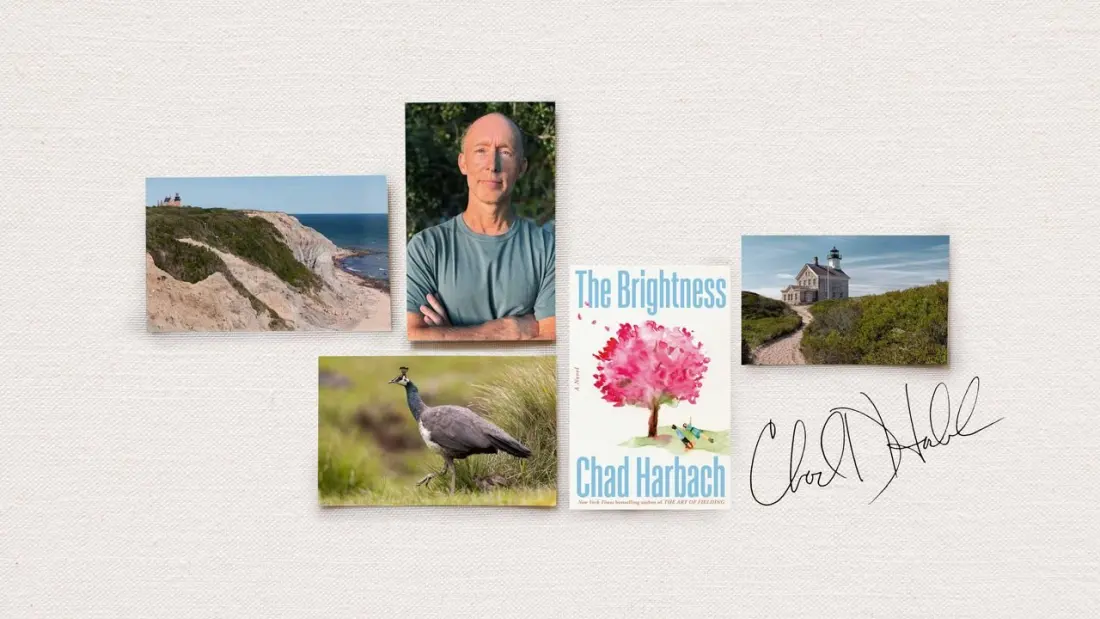
Novelist Chad Harbach (The Art of Fielding) has a new book out, The Brightness, and its dramatic core — a sprawling, chaotic wedding night that runs roughly 150 pages — is set on Block Island, Rhode Island. In a recent interview, Harbach explained that the island wasn't just a backdrop he invented from memory. To get it right, he organised a group holiday there in the summer of 2016, renting a big house with friends flying in from New York, Philadelphia, California and even Amsterdam. He called it the only trip he's ever taken purely for book research.
The idea was to soak the details back in: the layout of the downtown, the shape of the buildings, the marshlands, what it's like to bike out to the island's little airport. The wedding scene he was writing needed houses perched on stone cliffs on the island's eastern shore, an outdoor dance floor looking out over the beach and the moon on the water — essentially, he admitted, the destination wedding he'd love to attend.
One detail didn't make the final edit, despite friends lobbying hard: peahens. A small farm near the rental house sent its birds roosting in the trees next door, and they started squawking at 5 a.m. every morning, hours after the group had gone to bed. Harbach tried to work them into the plot but eventually cut them. His friends from the trip are apparently still aggrieved.
What the trip confirmed was that the island felt exactly as it had when he first visited at 19. Harbach describes it as rugged and green — rocky, tree-filled, surrounded by ocean, with a large protected nature preserve and a bike-centred way of getting around. He calls it the forgotten sibling of Nantucket and Martha's Vineyard: settled by Europeans in the mid-1600s, home to centuries-old cemeteries, and quiet enough that many Americans have never heard of it. That obscurity is part of the appeal — the island hasn't had to change much to accommodate tourism.
There's also the ferry ride itself. Harbach, who grew up on Lake Michigan, says the crossing out into open water — that feeling of vastness and scale — is part of the island's pull, and it fed directly into the mood of the novel.
For travellers, this is a nudge toward one of New England's less crowded summer islands. You get the same coastal drama as its famous neighbours — cliffs, moorland, beaches — with fewer people and a strong sense of place. It suits readers of Harbach's books who want to walk the setting, cyclists, and anyone after a low-key week of cooking, swimming and staying up late in a rented house. Just pack earplugs; the peahens are apparently still there.