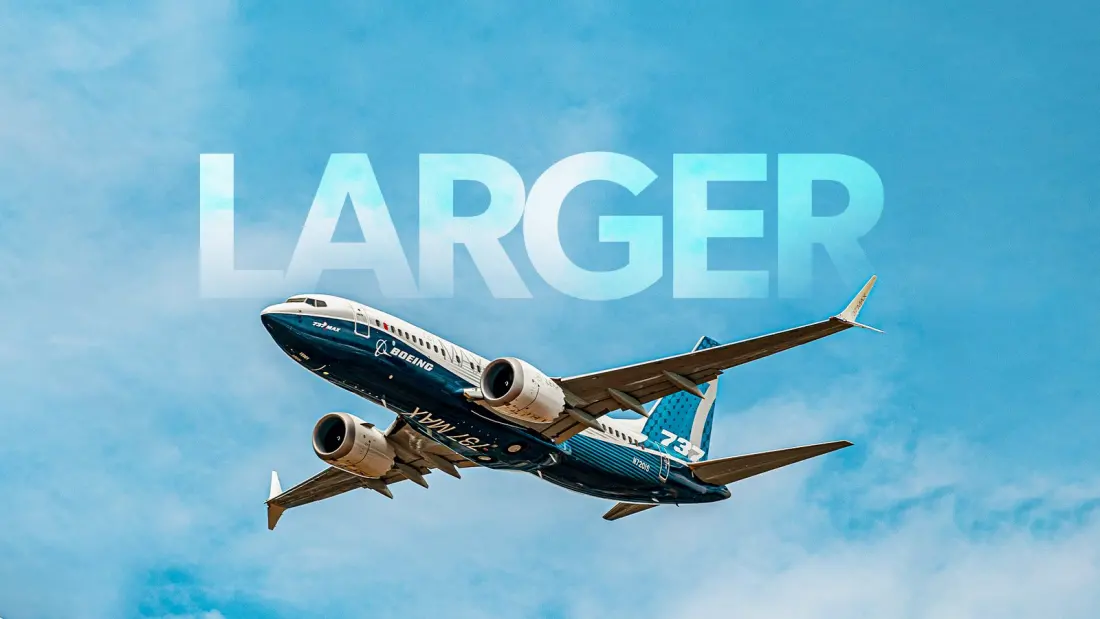
After years in limbo, Boeing's 737 MAX 7 earned its FAA airworthiness certificate on August 3, unlocking deliveries of the smallest - but not exactly little - member of the 737 MAX family. Roughly 30 finished jets are being pulled out of storage and fitted with engine anti-ice upgrades, with the first heading to Southwest Airlines ahead of a planned passenger debut in March 2027.
The interesting part is how different the final aircraft is from the one Boeing originally pitched. The MAX 7 was meant to be a like-for-one replacement for the 737-700, but heavier CFM LEAP-1B engines added drag without adding seats - and Southwest, which makes up roughly 90% of the MAX 7 order book with 237-300+ orders, threatened to defect to the Airbus A220. Boeing blinked, stretching the fuselage by 76 inches: 30 inches ahead of the wing box, 46 behind. The result is a jet six feet longer than the 737-700, with two-class seating up from 126-140 to 138-153 and single-class capacity jumping from 149 to 172. Wingspan barely changed, but maximum takeoff weight climbs by 22,500 pounds.
That extra girth pays off in range. Using the MAX 8's wings, fuel tanks and gear under a shorter fuselage gives the MAX 7 the longest range in the MAX line at around 3,850 nautical miles - roughly 400 more than the A220-300 Southwest nearly bought. For flyers, that means the MAX 7 can handle high-altitude airports, short runways, and long thin routes to Hawaii and the Caribbean that would force a heavier MAX 8 to bump bags or passengers.
The aircraft also fits neatly into Southwest's broader makeover. Having ended its 54-year open-seating policy in January, added bag fees and extra-legroom rows, and announced plans for airport lounges, the airline is courting business travellers - and the stretched cabin lets it carve out a premium section without adding a fourth flight attendant. Expect the MAX 7 on longer, higher-fare routes where its fuel efficiency offsets the weight-based landing fees that make short hops pricey, while the 175-seat MAX 8 keeps working the dense trunk routes between Dallas, Denver, Chicago Midway, Las Vegas and Baltimore.
Boeing isn't done yet, though. The 230-seat MAX 10 - wanted by United, Delta and WestJet to fight the A321neo - remains uncertified over software, landing gear and cockpit alerting issues, so the MAX saga's final chapter is still unwritten.
If you're flying Southwest from 2027 onward, the practical takeaway: shorter-haul schedules stay much as they are, but mid-size city pairs could see more frequency, and long-haul leisure routes to Hawaii gain a better-suited aircraft - plus a proper extra-legroom cabin if you're willing to pay for it.