
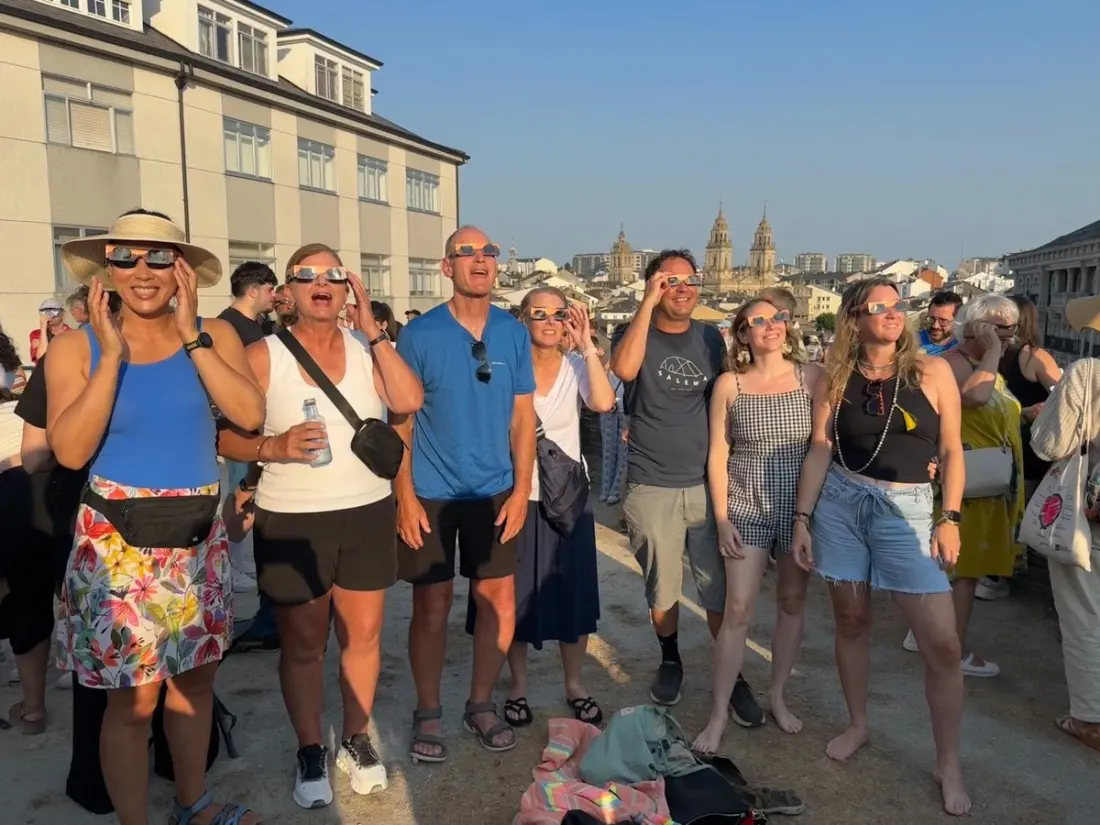
Picture finishing a nine-day multi-sport trek across northern Spain, climbing an ancient Roman wall, and watching the sun vanish overhead. That's exactly what happened on 12 August, when a small group of travellers reached Lugo's UNESCO-listed ramparts just as the moon fully covered the sun, plunging day into sudden dusk.
The trip was the brainchild of Spanish operator Primitivo Travel, working with US agency Root Adventures, and it flipped the usual pilgrimage formula on its head. Instead of walking the entire Camino Primitivo on foot, participants split the route three ways: three days hiking, three days in the saddle, and three days on mountain bikes, threading through the wild, rugged terrain of Galicia and Asturias.
The timing was engineered around the eclipse itself, with Lugo chosen as the viewing platform. As totality swept over the Roman walls, the group reacted the way crowds do when the sky goes dark in the middle of the afternoon: cheering, whistling, hugging, and in some cases crying. Breanne Kiefner, Root Adventures' CEO, admitted afterwards she had expected something beautiful but hadn't bargained for how emotional it would feel.
The journey wrapped up the traditional way, with arrival at the cathedral in Santiago de Compostela — but the story doesn't end there. Primitivo Travel has already set its sights on 2 August 2027, when southern Spain gets its own total solar eclipse. The operator is adapting its flagship Tears for Granada tour to route around the Sierra Nevada, blending active days outdoors with cultural visits and regional food, all timed to the eclipsed sky.
Why does this matter to travellers? Eclipses are rare, and each one turns a normal trip into a once-only event. Combining one with an active route like the Camino — or the mountains around Granada in 2027 — means accommodation and guides along the eclipse path will be in high demand well in advance. If the idea of watching totality from a mountain trail or a historic city wall appeals, the 2027 eclipse is the next realistic window for Spain, and tours built around it are already being shaped. Active travellers who like their astronomy with a physical challenge attached should start planning now, because the good spots and the good guides won't stay available for long.