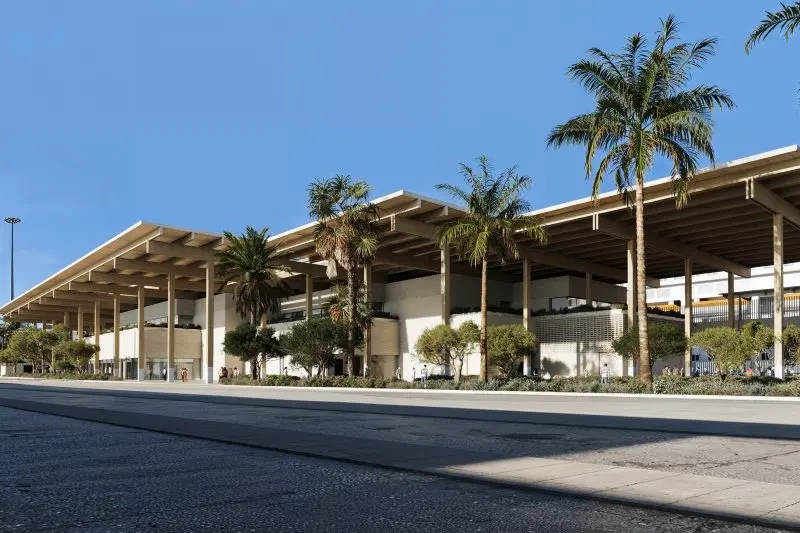
Barcelona is about to get another cruise terminal. The Port of Barcelona's Board of Directors has greenlit plans for Terminal C at Adossat Wharf, signing off on an investment of more than €50 million for the 11,253-square-metre facility. That's part of a larger €104.5 million project to overhaul the cruise infrastructure on the wharf, which handles most of the ships calling at one of Europe's busiest cruise ports.
Alongside the construction approval, the concession held by operator Creuers del Port de Barcelona has been extended to run until 2050, with an option to push it further to 2053. The operator is backed by Global Ports Holding, which runs Barcelona Cruise Port. Francesc Grau, GPH's regional director for the West Med and general manager of Barcelona Cruise Port, called the approval a significant milestone for the port and its relationship with the city.
The sustainability angle is what matters most here. Terminal C is designed with solar power generation and onshore power supply (OPS) infrastructure, meaning ships docked at the terminal can plug into the local electricity grid rather than idling their engines. That cuts emissions and noise while vessels are in port — something Barcelona's residents have pushed hard for, given how much of the city's waterfront is dominated by cruise traffic.
For travellers, the practical effect is a newer, more efficient arrival experience at one of the Mediterranean's key embarkation hubs. Barcelona is a starting or ending point for countless Western Mediterranean itineraries, so if you're cruising to or from the city in the coming years, chances are you'll pass through the upgraded Adossat Wharf facilities. Nothing changes immediately — construction and rollout will take time — but the long-term commitment to 2050 signals the city intends to keep cruising as a core part of its port, albeit in a cleaner form.
It's also worth watching how this fits into the broader picture: Barcelona has been under pressure to balance cruise tourism with residents' quality of life, and infrastructure that lets ships switch to shore power is one of the industry's standard answers. Whether you're sailing in or just passing through the port area, Terminal C is part of the city's attempt to make cruise visits less intrusive and more modern.