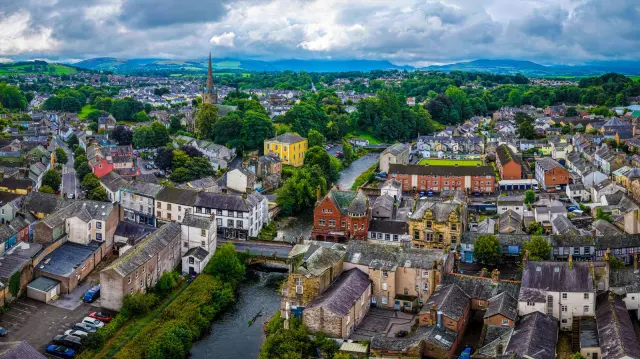
A 14th-century tower, a train station served by exactly two trains a day, and a national coastline four miles down the road — Chathill is one of those places that seems almost too tucked-away to be real. But this village of roughly 400 people in Northumberland, England's northernmost county, is a genuinely practical base for exploring one of England's most underrated stretches of coast.
The headline sight in the village itself is Preston Tower, a peel tower built in the 1390s as part of the defensive line against Scottish raids. It still looks much as it did in the 14th century, apart from one quirk: a large clock whose chimes ring out every quarter hour. You can tour the uninhabited tower and climb it, and the surrounding 600-acre estate doubles as a wildlife conservation area and working farmland. There's a campsite on the grounds too — tents, campers and motorhomes all welcome with a reservation — a good shout if you want countryside quiet without giving up a proper toilet. For something plusher, nearby Charlton Hall offers rooms in the hall itself, plus lakeside cabins, stable cottages, yurts and pet-friendly options.
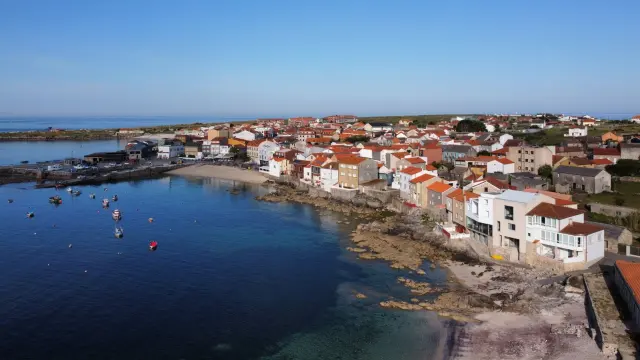
The real draw is what surrounds Chathill. The Northumberland Coast National Landscape, an Area of Outstanding Natural Beauty-style protected area covering 53 square miles from the Coquet Estuary up to Berwick-upon-Tweed, starts just four miles away. Don't mix it up with Northumberland National Park inland — this one is all beaches, rocky reefs, castles and archaeology, threaded together by the Northumberland Coast Path.
Two castles should anchor any itinerary. Bamburgh, seven miles from Chathill, is one of the largest inhabited castles in England and open to the public — you can wander the state rooms, the King's Hall, a windmill and active dig sites on the grounds. Dunstanburgh Castle, dating to 1313, is a ruined giant reached most easily from the fishing village of Craster, eight miles away, via the Dunstanburgh Castle Coastal section of the path. Beneath the ruins the Whin Sill — a volcanic rock formation that runs underground across northern England — surfaces as a dramatic east-facing crag, and it's a hotspot for nesting seabirds and migratory species. Self-guided tour tickets let you walk the ruins at your own pace.
Getting there is easier than the population figure suggests. Chathill sits on the East Coast Main Line and its historic unstaffed station still runs, though only two of the line's 140 daily trains stop — a roughly one-hour ride from Newcastle upon Tyne. Driving from Edinburgh Airport takes about two hours. Between those two cities, Chathill makes a low-key alternative to the usual Northumberland stops, especially for walkers, birders and anyone who likes their castles with more sheep than crowds.
Story credited to Islands.