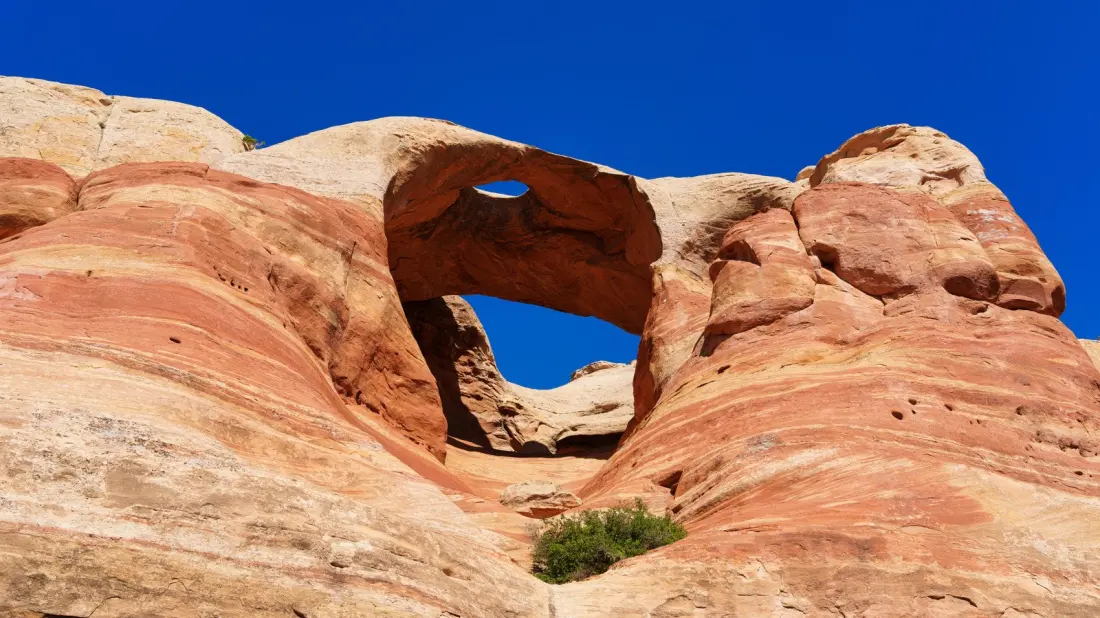
Tucked into the far western corner of Colorado, about a run from Grand Junction, Rattlesnake Canyon hides the world's second-largest concentration of natural rock arches — beaten only by Utah's Arches National Park. It sits inside the McInnis Canyons National Conservation Area on BLM land, along the Colorado River far upstream from the Grand Canyon, and it sees a fraction of the visitors. The reason is simple: getting there takes effort.
There are a few ways in. The no-special-equipment option is a 15-mile round-trip hike from Pollock Bench Trailhead, doable in any sedan's parking situation but a serious, shade-less day out best saved for cooler months. Around mile seven you reach Rattlesnake Arch, the biggest of the bunch at 120 feet tall, with Cedar Tree Arch marking the turnaround point. Drivers with a high-clearance 4x4 can use the Upper Trailhead to shrink the walk to about five miles round-trip — and the lower trail is the one to pick, since it passes the most arches. Connecting the two trails into a loop requires an off-trail scramble through Cedar Tree Arch that at least one AllTrails reviewer described as terrifying, so know your limits.
If driving rough tracks isn't your thing, the river offers a third route. The Ruby-Horsethief Canyon stretch of the Colorado runs 25 miles of mostly gentle Class I and II water between Loma, Colorado and Westwater, Utah. Camp at the mouth of Rattlesnake Canyon and you can hike 4.4 miles round-trip up to the arches. Do it yourself with a shuttle, or go guided — either way overnight campsites need permits, and rangers expect to see a fire pan, a sealed portable toilet (river folk call it a "groover") and safety gear. Rimrock Adventures in nearby Fruita, ten minutes from the Loma boat ramp, rents the kit and runs seasonal shuttles.
Prefer someone else to handle everything? Grand Junction Adventures runs a jeep-and-hike tour that cuts the walking to 3.2 miles for $325 per person when booked as a couple — roughly the cost of a Grand Canyon helicopter flight, with a far better dinner-party story.
For anyone who has bounced off the Grand Canyon's permit lotteries, summer heat or trailhead traffic jams, this is the quieter alternative. It suits fit hikers with a full day, river campers after a mellow multi-day float, or 4x4 owners who like their scenery earned. If you want a gentler taste of the same wilderness, the Trail Through Time in McInnis Canyons is a flat 1.5-mile wander with none of the logistics. Come in spring or autumn, pack far more water than seems reasonable, and enjoy one of the American Southwest's best sights before everyone else finds it.