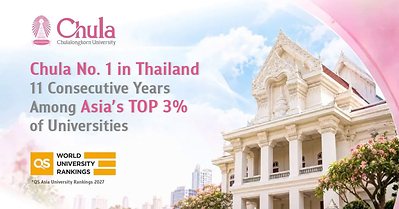
Chulalongkorn University has done it again. The Bangkok institution has been named Thailand's number one university for the eleventh year in a row, according to the QS Asia University Rankings 2027, released on 3 November 2026. This year's edition assessed 1,722 universities across Asia, and Chula's overall score places it in the top 3% of higher education institutions on the continent.
Two numbers stand out from the results. Chulalongkorn scored 99.9 out of 100 for Academic Reputation, an extraordinary figure that signals how highly scholars worldwide regard the university's teaching and research. It also hit 99.3 for International Research Network, reflecting deep collaboration with institutions well beyond Thailand's borders. Both scores rank among the strongest in the region.
The QS Asia rankings are no single-metric exercise. Eleven indicators feed into the final score, with Academic Reputation carrying the heaviest weight at 30%, followed by Employer Reputation at 20%. Faculty-to-student ratio, international research network and citations per paper each count for 10%, while staff with PhDs, papers per faculty, the ratio of international faculty and students, and inbound and outbound exchange flows make up the remainder. That mix means a high placement reflects not just research output but employability of graduates and genuine international exchange activity — useful context for anyone weighing a study abroad term or postgraduate degree in Southeast Asia.
For the university itself, the streak reinforces a brand. Chulalongkorn, founded in 1917 and named after King Chulalongkorn (Rama V), is Thailand's oldest and most selective university, sitting right in the heart of Bangkok near the Siam shopping district. Its campus is a familiar landmark for travellers too — the grounds are open to the public, home to the Museum of Human Body, rotating art exhibitions and a canal-side weekend market that draws locals and visitors alike.
Why should a traveller care? If you're planning a study exchange, a gap-year language course or a graduate programme in Asia, these rankings are the kind of independent yardstick worth checking — they weigh employer reputation and international student numbers, which speak directly to the student experience. And if you're simply passing through Bangkok, the university's central location and open campus make it an easy, free half-day detour between the malls of Siam and the older quarters of the city. Either way, an institution ranked in Asia's top 3% for over a decade is a fair signal that the city hosting it punches well above its weight in education too. — Laotian Times