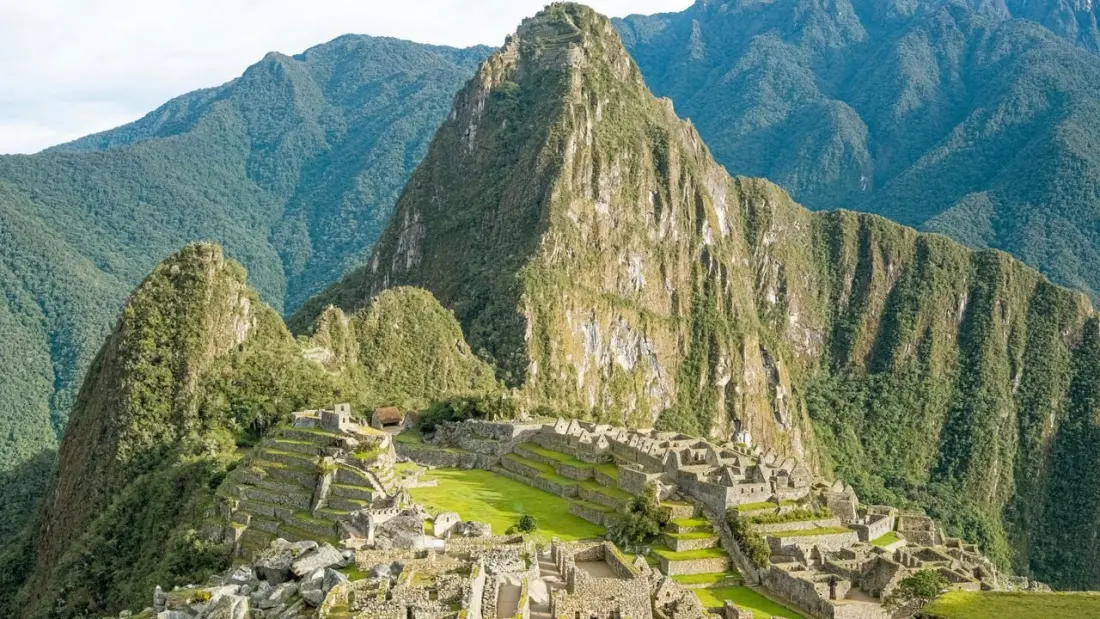
Machu Picchu sits on a forested ridge above the Urubamba River, where the Andes tumble toward the Amazon basin — and a single cloud bank can swallow the whole view. So when you go matters almost as much as how you book.
For a first visit, the sweet spots are May and September. Both flank the June-to-August crush, with generally dry walking weather. September has a practical edge: seasonal routes like the Sun Gate and Inca Bridge typically open then, while they're often still closed in May — check each year's calendar before committing. April is the wildcard. Slopes are lush green after the rains, crowds are thin, and showers are usually manageable. November to March is the budget play, with cheaper flights and hotels. Rain falls mostly in the afternoons and evenings rather than all day, and February is especially quiet because the Inca Trail closes for maintenance. One travel planner quoted in the source calls it her favourite time, pairing misty mornings at the ruins with Peru's coastal summer in Lima or Máncora.
Peak season is real: daily entry is capped (4,500 on ordinary dates in 2026, 5,600 on specified days), split by route and entry hour, so your chosen slot can sell out even when the site has room. Book sought-after routes about six months ahead for high season, three for low. Huayna Picchu permits need the same lead times.
Plan four or five nights in the region, starting in the Sacred Valley — it eases the altitude transition from Cusco (around 11,150 feet) and warms you up with Inca towns and terraces. Ollantaytambo, at about 9,160 feet, is the train boarding point and worth a stop itself; Aguas Calientes, the town at the base, is where you sleep the night before for an early start.
Tickets need attention. Entry is bought separately from trains via the Ministry of Culture's Tu Boleto portal: pick your route first, then your hour, and match every visitor's name to their ID — no changes allowed after purchase. Since September 2026, checkout is paid directly with a 15-minute window, so have documents and payment ready. A 2026 rule also puts trail arrivals on a Circuit 3-B ticket, which matters if you also want the classic Circuit 2 walk through the urban sector. Tickets can't be switched at the gate, so choose carefully: Circuit 2 for the standard visit, Circuit 1 for the upper-terrace panorama, Circuit 3-A for the Waynapicchu climb. If Circuit 2 sells out, combining Circuits 1 and 3 works well. Up to 1,000 same-day fallback tickets are sold in person in Aguas Calientes for next-day entry — budget a night in town if you're relying on that.
Travel time needs padding too: leave about an hour for the shuttle queue from Machu Picchu Pueblo before your slot, or two if walking up. A guide is recommended and can be arranged through your hotel or at the entrance.
Anyone planning a first trip — especially for 2027, when entry sales dates and caps are still unannounced — should read this before buying trains or rooms. The order of operations is route, ticket, then train, not the other way around.