November is when Phú Quốc shows off. The seas calm down, the skies clear, and Vietnam's largest island turns into a showcase of the country's culture — timed nicely with Vietnam Culture Day on 24 November, when the island leans into poetry, food and music.
The cultural route starts inland. Hộ Quốc Pagoda overlooks the island's southwestern waters as a place of prayer for national peace, while a shrine to Emperor Gia Long sits by the Giếng Ngự (Royal Well) at Mũi Ông Đội. The Cội Nguồn Museum holds more than 3,300 artefacts tracing island history, and the working heritage is just as interesting: traditional fish sauce houses where anchovies ferment in huge wooden vats, plus the pepper gardens that have supported island families for generations.
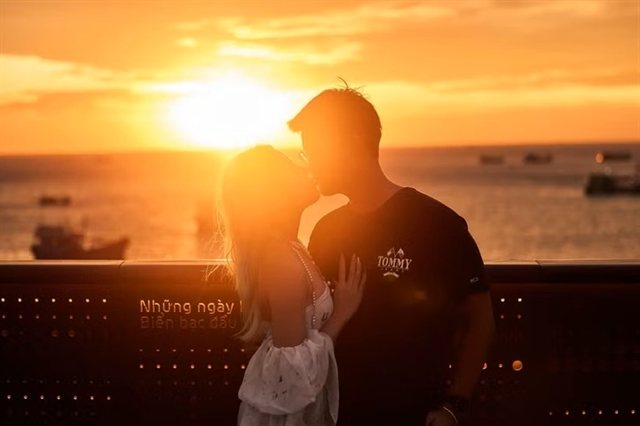
Then head south to Sunset Town, where modern development carries a surprisingly literary streak. Kiss Bridge, designed by architect Marco Casamonti with two arms reaching toward each other over the water, has nearly 400 inscribed literary passages, proverbs and love poems along its walkways — in 22 languages. Nearby, the 79-metre Nam Phương Tower at Rixos Phú Quốc Vietnam is shaped like a khăn vành dây, the traditional headdress worn by Empress Nam Phương, translating Huế's imperial elegance into resort architecture.
Getting to Hòn Thơm means riding the world's longest three-rope cable car across the sea — an attraction in itself. Once there, food does the cultural heavy lifting. Taste of Vietnam serves the country's three regions in one stop: Phú Quốc's signature bún quậy noodles, golden bánh xèo pancakes, and crisp mini bánh khọt. Back in Sunset Town, Sun Bavaria GastroPub — billed as the world's largest seaside restaurant — runs a buffet of nearly 100 Asian and European dishes, with a Madam Việt Nam station dishing up fish noodle soup with mustard greens, fried spring rolls and roast pork bánh mì.
Evenings are the headline act. Symphony of the Sea, now in its third season, uses 56,000 square metres of open water as its stage, mixing jet ski and flyboard stunts, lasers and fireworks with distinctly Vietnamese touches — the lullaby Mẹ Yêu Con and the whir of kite flutes drifting over the show. Kiss of the Sea, the other major night performance, is built around the five elements philosophy, with Phú Quốc cast as Earth, the Pearl Island. Its characters include Mok, a young islander; Khee, a Phú Quốc Ridgeback dog; and a rare dugong, with traditional shadow puppetry woven into the design.
For travellers, the appeal is that this isn't a museum exercise. The culture arrives through a night show you'd want to see anyway, a dinner that doubles as a tour of Vietnamese cooking, and a cable car ride with serious views. If you're heading to Phú Quốc between November and March, build a day around southern Phú Quốc's Sunset Town and Hòn Thơm — and book a night show in advance, as seats fill fast in peak season.