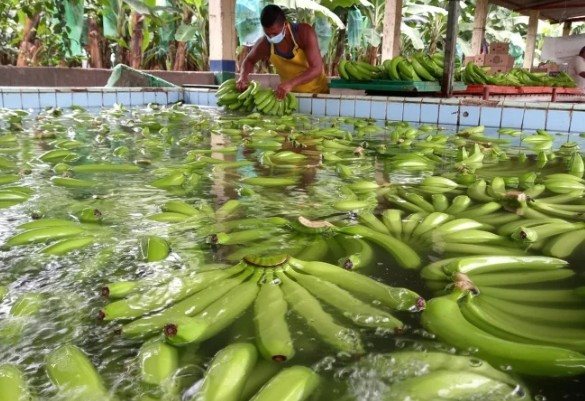
Ecuador isn't just good at growing bananas — it dominates the global trade outright. According to World Bank figures, the country exported $4.3 billion worth of bananas in 2025, more than double second-place Philippines' $1.7 billion. Colombia follows at $1.5 billion, then Costa Rica at $1.1 billion, with the Netherlands, Belgium and the United States further down the list.
The scale of the industry is enormous. Bananas are Ecuador's largest single employer, with roughly 365,000 people working across the fields, packing plants and wider supply chain. Production is concentrated in Guayas Province, with El Oro, Manabí and Esmeraldas also turning out large crops. Most of the fruit leaves the country through the ports of Guayaquil and Machala — the latter styling itself the banana capital of the world.
There's a cloud on the horizon, though. Ecuador's Agriculture Ministry has warned that El Niño conditions threaten the 2026 and 2027 harvests. Heavy rains are already flooding many plantations, and the main worry is fungal infection taking hold in waterlogged fields. The ministry is monitoring the situation closely, though it notes one point in the crop's favour: banana plants can tolerate standing water for long stretches without damage, since the fruit grows high on the plant, well above the mud.
For visitors, this is more than an export statistic. Travel along Ecuador's southwestern coast and bananas are everywhere — plantations lining the roads near Guayaquil, roadside stalls selling fruit at prices that make European supermarkets look absurd, and a whole regional food culture built around the crop. Machala even hosts an annual banana fair celebrating the industry. Plantation visits and agro-tours in Guayas and El Oro offer a behind-the-scenes look at how the world's most-traded fruit actually gets grown, cut, washed and packed.
If El Niño does hit harvests in the next couple of years, travellers may notice it indirectly: fewer workers in the fields, tighter supply, and tougher economic conditions in towns that depend on the crop. That makes the current moment a good one to see the industry at full strength.
Who's this for? Food-focused travellers, anyone curious about where their groceries come from, and visitors combining Ecuador's coast with the nearby highlands. The banana belt pairs naturally with a Guayaquil stop, and it's an easy detour for anyone heading towards the southern coast beaches around Salinas or Machala's mangrove country.