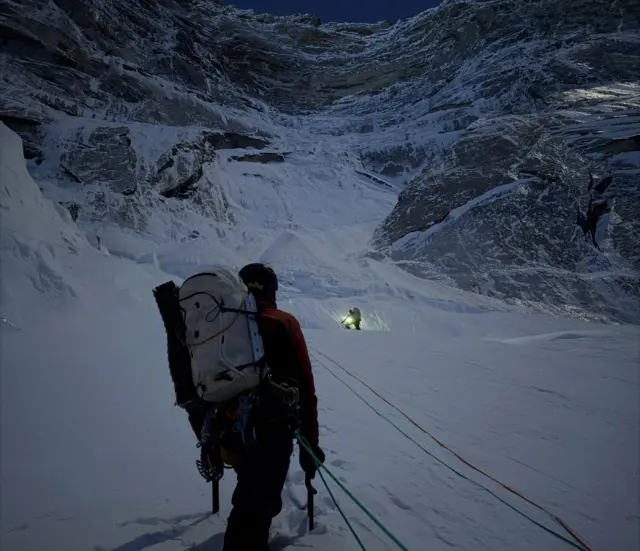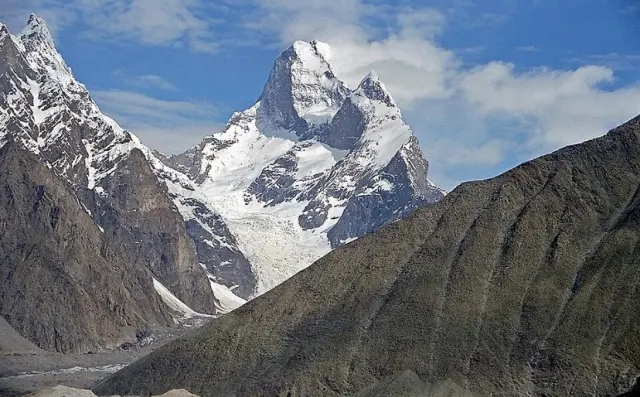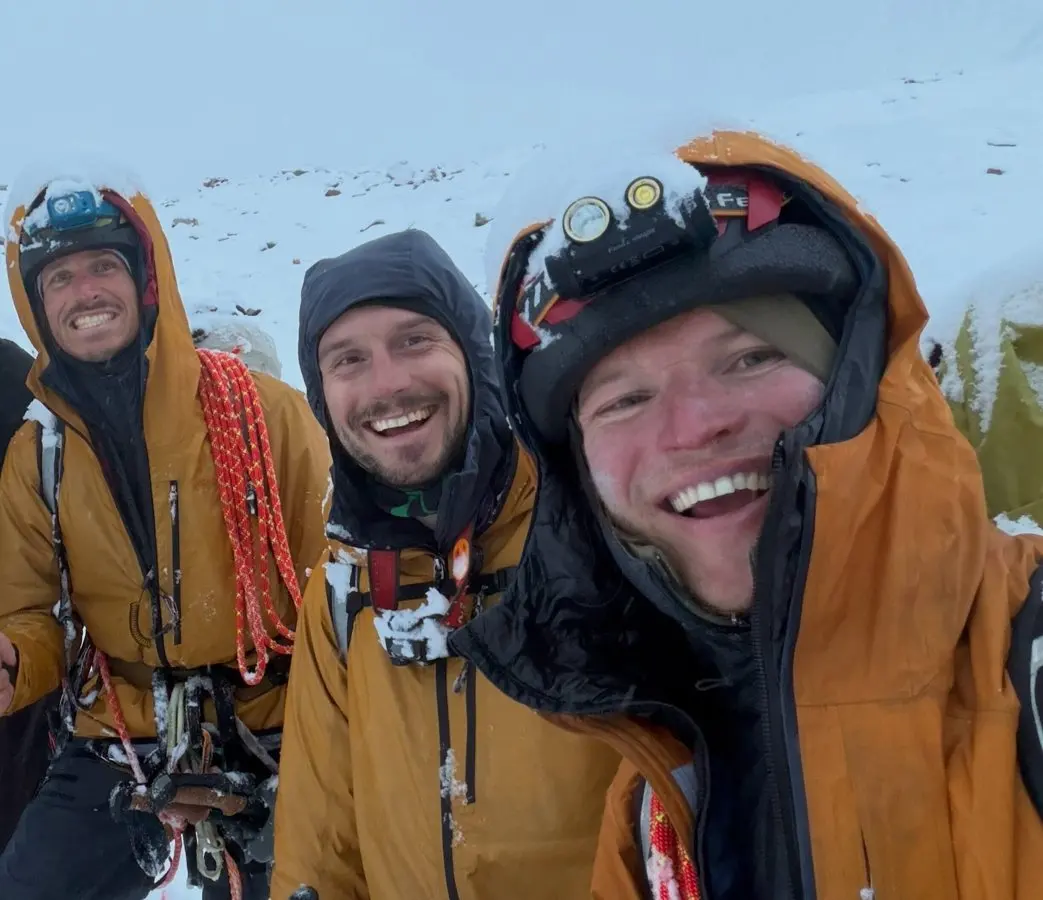
A 1,800-metre wall of ice and gneiss in Pakistan's Karakoram has finally been climbed. Americans Dane Steadman and Cody Winckler, plus Canadian Grant Stewart, made the first ascent of the north face of Sosbun Brakk (6,414m) last month — a peak previously summited only once, by a Japanese team in 1981, and only from a much gentler side.
The route, graded up to M7 and WI5, pushed the trio to their limits. Steadman, who won a Piolet d'Or for a 2024 first ascent of nearby Yashkuk Sar with Winckler, says Sosbun Brakk was far tougher. That earlier climb went almost perfectly: a great weather window, a first-try success, a clean descent. This time it was the opposite — lost luggage, sickness during acclimatisation, repeated storms, brutal climbing and route-finding, and a descent through dreadful weather. He admits the team often believed they would fail, and were surprised to succeed.
The climb nearly didn't happen at all. Their planned central line, which looked like the only feasible route from below, turned out to be threatened by a hanging serac over the lower half. A first attempt up a harder left-hand variant stalled after a two-hour lead on a deceptively difficult pitch, with no bivy spot and dusk approaching, just 300 metres up the wall. Retreating, they spotted a hidden east-facing gash on the right side of the face — invisible from every previous vantage point — and decided it was their best shot. After three days of rest, they committed.
They topped out on day five at 4 pm, with short autumn days and an unknown descent still ahead. The way down involved rappelling the northwest spur, then a straight-down descent through icier terrain, diagonalling left to dodge serac hazard.
One detail stands out for anyone watching high-altitude mountaineering: the team climbed in early October, two months after the usual July-August Karakoram season. Steadman argues this is deliberate, climate-aware planning. The Karakoram is still monsoonal, and locals report autumn weather is often more stable than summer. Colder temperatures also reduce rockfall on a low, buttress-free face and improve the odds of good ice. His advice to other expeditions: September and October deserve serious consideration — though this year was snowier than normal.
For travellers, the story is a window into Pakistan's Karakoram, one of the world's great mountain arenas, where even 6,000-metre peaks can hold unclimbed faces 44 years after their first ascent. You don't need to swing ice tools to appreciate it — the region's trekking routes, base camps and village culture around Hushe and the Baltoro make it accessible to fit hikers. For climbers, the takeaway is clear: the season is shifting, and autumn may be the new smart window for certain Karakoram objectives.