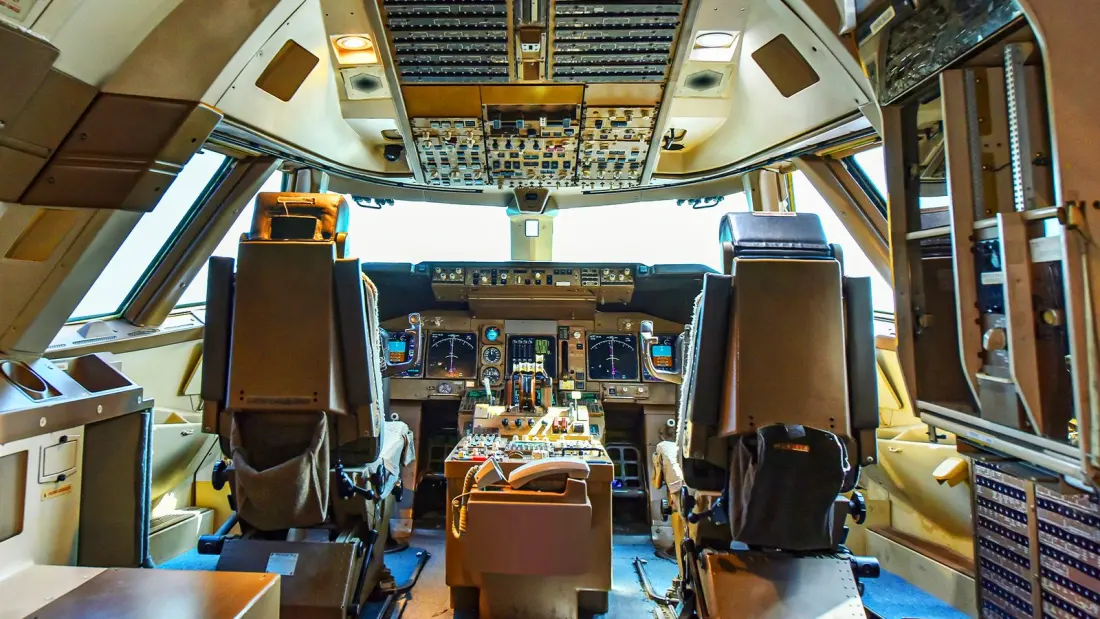
Every reinforced cockpit door you walk past when boarding a plane in the US exists because of one day: 11 September 2001. Before then, flight deck doors were often little more than thin aluminium. Afterwards, the FAA required doors that can't be forced open and can withstand small-arms fire — steel frames, Kevlar composites, and certification tests including a 100 lb pendulum strike. Casual cockpit visits by passengers and crew vanished overnight, and pilots now lock themselves in from the inside.
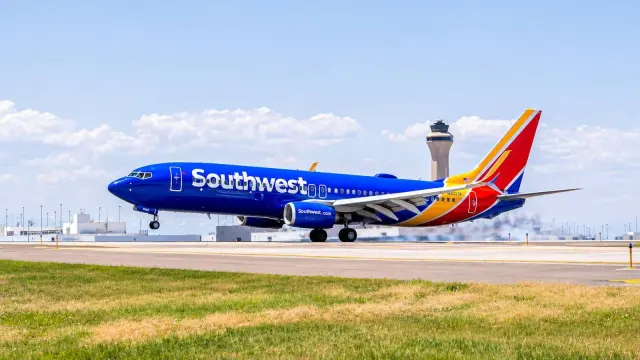
But the reinforced door created its own weak point. When a pilot steps out to use the lavatory or swap shifts on a long-haul flight, the door has to open — and for those few seconds, there's no barrier at all between the cabin and the flight deck. Airlines knew this. Some, including JetBlue and Delta, fitted lightweight wire-mesh gates as a stopgap. Others didn't. Southwest famously went first: the first scheduled passenger flight under the FAA's new secondary barrier mandate was a Southwest Boeing 737 MAX 8 from Phoenix to Denver on 29 August 2025, on a freshly delivered aircraft.
The requirement is now law. The FAA Reauthorization Act of 2024 — passed as the Saracini Aviation Safety Act, championed for more than two decades by Ellen Saracini, widow of United captain Victor Saracini, who died when his hijacked flight was flown into the World Trade Center — mandates a secondary barrier on commercial aircraft. In practice that's a retractable gate or mesh screen in the forward galley, deployed whenever the cockpit door opens. Think of it like a zoo enclosure: there's always at least one barrier in place.
Not everyone moved quickly. Airlines for America, the industry trade group, pushed for a two-year delay citing certification and training issues; the FAA granted one year instead, drawing sharp criticism from the pilots' union ALPA, which represents around 80,000 pilots in the US and Canada. Before the law, United had declined to install barriers proactively, saying that other security layers had evolved since 2001 and denying that cost was the deciding factor. Full implementation is expected to take five to six years, so plenty of aircraft will fly with a single door for a while yet.
Why should a traveller care? Because it explains something you'll increasingly see at the front of the cabin — and because it closes one of the last known gaps in flight deck security. Crews on aircraft without barriers had improvised, sometimes parking a catering trolley across the aisle to buy seconds. Standardised, built-in gates replace that improvisation. If you're flying with Southwest, Delta, JetBlue or on newer deliveries from any US carrier, you're increasingly likely to fly on an aircraft with the second barrier already fitted.
Full story via Simple Flying.