Colombia's wild bees just got a much better headcount. A sweeping scientific review, led by researchers from Penn State, has confirmed 738 bee species in the country — well above previous estimates of 466 to 604. The team analysed nearly 88,000 records and examined over 62,000 preserved specimens, adding 246 species never before recorded nationally and striking 109 from old lists that lacked solid evidence. Around 300 more species may still be undocumented, with models suggesting the true total could reach roughly 1,035. That would put Colombia fourth in South America, behind only Brazil, Argentina and Peru.
The numbers tell a story about where to look, too. The Andean region leads with 483 species, followed by Orinoquia (280), the Amazon (265), the Caribbean (222) and the Pacific (169). Antioquia tops the departmental charts with 269 recorded species, ahead of Meta, Cundinamarca and Valle del Cauca — though the researchers caution that these hotspots partly reflect where universities and expeditions happen, not necessarily where diversity is richest. Little-studied dry zones like La Guajira and Arauca each have fewer than 35 documented species and could hold far more.
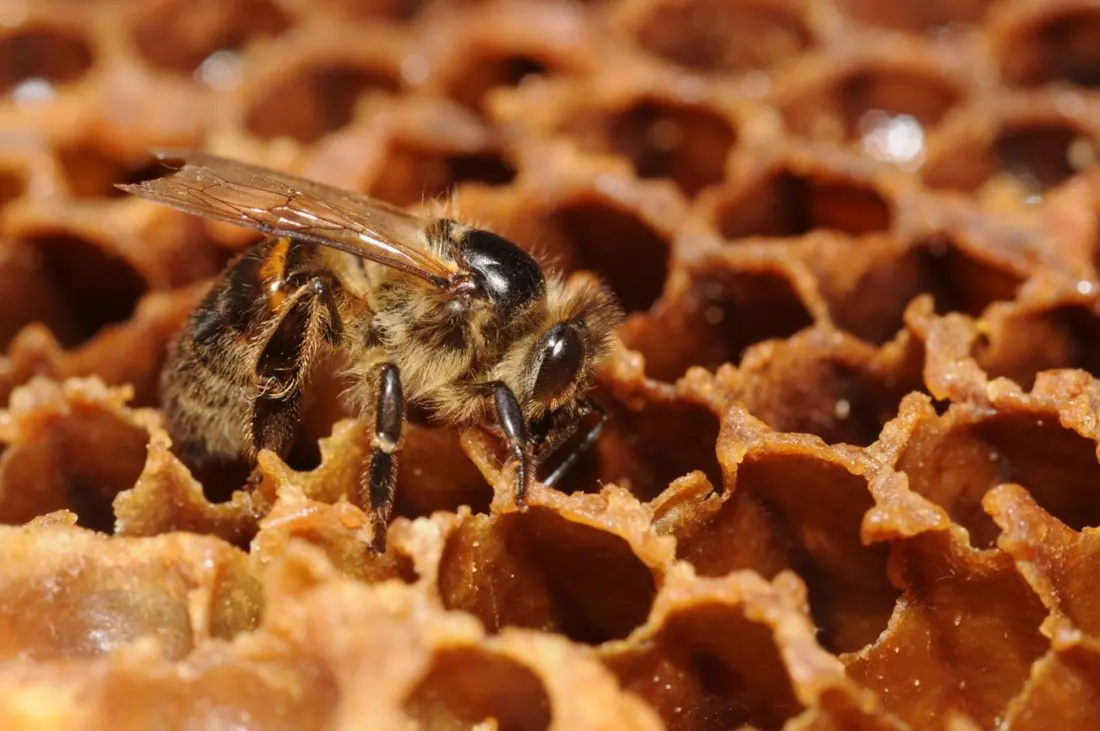
For travellers, the most interesting finding is cultural as much as ecological. Most Colombian bees are nothing like honeybee hives: 57% of recorded species are solitary, and 57% nest above ground in trunks, branches and tree cavities — the opposite of the underground nesting pattern common elsewhere in the world. Colombia is also home to stingless native bees, and in Putumayo, rural communities practise meliponiculture, keeping at least 35 native species for honey and other products. It's a living tradition blending Indigenous knowledge with small-scale rural enterprise, and it's one of the more distinctive encounters available to visitors exploring the country's southern Amazon foothills.
Why should a holidaymaker care about an insect inventory? Because pollinators underpin the landscapes people actually come to see — cloud forests bursting with flowers, and the farms producing avocados, strawberries, blackberries, oranges and mangoes that fill Colombian markets. A country with 140 bee species found nowhere else on Earth (about 19% of its total) is a country whose ecosystems are genuinely one-of-a-kind. The study also flagged Osmia azteca, found in Antioquia's Chocó biogeographic region, as the first record of its genus anywhere in South America.
The bigger takeaway for anyone planning a nature-focused trip: Colombia's biodiversity goes well beyond its famous birds and orchids. Its insect life is a huge, still-mapped-in-progress part of what makes places like the Andes, the Chocó and the Amazonian departments so rewarding to explore — and conservation of these pollinators directly shapes the health of the trails, forests and farms you'll walk through.
Story via Colombia One.