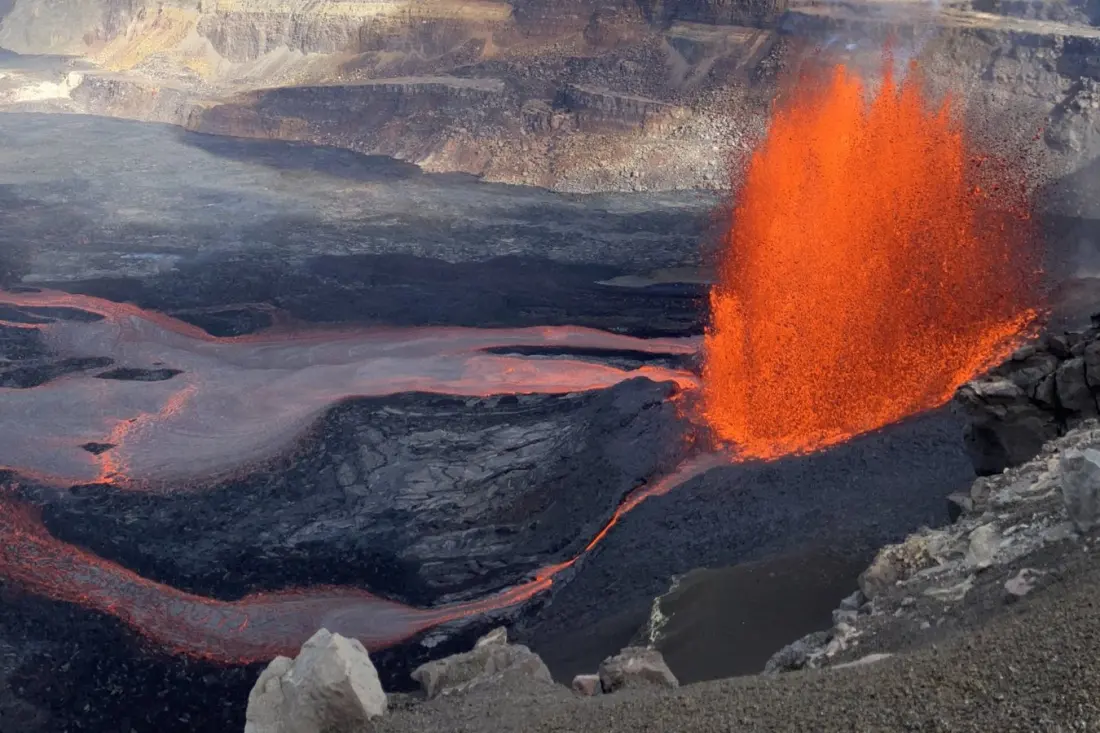
Hawaii's most famous volcano is showing fresh signs of life. On November 2, lava began spilling from a vent inside Kilauea's summit crater, and by the next morning the US Geological Survey had logged 42 separate overflows. Scientists at the Hawaiian Volcano Observatory now expect this buildup could lead to episode 56 of the lava-fountaining spectacle that has captivated visitors since late 2024, possibly starting by November 8.
Kilauea has been erupting episodically inside its Halemaʻumaʻu crater since December 23, 2024, cycling between dramatic fountaining events and quieter pauses of roughly two weeks or more. The last major show, episode 55, fired a lava fountain roughly 220 metres (720 feet) into the air on October 17. The current overflows are far more modest — small dome-shaped fountains of about 6 to 7 metres — but the pattern matches previous episodes, where preliminary overflows preceded the main event.
The USGS has responded by raising Kilauea's alert level from Advisory to Watch and its aviation colour code from Yellow to Orange. Several indicators back up the increased vigilance: seismic tremor is up, tiltmeters show pressure shifting beneath the summit, and sulfur dioxide emissions jumped from about 2,200 to 4,000 metric tons per day in a single day. That gas can form vog, a hazy pollution that irritates lungs and reduces air quality downwind. Notably, activity remains confined to the summit — both rift zones running down the volcano's flanks are quiet, which lowers (but doesn't eliminate) the risk of a repeat of 2018, when lava reached neighbourhoods and destroyed more than 700 structures.
For travellers, the key fact is that the current eruption is contained within the summit crater. That means visitors to Hawaii Volcanoes National Park may still be able to view a genuinely rare spectacle: glowing lava fountains and an illuminated plume at night, safely viewed from designated overlooks. Episode timings are unpredictable, so anyone hoping to catch fountaining should check the USGS Hawaiian Volcano Observatory's daily updates before planning a visit, and stay flexible — pauses have lasted two weeks or longer between episodes.
There's also a science angle worth appreciating. The observatory has analysed 178 lava samples from the first 39 episodes, finding the eruption is fed by a magma chamber only 1 to 2 kilometres beneath the crater, with older 2020-2023 lava lake material still molten and occasionally mixing into new eruptions. The crater floor you'll walk near is geologically brand new.
Kilauea's history adds perspective: the 1790 summit explosion killed several hundred people and remains the deadliest known eruption on US soil, and the 1983-2018 Puʻuʻōʻō eruption covered 35.5 square kilometres in lava. Today's activity is far tamer, but the volcano demands respect. If vog advisories are issued, people with respiratory conditions should limit exposure. Watch park closures, follow ranger guidance, and treat any glowing horizon after dark as a sight to enjoy from a distance — not one to chase.