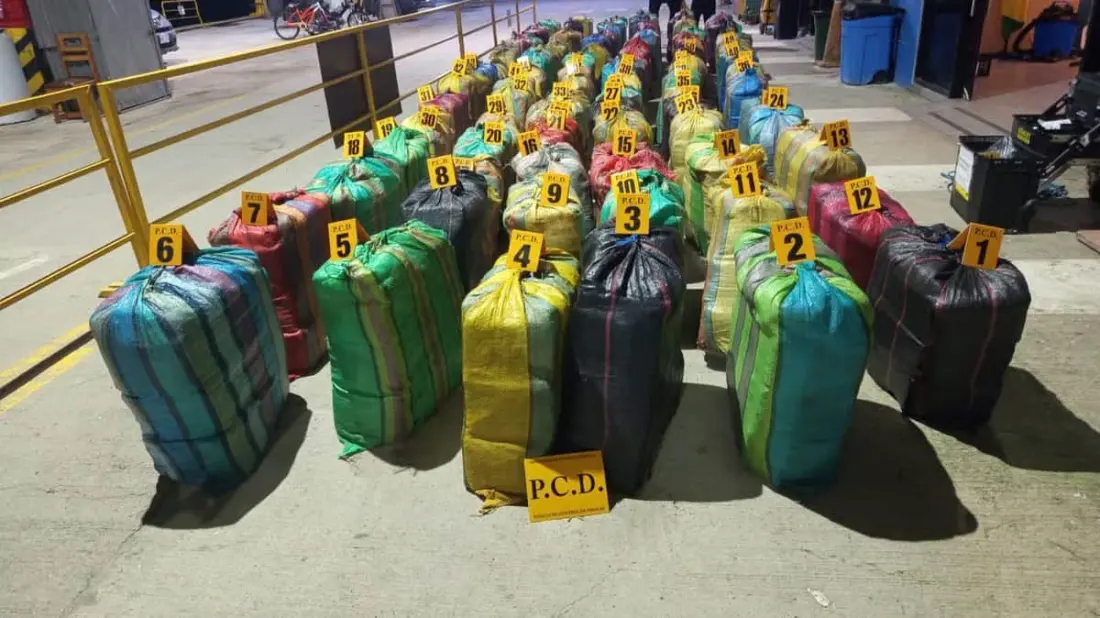
Costa Rica's Coast Guard has pulled more than 2.6 metric tons of marijuana out of the waters off its southern Pacific coast, in an operation run jointly with the US Drug Enforcement Administration. The stop happened roughly 52 nautical miles (about 96 km) southeast of Punta Burica, the quiet peninsula where Costa Rica meets Panama.
Here's what went down: GOPES, the Coast Guard's special operations unit, intercepted a 38-foot go-fast boat carrying 2,648 packages of marijuana, each weighing roughly a kilogram. Two Ecuadorian crew members were detained — a 25-year-old alleged captain and a 49-year-old passenger — and handed over to the Public Prosecutor's Office. Agents also seized 11 drums of fuel. The operation started Tuesday and wrapped up on Wednesday, Nov. 4, with air and intelligence support from the US Joint Interagency Task Force South and Panama's SENAN, plus Costa Rica's own drug police and intelligence units.
The boat was towed to Golfito, a port town in Puntarenas province, where prosecutors inspected the cargo. Investigators are still working out where the shipment originated and where it was headed, and officials haven't said whether it's tied to any named cartel or other cases.
This wasn't a one-off. The stretch of coast between the Osa Peninsula and the Panamanian border has become one of the busiest smuggling corridors in the region, sitting directly on the route boats take north from South America. Just last month, a US surveillance plane helped Costa Rican authorities seize 1.5 tons of cocaine off Osa, a short distance up the same coastline.
Cooperation with US agencies is now standard practice here. A joint maritime patrol agreement has been in place since 1999, US Coast Guard vessels were cleared to join 2026 anti-drug operations, and in September a US military plane flew 45 tons of seized drugs out of the country. Cocaine seizures are up nearly 50% this year.
Why should a traveller care? Punta Burica, Golfito and the Osa Peninsula are exactly the kind of low-key, off-the-beaten-path corners that draw surfers, anglers and wildlife lovers — this coastline borders Corcovado National Park, one of Central America's richest wilderness areas. The seizures are happening well offshore, and tourism along this coast continues largely unaffected, but the story is a useful reminder that these waters are patrolled actively and that remote border zones can see occasional enforcement drama. If you're heading into far southern Costa Rica, keep an eye on local advisories, and know that the heavy Coast Guard presence is, if anything, reassuring rather than worrying for visitors.
For most travellers, the takeaway is simple: the Osa and Punta Burica region remains open for business, and the increased maritime surveillance is part of everyday life on this coast rather than a reason to change plans.
Story reported by The Tico Times.