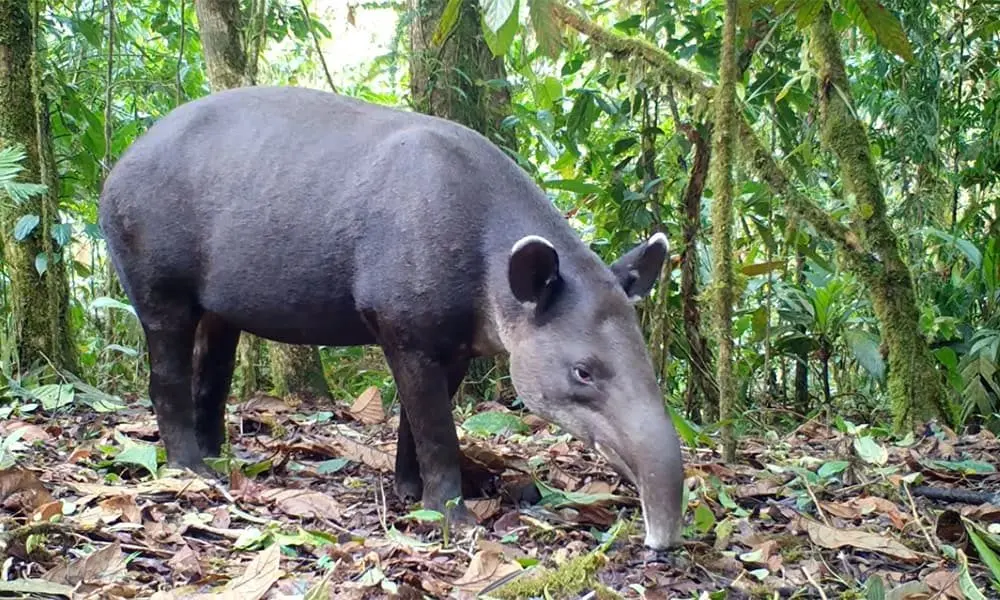
A field team in northern Costa Rica got lucky last month. On October 23, specialists from FUNDECOR (Foundation for the Development of the Central Volcanic Mountain Range) filmed a family of three Baird's tapirs — a male, a female and a young calf — moving through forest patches near Pital de San Carlos. What makes the footage remarkable isn't just the species, which is endangered, but the setup: tapirs are solitary, shy and mostly nocturnal, so seeing three together, in daylight, outside dense forest cover is highly unusual.
Baird's tapirs, known locally as dantas, are the largest native land mammals in Central America. Adults weigh several hundred pounds and sport a distinctive elongated snout for gathering leaves and fruit. Females carry a calf for roughly 13 months, and the young stay with their mother for at least a year — slow reproduction that makes every confirmed calf a small victory for the species.
Conservationists care about more than the cute factor. Tapirs are often called the gardeners of the forest: they swallow fruit, wander long distances and deposit seeds across their range, helping native trees spread. Their bulldozing movement through thick vegetation also opens gaps that let sunlight reach the forest floor, aiding regeneration. Protecting them means protecting the whole forest system.
The Pital sighting also tells a story about habitat. The three animals were moving between separate fragments of forest, not one continuous block — a live demonstration of what ecologists call connectivity. In agricultural zones like San Carlos, private forest patches often form the only corridors between bigger protected areas. Costa Rica's Payments for Environmental Services program pays landowners to keep forest standing, and organisations like FUNDECOR work with farmers to keep those links alive. One sighting doesn't mean the local population is recovering, but it does show the corridors are being used.
For travellers, the takeaway is that Costa Rica's wildlife drama isn't confined to the famous parks. Tapirs still survive in Corcovado National Park on the Osa Peninsula — one of the best places in the country to realistically hope for one — but the northern lowlands around San Carlos hold their own quiet populations. If you do encounter a tapir, keep your distance and never feed or approach it; they're powerful animals that want nothing to do with people.
Why it matters for your trip: if seeing elusive megafauna is on your list, timing and patience count. Corcovado's guided hikes offer the best odds, while the San Carlos region rewards travellers who like their nature off the beaten path — think camera-trap research projects, rural lodges and a chance to support the exact kind of forest-friendly farming that lets a tapir family cross the landscape unseen.