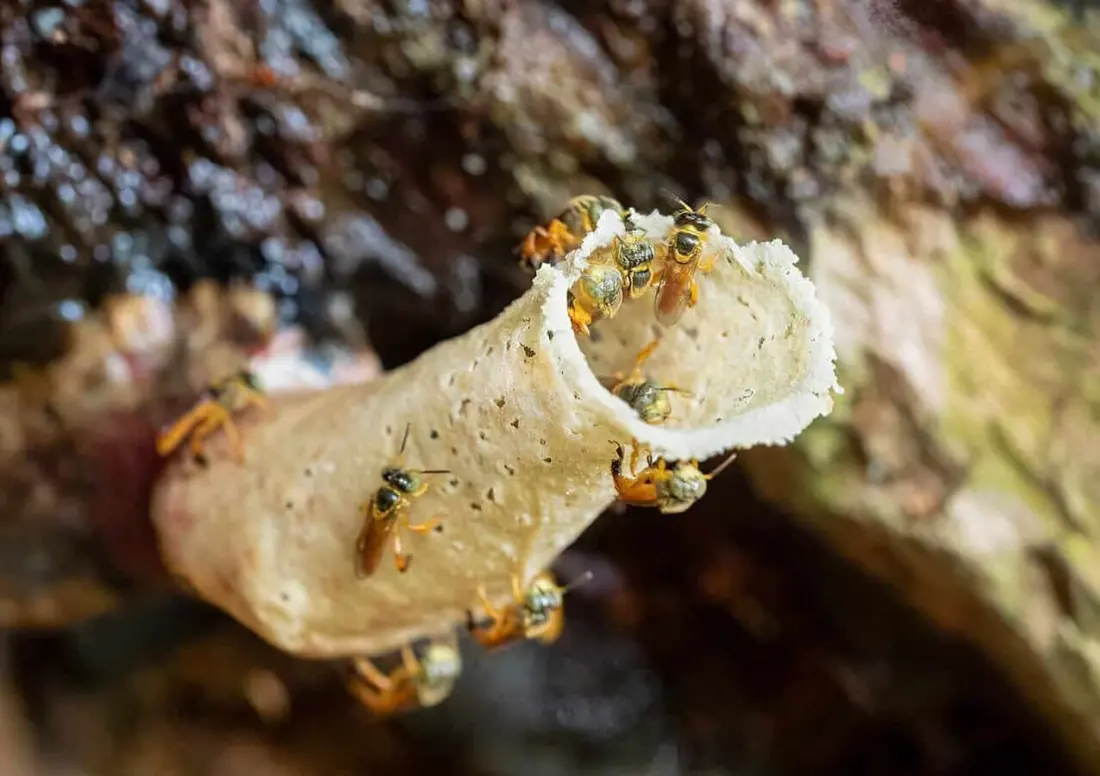
Costa Rica's tiniest pollinators have ended up in front of the country's highest court. The Constitutional Chamber of the Supreme Court (Sala IV) has agreed to review a challenge against regulations that restrict the commercial use of native stingless bees — insects that have no functional stinger and have been raised by rural families for generations.
The dispute centres on an Executive Decree introduced in November 2025. Of Costa Rica's 58 recorded stingless bee species, only two can be commercially farmed without extra scientific studies: the mariola (Tetragonisca angustula) and the soncuano (Scaptotrigona pectoralis). Anyone wanting to produce honey or wax from the other 56 species must first prove it won't threaten their survival. That's a tall order, given researchers at the National University's Tropical Bee Research Center have documented 20 species already kept in managed colonies.
The challenge, filed by Yandry Johanna Alvarado Castro, targets several contentious rules. Commercial operations are capped at 30 colonies, non-commercial ones at just five — limits critics say ignore the huge differences between, say, humid Limón and the dry forests of Guanacaste. Beekeepers must also keep colonies 500 metres to 3.5 kilometres away from pesticide-using farms, with even bigger buffers where aerial spraying happens. The lawsuit also flags penalties tied to the Wildlife Conservation Law, arguing beekeepers face legal uncertainty over insects that naturally move between hives and the wild.
The stakes go beyond honey. Meliponiculture — stingless beekeeping — is a rural tradition, and the bees pollinate native plants and crops, helping forests regenerate. The government says the rules protect biodiversity and prevent overexploitation; beekeepers and researchers counter that they lack a solid scientific base and could push small producers into the informal market. The National Chamber of Stingless Beekeepers wants additional species added, notably the jicote gato and jicote barcino.
The court has given government ministries 15 days to respond, and the existing rules stay in force meanwhile. Beekeepers face a registration deadline of November 2026. It follows an earlier Sala IV ruling this year enforcing a nationwide ban on fipronil insecticides after a case in Lepanto, Puntarenas, where at least 24 native colonies were lost and hundreds more hives damaged.
For travellers, this is a reminder that Costa Rica's famous eco-credentials are actively contested on the ground. If you visit a finca or community project offering melipon honey tastings — increasingly common around rural tourism routes — you're tasting a tradition in flux. The eventual ruling will shape whether small-scale beekeepers can keep doing it, and how the country balances conservation with the families who've cared for these bees for generations.