If you've been weighing up a Croatian holiday and quietly wondering about safety, a new global assessment has an answer: the country sits firmly in the low-risk band. The 2027 Global Risk Map, produced by US security firm Global Guardian, rates countries on seven factors — crime, armed conflict, terrorism, political unrest, healthcare quality, infrastructure and natural-disaster exposure — then sorts each one from low to extreme risk.
Croatia comes out green, alongside the likes of Switzerland, Norway, Denmark and the Republic of Ireland. For travellers, that's essentially a thumbs-up: the classification signals limited overall security risk for visitors, businesses and international organisations alike.
The map's other end of the scale tells a starker story. Iran, Yemen and Sudan are rated extreme risk, and Ukraine — plus the Russian territory bordering it — lands in the same top-tier category. Large swathes of northern and central Africa, including Ethiopia and Nigeria, are flagged for armed conflict, terrorism, banditry and violent crime. Egypt's northern Sinai Peninsula is singled out as an extreme-risk zone, and pockets of South America, notably Venezuela and areas near its borders with Colombia and Brazil, also rank as high risk.
A couple of the rankings may raise eyebrows. Both the United Kingdom and the United States are classed as moderate risk, while Gulf states including Jordan, Saudi Arabia, the UAE and Oman sit in the same middle band. The map also stresses that country-level ratings can hide huge internal variation — parts of Mexico's border region are rated extreme risk even though the country as a whole isn't, and conditions within any single nation can differ sharply from one city or region to the next.
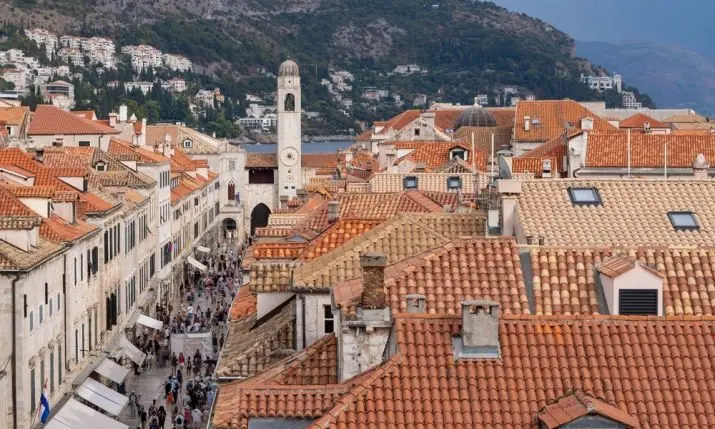
So what does this mean if you're booking a trip? Practically speaking, Croatia's green rating just confirms what millions of summer visitors already know: Dubrovnik, Split, Hvar and the Plitvice Lakes are as straightforward and secure as European destinations get. The broader takeaway is more useful for anyone planning multi-country itineraries. If your route mixes low-risk and extreme-risk areas — a Red Sea resort plus a Sinai excursion, say — it's worth checking region-level advisories rather than relying on a single country rating. Global Guardian built the map for exactly that purpose: helping organisations and individual travellers weigh security conditions before committing to plans.
The short version for holidaymakers: Croatia remains one of Europe's safest picks for 2027, and a quick scan of the risk map before a complex trip can save you from nasty surprises in the few corners of the world where conditions genuinely warrant caution.