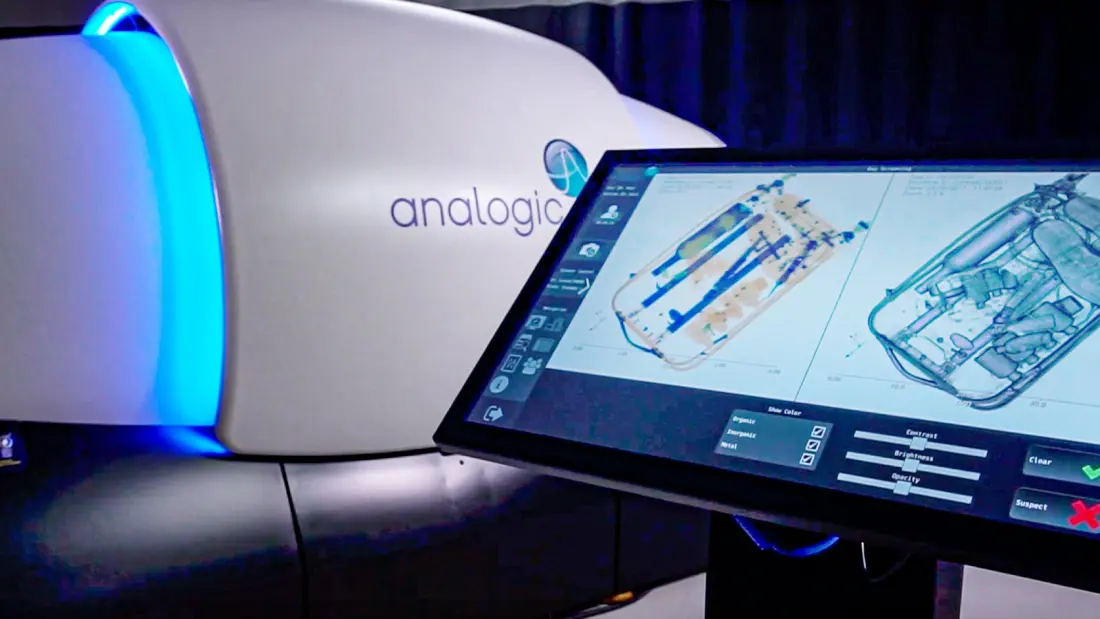
Frontier and Southwest both let passengers bring carry-ons up to 24 by 16 by 10 inches, wheels and handles included. That rule hasn't changed. What has changed is the equipment at security: the TSA's newer CT scanners, now installed at nearly 300 US airports, have tunnel openings of roughly 24.5 by 16.5 inches. On paper a maximum-size bag squeaks through. In practice, you're working with about half an inch of margin in each direction.
That thin gap is where real-world luggage falls apart — literally and figuratively. Soft-shell cases bulge when packed, expandable zippers add bulk, and protruding wheels, handles and corner guards all make a bag wider than the number printed on the box. TSA doesn't set airline baggage allowances, so there's no formal rule change here. It's a physical constraint: the scanner judges the shape you present at the checkpoint, not the dimensions on the luggage tag.
There's a genuine upside to the new machines worth knowing. CT scanners produce 3D images with better explosives detection, and in CT lanes you can typically leave laptops, electronics and travel-size liquids inside your bag — no tray-juggling ritual. The trade-off is simply a smaller entrance than many older X-ray units had.
For most travellers this is a non-issue. The common 22 by 14 by 9 inch carry-on clears the opening comfortably. The people exposed are those who deliberately buy luggage at the very edge of an airline's limit, especially soft or expandable models. And the consequences are more than cosmetic: if a bag won't fit the scanner, officers may manually screen it or send you elsewhere — or you may have to leave security, check the bag at the counter, pay the fee, and queue again. Southwest directs oversized carry-ons to the ticket counter; Frontier warns that bags caught at the gate can incur charges.
With over 1,100 CT units already deployed nationwide, this isn't something you can route around by picking a friendlier airport. Equipment varies by checkpoint, but the safe assumption is that the narrow tunnel will follow you through any US connection.
The takeaway is refreshingly simple: treat the airline's maximum as a ceiling, not a target. A rigid case a couple of inches under the limit will serve you better than an expandable roller packed to its advertised capacity. Measure your bag as it will actually travel — stuffed, zipped, wheels on — and you'll know whether security is going to be a formality or a fee.