Everyone racing between Positano and Amalfi drives straight past Cetara, and that is exactly the point. This small fishing village at the eastern end of the Amalfi Coast sat at the edge of ancient Greek maps — a place far enough away that the Greeks wove its people into monster myths. The nearby Sirenuse islands, named for the sirens who lured sailors to their deaths in the Odyssey, are just offshore. The seduction still works; it has simply changed form.
What makes Cetara worth a detour is colatura di alici, a dense amber sauce pressed from salted anchovies that locals splash over spaghetti or stir into broth. It is a living descendant of garum, the fermented fish sauce Romans produced on this exact stretch of coast two millennia ago. At Fabbrica Nettuno, a workshop up on the hillside, the method has barely moved since the Middle Ages: anchovies and salt layered into wooden barrels, weighted and pressed, then left to age while the concentrated extract slowly seeps from the bottom. One family there has kept the process going the same way since 1950, and with no obvious succession plan, the craft's future is genuinely uncertain.
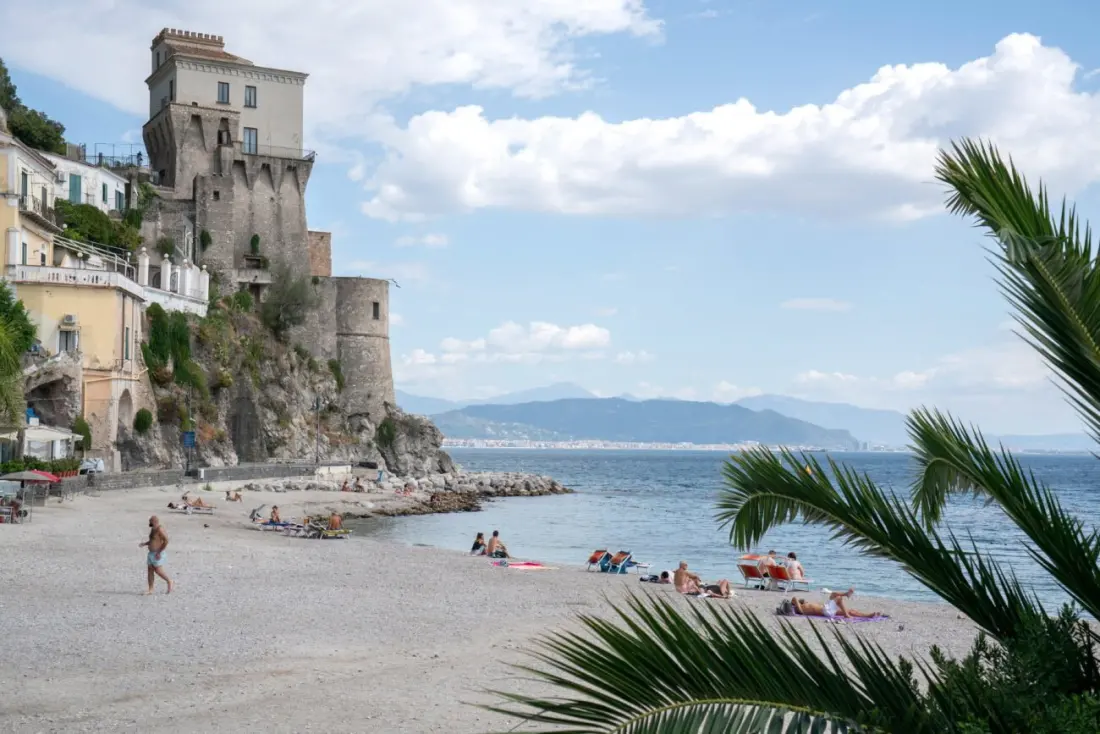
The village itself delivers the Amalfi Coast people imagine, minus the tour buses. A small fishing fleet bobs in the harbour, and a pocket beach sits under a sixteenth-century stone watchtower. Chef Pasquale Torrente, Cetara's most vocal champion, likes to recall filming here with Anthony Bourdain for a 2011 episode of No Reservations — fried fish, wine and a vicious hangover — after which Bourdain reportedly declared he wanted to buy the tower and live out his days in the village.
For travellers, the appeal is twofold. First, food: this is one of the few places in Italy where you can taste a direct line back to antiquity, ideally at a table with grilled anchovies and a glass of local white. Second, logistics: Cetara sits between Vietri sul Mare and Maiori, reachable by the SITA bus or ferry routes along the coast, and it remains one of the last stops where prices and crowds have not caught up with the postcard towns. Go soon, and go hungry.
If the family behind Fabbrica Nettuno does find an heir, the barrels keep dripping; if not, a two-thousand-year-old flavour could thin out. Either way, the sauce tastes better in the village where it was invented.
Original reporting by Roads & Kingdoms.