By day 11 of a thru-hike of the John Muir Trail, the routine is set: granola with freeze-dried berries in the dark, a slow camp breakdown, and a steady push toward whatever pass the Sierra throws at you next. This instalment covers the climb over 12,000-foot Mather Pass — and it's a useful read for anyone dreaming about the trail themselves.
The day started above a lake with a postcard of new acquaintances: Sally, a China-born, Brisbane-based hiker who summited Aconcagua, the highest peak in the Americas, and Amy, drying socks after an unplanned creek dunking. One thing long-distance hikers learn quickly: you meet remarkable people, and you may leapfrog the same strangers for hundreds of miles.
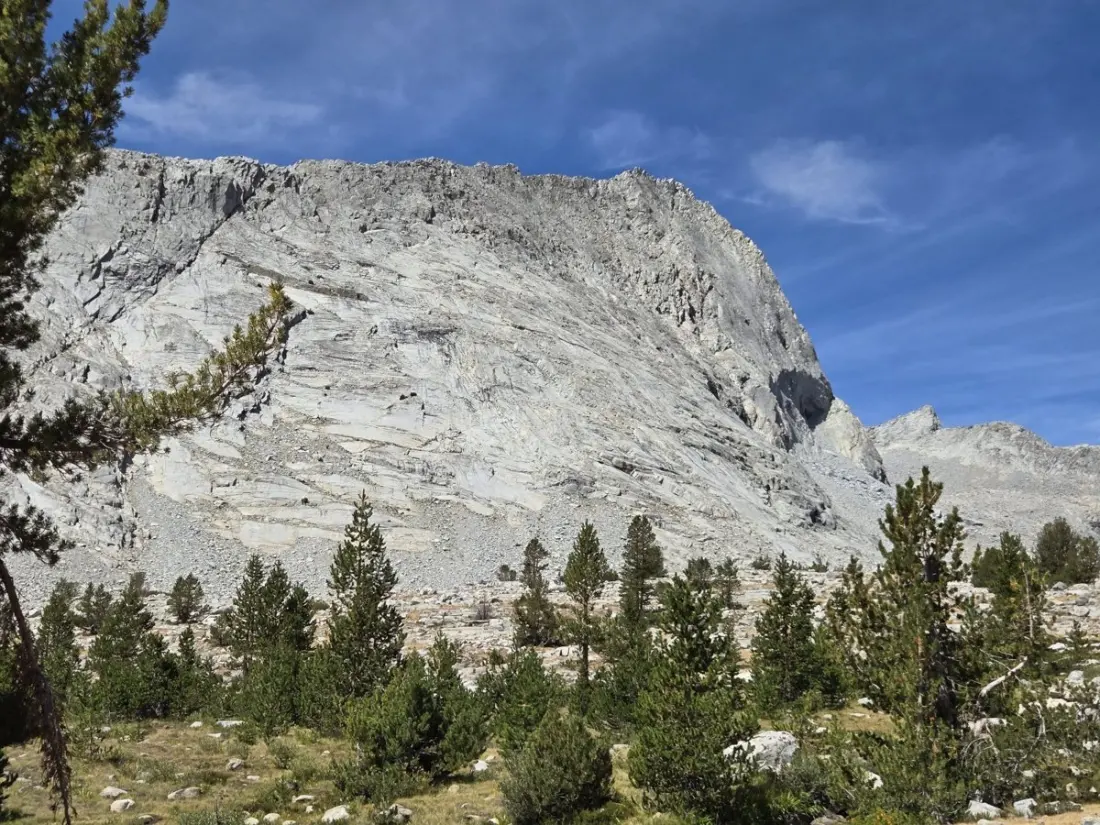
Mather itself proved kinder than feared — certainly easier than the previous day's Pinchot Pass. After a gentle descent to the valley floor and a river crossing made trivial by late-season low water, the trail climbed through forest into open, almost lunar boulder fields. Switchbacks cut into a rockslide led to the top, reached five hours after setting out. Lunch at the pass, then the trickier descent, where a fresh rockfall had wiped out the trail entirely. The writer's fix, like everyone's: pick your own line over the boulders, ideally following the horse manure trail left by pack trains. Trail crews apparently hadn't reached it yet, so conditions like this are a real possibility on any given season.
The body-management side of the story is just as instructive. An injured knee handled with scheduled ibuprofen, an umbrella deployed against afternoon sun, a big toe blister left alone after ambiguous first-aid instructions, and a food lesson learned the hard way: cook and eat freeze-dried lasagna in the packet, not your Nalgene. None of this is glamorous, but it's exactly the texture of a JMT hike that guidebooks skip.
Why should a traveller care? The John Muir Trail — roughly 211 miles from Yosemite to Mount Whitney — is one of the world's great long hikes, and accounts like this show what it actually feels like day to day: the pacing decisions, the campsite gambles above the notorious Golden Staircase, the quiet social rhythms of the trail. If you're considering it, expect steep passes above 12,000 feet, mandatory bear canisters, and a physical and logistical puzzle that rewards flexibility. It's a demanding three-week commitment, but even a section hike through Kings Canyon's passes gives you a taste of this high-country experience.
For anyone planning a Sierra trip this season, the takeaway is practical: late-season low water makes river crossings far easier, but rockfall and trail damage can appear with little warning — carry the flexibility (and the ibuprofen) to adapt.
The Trek