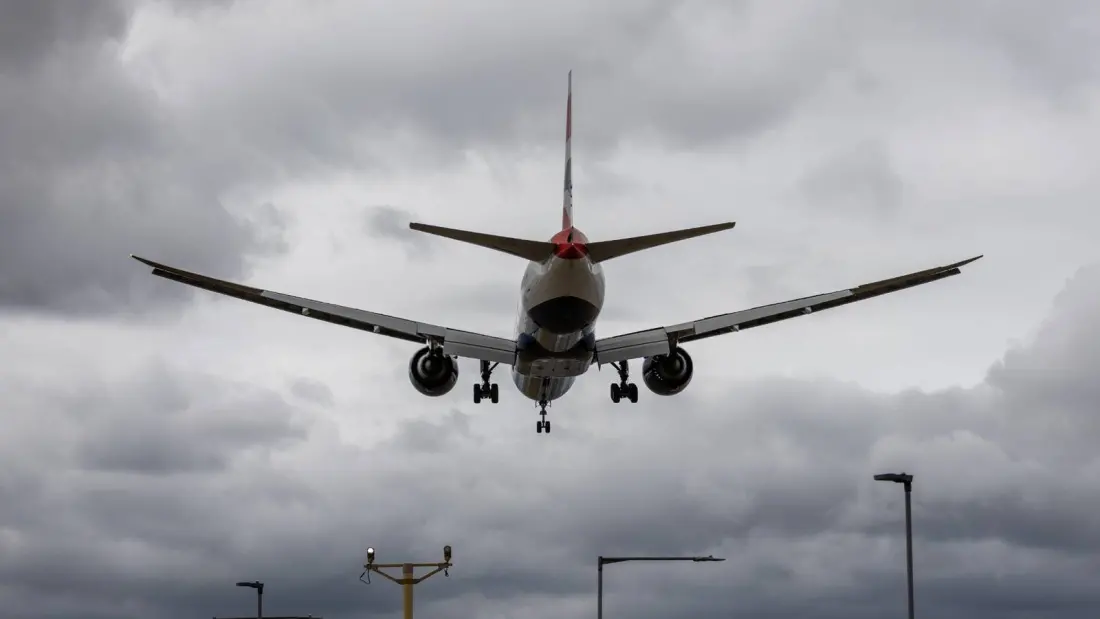
A British Airways Boeing 777 flying from Nassau to London Heathrow briefly pushed past its operational speed limit in early November, and it wasn't alone. Several aircraft crossing the North Atlantic on November 3–4 reported overspeed alerts as an unusually powerful jet stream swept across the corridor.
The flight in question, BA252 operated by a 777-200 registered G-VIID, was cruising at 38,000 feet when it reportedly hit around 282 knots — roughly 7–10 knots above its applicable limit. The crew climbed first to 39,000 feet, then to 41,000 feet, hunting for calmer air. The plane landed at Heathrow at 11:13 GMT on November 4 after just under eight hours in the air, with no injuries or damage reported. Other transatlantic flights logged similar alerts that night, though details on those are thin.
So what's going on up there? The jet stream is a narrow river of wind five to seven miles above the Earth, flowing west to east along the boundary between cold polar air and warmer tropical air. It can top 250 mph, and eastbound flights ride it like a tailwind — cutting flight times and fuel burn, while westbound routes slog into headwinds. The catch: autumn and winter sharpen the temperature contrast, making the jet stream stronger and more volatile, which is exactly when incidents like this cluster.
When tailwinds are extreme, ground speeds get eye-popping. In February 2024, Virgin Atlantic and United 787 Dreamliners recorded ground speeds of about 802 and 838 mph over the Atlantic — faster than the speed of sound on paper, though the planes themselves weren't aerodynamically exceeding any limits. Ground speed is airspeed plus wind; the aircraft wasn't flying unsafely fast through the air around it.
The subtler risk is wind shear — sudden shifts in wind speed or direction that can momentarily affect indicated airspeed, which may be what tripped the alerts. The exact mechanics behind the BA252 event aren't fully established from available reports.
For travellers, the practical takeaway is clear-air turbulence. It forms near jet streams with no clouds or storms to warn of it, and standard onboard radar can't detect it — pilots depend on forecasts and reports from other aircraft. Research suggests severe clear-air turbulence over the North Atlantic jumped 55% between 1979 and 2020. Aircraft are built to handle far worse than anything you'll feel, but unbelted passengers and crew are the ones who get hurt. Translation: keep your seatbelt fastened even when the sign is off, especially on autumn and winter transatlantic crossings.
As a bonus, a strong jet stream can actually work in your favour. Eastbound flights to Europe from the US and Caribbean often arrive early in the colder months — sometimes dramatically so. Westbound returns take longer, so build that into connection plans. The recent events ended without incident, and they're a reminder that the fastest route across the Atlantic is also the most wind-blown one.