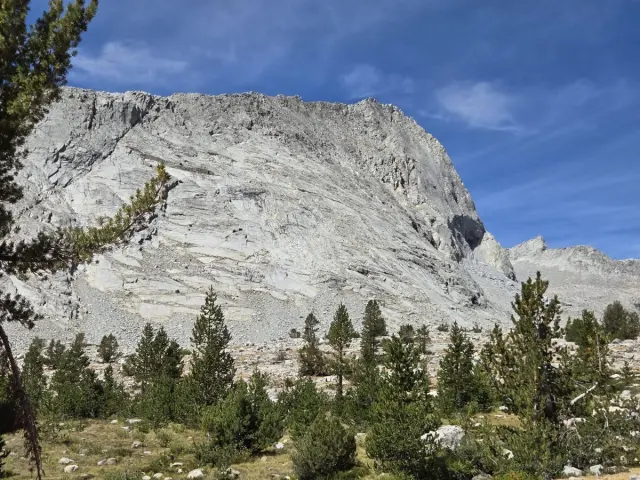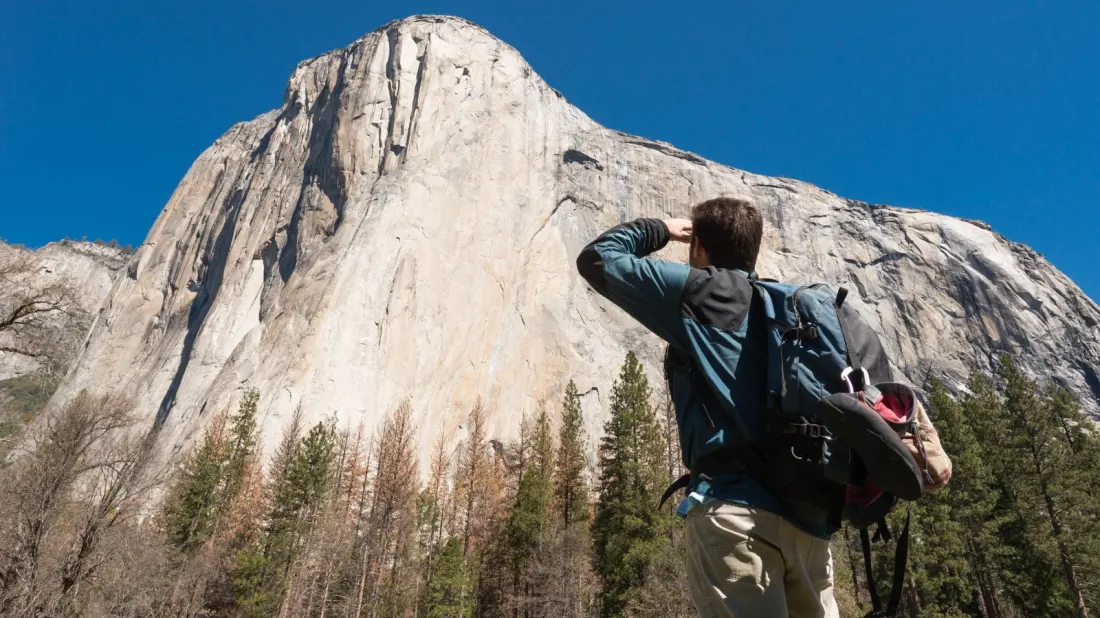
Forget Angels Landing or Glacier's ridgelines. The steepest, sheerest cliff face in the United States sits in California's Yosemite National Park: El Capitan, a granite monolith around 3,000 feet tall and a mile wide, rising almost perfectly vertical from Yosemite Valley. To put that in perspective, it's more than double the height of the Empire State Building — which is why climbers from all over the world treat it as the ultimate test.
The rock itself is ancient. It formed from magma cooling deep underground roughly 100 million years ago, then got pushed upward and sculpted into its current shape by glaciers carving out the valley. The Ahwahneechee people, who lived in Yosemite Valley long before it became a park, knew the formation as Tutokanula. The name El Capitan came later, in 1851, when the Mariposa Battalion entered the valley to forcibly remove its Native inhabitants.
Once considered unclimbable, El Capitan now has more than 100 established routes up its face. The first ascent came in 1958, when Warren Harding, Wayne Merry and George Whitmore finished The Nose after years of effort. If you want to understand the obsession, the documentaries "Free Solo" — Alex Honnold's ropeless 2017 climb — and "The Dawn Wall" make the case better than any guidebook.
Climbing isn't the only way up. Hikers can reach the summit on the El Capitan from Yosemite Valley Trail, a gruelling 15-mile round trip with over 4,600 feet of elevation gain that takes a full day. It starts near Camp 4, sharing the Yosemite Falls Trail switchbacks past one of North America's tallest waterfalls, with an optional detour to Eagle Peak. Boots with real grip, water and a map are non-negotiable — loose gravel makes descents sketchy, snow can linger into late spring, and bears do show up on the trail. Overnight wilderness trips need a permit. If you'd rather have company, Lasting Adventures runs guided day hikes from April to November from $800 for one or two people. Not up for the climb? The Yosemite Valley Loop Trail (11.5 miles full, 7.2 for the half loop) keeps you on flat ground with the big picture view from below.
You don't even have to hike for great views. El Capitan Meadow, reached via the free Valleywide Shuttle (stop 9), gives you the classic full-face angle — bring binoculars to spot tiny climbers inching up the wall. The picnic area at shuttle stop 8 works for a lunch break, and pull-outs along Bridalveil Straight pair El Capitan with Bridalveil Fall. Tunnel View on Wawona Road is the one-stop shop if you've only got a day: El Capitan, Half Dome and Bridalveil Fall all in one frame.
Timing is everything if you want the famous Firefall. Each February, when conditions align — clear skies, decent water flow, sunset hitting at just the right angle — Horsetail Fall glows like a stream of fire over El Capitan's eastern edge. It's never guaranteed, but it draws crowds to designated viewing spots near El Capitan Picnic Area.
Sleeping options: Camp 4 is closest to the wall and open year-round, with reservations required April through November and released just a week ahead. Upper Pines books up five months out. For a bed and restaurants, Yosemite Valley Lodge sits right in the valley.