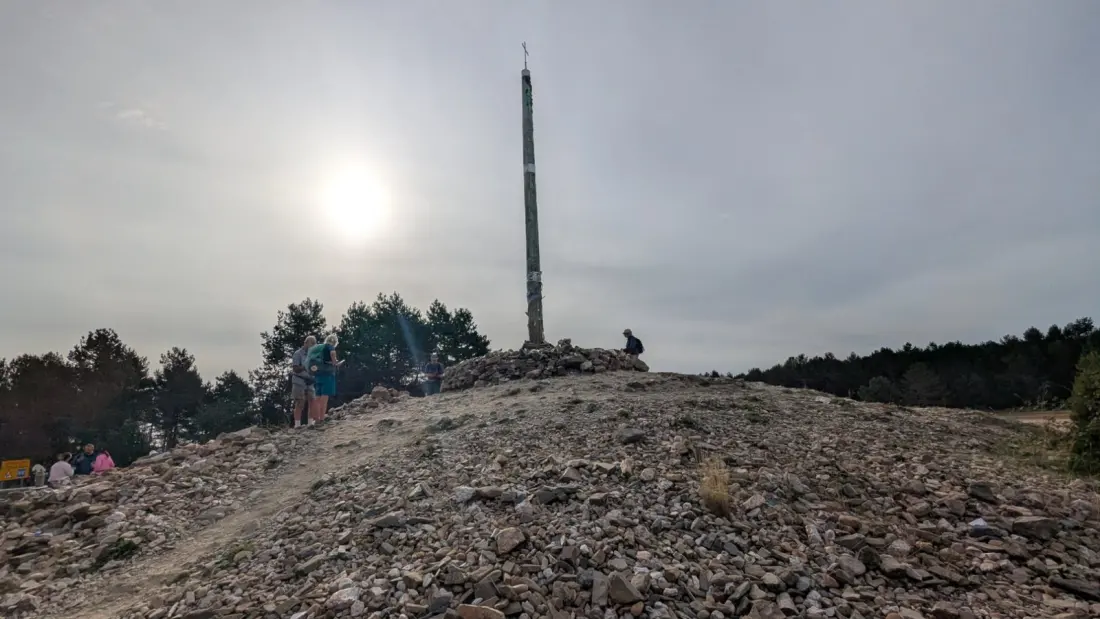
Somewhere on the highest point of the Camino Francés stands an iron cross on a wooden pole, ringed by a hill of pebbles left by centuries of pilgrims. Cruz de Ferro, in the mountains of western Spain, is where walkers traditionally deposit a stone carried from home — a physical stand-in for a worry, regret or resentment they want to leave behind. It's one of the most emotionally charged moments on the whole route.
A recent writer for The Trek returned to the cross nine years after his first Camino and got a surprise. In his memory, the cross stood in a quiet field atop a vast, symmetrical mound of stones. In reality, he found a smaller, lopsided heap beside a paved highway, flanked by two parking lots and tour-bus crowds — he jokes he should rename it 'Carnaval de Ferro'. His conclusion after checking his 2017 photos: the mound genuinely has shrunk.
The explanation he later learned is worth knowing before you go. Periodically, small excavators clear away the accumulated stones, and the tonnage is used as road fill and construction material across the region. In other words, some of those carefully carried burdens may literally end up in the tarmac pilgrims walk on — which is either grimly funny or oddly fitting.
The writer's eventual take is more generous. Leaving a stone at Cruz de Ferro was never meant to be a monument you revisit; it's an act of release. Once a burden is laid down, you're not supposed to come back and check on it. If the stones piled up forever, there'd eventually be no room for the next pilgrim's — so the clearing is part of the ritual's logic, not a betrayal of it. He still throws his own stone, deliberately not looking where it lands, praying this time the letting-go sticks.
For anyone planning the Camino, the practical details here matter. The writer started the day at Refugio Gaucelmo, a converted parish priest's house and barn in the village of Foncebadón, named for a 12th-century hermit who cared for pilgrims there and is credited with placing the original cross. Breakfast is toast and coffee served by volunteer hospitaleros — accommodation along the route is often run by volunteers, and a small donation gets you a bed and a warm welcome. Cruz de Ferro sits between Foncebadón and Manjarín, typically reached on a cool, forested morning's walk from Astroga-side stages.
Go with realistic expectations: this is now a popular stop, and mid-morning can feel like a coach-tour layover rather than a mountain sanctuary. Arrive early if the ritual matters to you, bring your stone from home rather than picking one up en route, and accept that the moment is about the releasing, not the keeping. The cross will still be there — even if your stone, eventually, becomes someone's road.