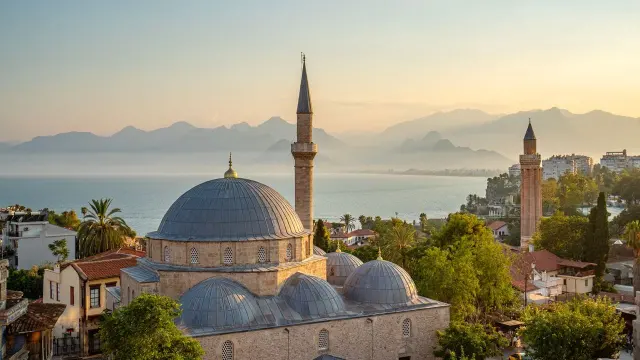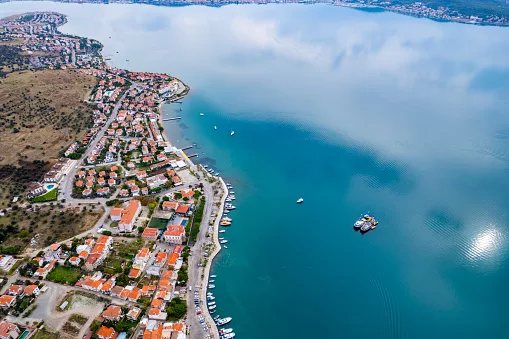
Just off Türkiye's northern Aegean coast, a short causeway from the olive-growing town of Ayvalık, sits Cunda (also called Alibey Island) — a small island that packs in more history and food culture than its size suggests. It's part of the Ayvalık archipelago in Balıkesir province, and while you can drive there from the mainland, it still feels like a proper island settlement: fishing boats in the harbour, cobbled lanes, and restaurants encouraging you to linger for hours.
The island's character comes from its layered past. For centuries it was home to a predominantly Greek Orthodox community, prosperous from olive oil, trade and fishing, especially during the 18th and 19th centuries. Many of the stone houses lining its historic quarter date from that era — two and three storeys, with ironwork balconies, wooden shutters and projecting upper-floor windows. The 1923 population exchange following the Lausanne Treaty changed everything: Greek Orthodox residents left for Greece, and Muslim families, many from Crete, arrived. That Cretan influence still shows up on the plate today.
The most recognisable landmark is Taksiyarhis Church, built in 1873 and dedicated to the Archangels Michael and Gabriel. With its central dome and multi-aisled layout, it served the island's Greek Orthodox community for generations before falling into disrepair; after restoration it reopened in 2014 as the Ayvalık Rahmi M. Koç Museum. Elsewhere, the Sevim and Necdet Kent Library occupies a restored historic building on a rise above the rooftops, and old windmills, monasteries and former churches dot the island.
But honestly, food is the main event. The Ayvalık region is serious about olive oil — it's poured generously over salads, meze and vegetable dishes — and the waterfront restaurants serve grilled fish and small plates built for slow afternoons. Look out for papalina, a small local fish usually served fried; deniz börülcesi, a coastal plant dressed as a salad with lemon and garlic; kabak çiçeği dolması (stuffed courgette flowers); Girit böreği, a Cretan-style pastry; and mastic ice cream for dessert.
Beyond the historic centre, quieter rewards await. The Pateriça peninsula stretches north from the island with olive groves, small coves and former monasteries, and the elevated viewpoints give you wide views over the archipelago's bays and channels.
Why it matters: if your mental image of Türkiye's coast is crowded southern resorts, Cunda offers the opposite — a walkable, food-first island where the sightseeing is architecture you stumble across and the afternoons belong to meze by the water. It suits travellers who like history with their lunch and prefer wandering without an itinerary.
Getaway South Africa