Croatia's Advent season is the country's biggest winter draw, and for 2026 several cities have decided to take the guesswork out of market snacking by capping prices on the classics. If you've ever winced at a €6 cup of gluwein, this is good news.
Split, Pula and Osijek have all set maximum prices for a shortlist of staple items at their Christmas stalls, following the model Poreč has used for a few years now. The caps apply only to specific basics and minimum portion sizes — anything fancier or off-list is still up to the vendor.
Split's limits keep a 150g bag of fritule (those addictive little fried dough balls) at €4, mulled wine and hot chocolate at €3 per 200ml, a hot dog or sausage in bread at €3, tea at €2.50 and half a litre of water at €2.
Pula goes slightly cheaper on the sweet side: €3 buys you fritule, a pancake, Christmas biscuits, mulled wine or hot chocolate, while heartier fare — hot dog, hamburger or a portion of bakalar (the traditional Christmas cod) — tops out at €5. Tea and water are capped at €2.
Osijek, in the country's east, is the budget pick of the three. Mulled wine there is capped at just €2 per 200ml, with fritule, hot dogs, hot chocolate and tea at €3 or under and sausage in bread at €4.
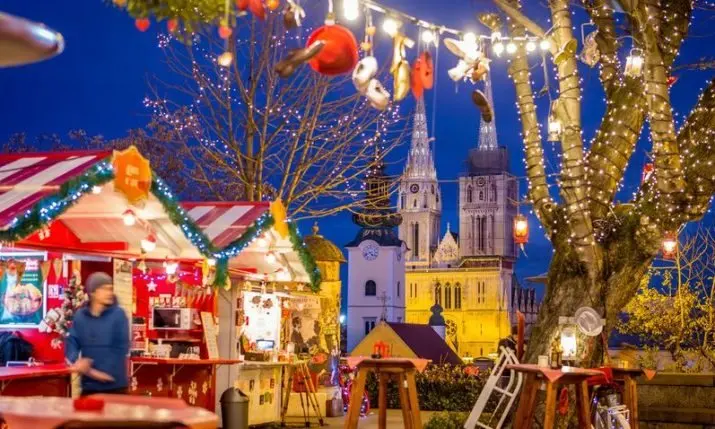
Zagreb, whose Advent programme is the largest in the country, runs differently: no city-wide price caps, so individual vendors set their own rates. The capital's official Advent season runs from 28 November 2026 to 7 January 2027.
Why it matters: Advent markets have become a genuine winter holiday option for Croatia, drawing crowds to squares lit up against the Adriatic or along the Danube. Published price ceilings mean you can budget a market evening in advance — roughly €10-15 covers a drink and a couple of snacks in the capped cities. Zagreb visitors should expect more variation, though competition between stalls tends to keep things reasonable. Just remember the caps cover the basic versions: a loaded hot dog or a fancy pancake can legitimately cost more.
If you're torn between cities, the split is convenient: Split pairs market strolling with a mild coastal winter, Pula adds Roman ruins to the mix, and Osijek offers the lowest prices and a Slavonian change of scene most tourists never see.