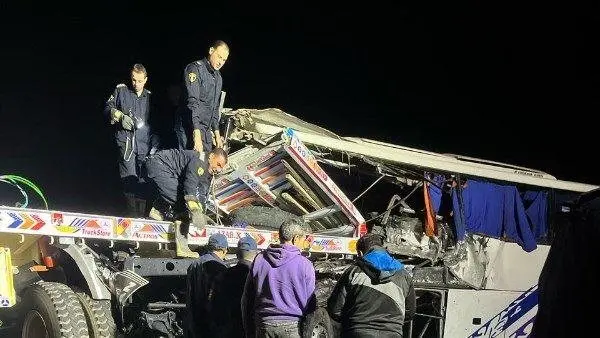
Thirty-one people are dead and 21 injured after a fuel tanker overturned and caught fire on Cairo's ring road on the evening of Wednesday 25 November. The blaze, which broke out in the Warraq neighbourhood north of the city's historic centre, spread quickly to nearby vehicles, trapping motorists in flames and thick black smoke. Images shared online showed fire engulfing a stretch of one of the capital's busiest highways.
Egypt's health ministry confirmed the toll and said 39 ambulances were sent to the scene, with hospitals treating victims for burns and smoke inhalation. State media reports suggest a fallen high-voltage cable may have played a role: the tanker's driver is said to have lost control after hitting it, crossed the central reservation and overturned, spilling fuel that ignited. The vehicle belonged to a private contractor, and the regional public prosecutor has ordered an investigation, including DNA testing to identify victims. The road reopened once crews, aided by a bulldozer, had cleared the burnt-out wreckage.
The crash is the latest in a string of road disasters in Egypt. Official statistics put last year's road death toll at nearly 6,000, several hundred higher than the year before, with poor vehicle maintenance and ignored traffic rules regularly cited as causes. Deadly fires have also hit the country repeatedly in recent years, with ageing infrastructure and crowded informal neighbourhoods complicating emergency responses.
For visitors, the takeaway is practical rather than alarmist. Cairo's ring road and highways are used by millions every day, and most trips pass without incident, but self-driving in Egypt carries real risk. Road conditions, vehicle standards and driving culture differ sharply from what most international visitors are used to. Hiring a car comes with hazards that trains, organised transfers or ride-hailing services largely avoid. If you are travelling between Cairo and destinations like Alexandria, Giza or the Red Sea coast, it is worth weighing driver options carefully, checking that any vehicle you use is well maintained, and allowing extra time rather than rushing long drives at night. Emergency coverage of incidents like this also tends to close major routes for hours, so flexible itineraries help.
Egypt remains one of the most rewarding countries in the region to visit, from the pyramids and the Egyptian Museum to Luxor and the dive sites of the Red Sea. Incidents like the Warraq fire are a reminder to plan ground transport with the same care you'd give to choosing hotels or flights.