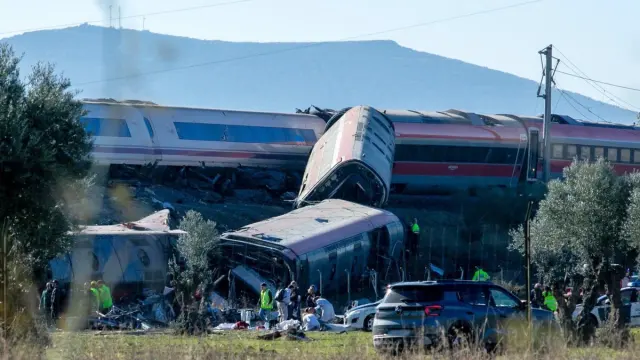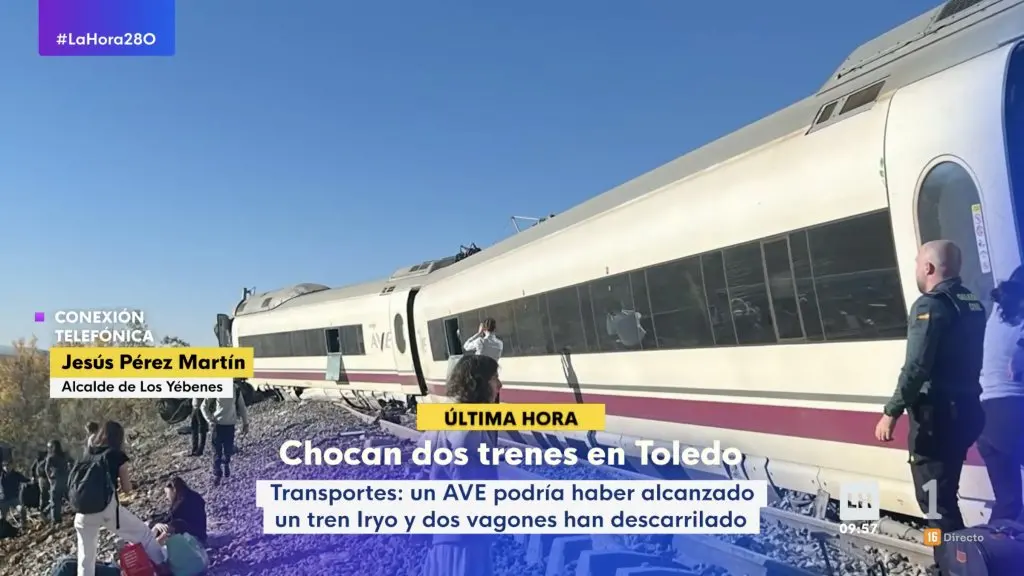
At least ten people have died after two high-speed trains collided near the small town of Urda, in Toledo province, on Wednesday morning — an accident that has shut the busy Madrid–Andalusia high-speed corridor in both directions.
The crash happened at around 8.30am close to Urda station, roughly 118 kilometres along the line. According to operators and state broadcaster RTVE, a RENFE service travelling south from Madrid struck an Iryo train from behind; the impact derailed the Iryo's two rear carriages, which fell down an embankment. Both trains had been bound for Seville. Emergency crews could not initially reach the driver of the RENFE train, and regional government spokeswoman Esther Padilla warned the death toll would "with complete certainty" rise, describing the scene as very serious.
The response was swift and large. Castilla-La Mancha activated its regional emergency plan just before 9.15am, deploying Guardia Civil, firefighters from Toledo and Ciudad Real, Civil Protection volunteers and regional health service medics, with an advanced medical post set up at the site. In Urda itself, the mayor offered a local sports pavilion as a reception point for those affected. RENFE opened a dedicated helpline for victims' families on 900 101 020 and urged the public not to call it for general information.
The political fallout was immediate. Prime Minister Pedro Sánchez said he was receiving constant updates from Transport Minister Óscar Puente and regional president Emiliano García-Page, who cancelled all engagements to travel to the scene. Opposition leader Alberto Núñez Feijóo also expressed concern as campaign events were shelved ahead of Spain's election.
For anyone travelling between Madrid and southern Spain, the practical impact is significant. The Madrid–Andalusia line is one of the country's busiest rail routes, and the collision has suspended AVE and Iryo services towards Ciudad Real, Córdoba and Seville. Travellers with bookings on this corridor in the coming days should expect cancellations, long-distance bus substitutions or rerouting, and should check directly with RENFE and Iryo before setting out. Some alternative connections via Valencia or the coastal routes may still operate, though capacity will be tight.
The crash is also the second major disaster to hit Spain's high-speed network in under two years. In January, 45 people died near Adamuz in Córdoba province when an Iryo train derailed and left carriages in the path of an oncoming Alvia service — the country's deadliest rail accident since 2013. Safety scrutiny of the network, and confidence among the millions of passengers who use it each year, will now intensify again. Cause of the Urda collision remains unknown, and injury figures were still unconfirmed in initial reports. This is a developing story.
For holidaymakers planning trips to Andalusia, the short-term message is simple: build in flexibility, monitor operator updates closely, and consider refundable fares on Madrid–Seville routes until the line reopens.