
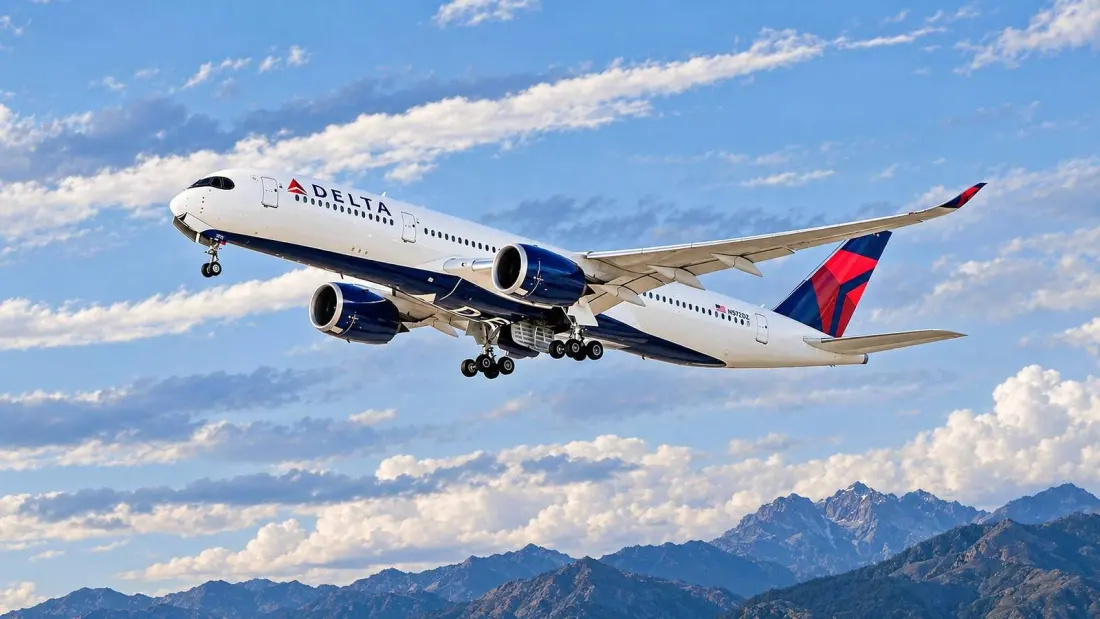
Delta Air Lines still runs more than 5,500 flights a day to over 300 destinations, but its long-haul map looks very different from a decade ago. Twenty-one international airports have lost Delta service entirely since the mid-2010s, from Singapore, Beijing, Dubai and Mumbai to European cities like Düsseldorf, Geneva, Manchester, Glasgow and Stuttgart. The most recent cuts came fast: Stuttgart went in 2024, followed by Geneva, London Gatwick and Tahiti (Papeete) in 2025.
This isn't an airline pulling back from the world. Delta's summer 2026 schedule is its biggest ever, and it now generates more than half of all adjusted earnings among US airlines. What's actually happening is a deliberate rethinking of which routes its own widebodies should fly — and which ones partners can handle.
Asia is the clearest example. Delta inherited a connecting hub at Tokyo Narita from Northwest Airlines, but it moved its Tokyo flying to Haneda and handed onward regional reach to joint venture partner Korean Air. Today, travellers reach Singapore and roughly 80 other Asian destinations by connecting through Seoul Incheon, where the two carriers say more than 2,000 passengers transfer in each direction daily. Europe works the same way: drop the Geneva nonstop, route people via Paris CDG or Amsterdam Schiphol through the Air France-KLM and Virgin Atlantic joint venture, and free the aircraft for something more lucrative.
What's more lucrative, it turns out, is holidays. While Stuttgart, Manchester, Düsseldorf, Glasgow and Geneva lost their Delta nonstops, the airline has added or expanded to Sardinia, Malta, Catania, Porto, Marrakech and Naples. The centre of gravity has shifted from corporate road warriors to premium leisure travellers who want experiential destinations — and who will happily fly seasonal routes. Delta's 2025 "Route Race" made this explicit: nearly 150,000 SkyMiles votes, members chose Sardinia, employees picked Malta, and both routes launched.
The economics back it up. Premium revenue hit $22.2 billion in 2025, up 120% since 2015, while American Express remuneration has more than quadrupled to $8.2 billion. Newer aircraft like the A350-900 devote nearly 30% of seats to premium cabins, and the A350-1000 arriving from 2027 will push that to a third. Filling a plane is no longer enough — it matters which cabins fill. Atlanta–Stuttgart ran at 85% load factors for years and still got cut, because those were largely the wrong seats on the wrong route.
For travellers, the practical upshot: if your city lost its Delta nonstop, you can usually still get there on Delta metal plus a partner via Seoul, Paris or Amsterdam. And if you're eyeing a Mediterranean holiday, expect Delta to keep chasing summer demand to places like Catania and Sardinia rather than maintaining year-round service to secondary business cities.