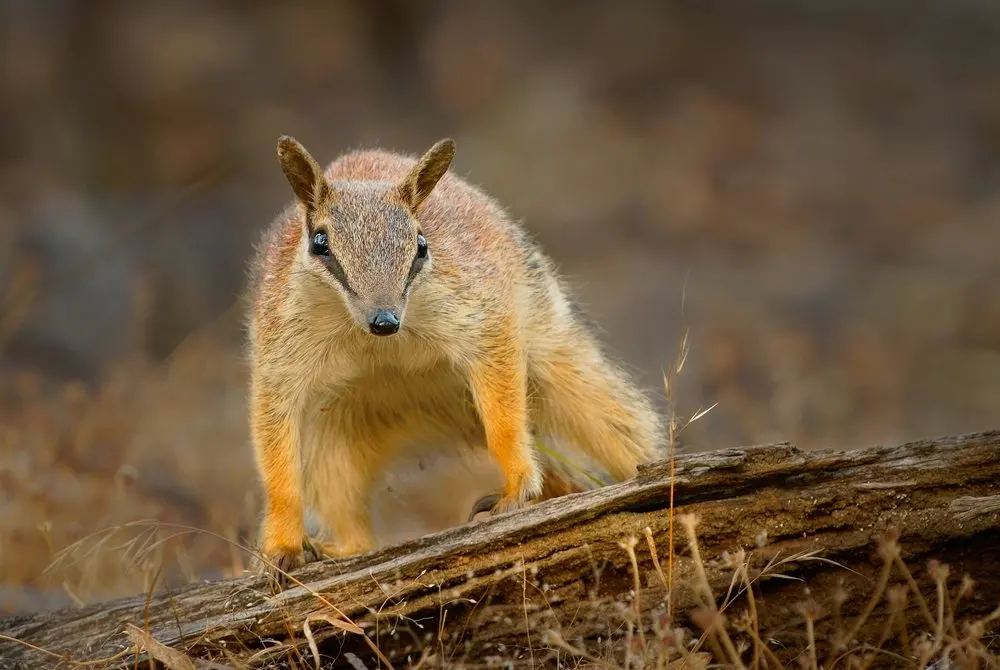
Picture a small cat crossed with a squirrel, a zebra and an anteater, and you've roughly got a numbat. This striped, bushy-tailed marsupial from Western Australia is one of a kind — and thanks to Australian Geographic's latest deep dive, it's having a well-deserved moment in the spotlight.
The numbat's party trick is its diet. It eats almost nothing but termites, devouring up to 20,000 a day. To manage that, it's armed with a tongue that can stretch to around 11cm, slathered in sticky saliva that traps the insects like flypaper. No chewing required — which is just as well, because a numbat's teeth are blunt little pegs. Strangely, it still sports up to 52 of them, more than any other land mammal in Australia. They're not for eating; they're for mashing bark and leaves into nesting material for its cosy dens in tree hollows and burrows.
Even the numbat's pouch breaks the marsupial rulebook. Where kangaroos and wombats have proper built-in pouches, the numbat makes do with a simple fold of skin and fur that shelters its joeys while they nurse — at least until they're big enough to hole up in a den.
Here's the sobering part. Before European colonisation, numbats roamed mainland Australia in every state. By 1985, only two tiny populations survived, at Dryandra and Perup in WA's south-west, hunted to the brink mainly by feral cats and foxes. The species is still endangered, but the story is slowly turning. Predator-proof fenced sanctuaries have allowed numbers to recover in recent years, though conservationists stress the numbat will need ongoing protection to secure its future.
For travellers, this is a genuinely special wildlife-watching opportunity. The numbat is one of the few Australian marsupials that's active by day, meaning your chances of spotting one foraging in the sunlight are better than with most nocturnal natives. Dryandra Woodland, now a national park around two hours from Perth, and Perup are the classic places to look — think wandoo woodlands and wildflower-dotted bushland, with echidnas, woylies and bilbies also on the species list.
Why care? Because seeing a numbat in the wild is the kind of travel memory that beats any souvenir. It also puts your tourist dollars behind the sanctuaries and local conservation programs keeping this species alive. If you're road-tripping through WA's south-west — a region better known for wine country and towering karri forests — carving out a day for numbat spotting adds a wildlife highlight most visitors never get.
Pack binoculars, visit on a warm sunny morning when numbats are out foraging, and keep quiet and patient along the woodlands' walking trails. You might just catch a glimpse of a striped little tongue-flicker going about its 20,000-termite day.