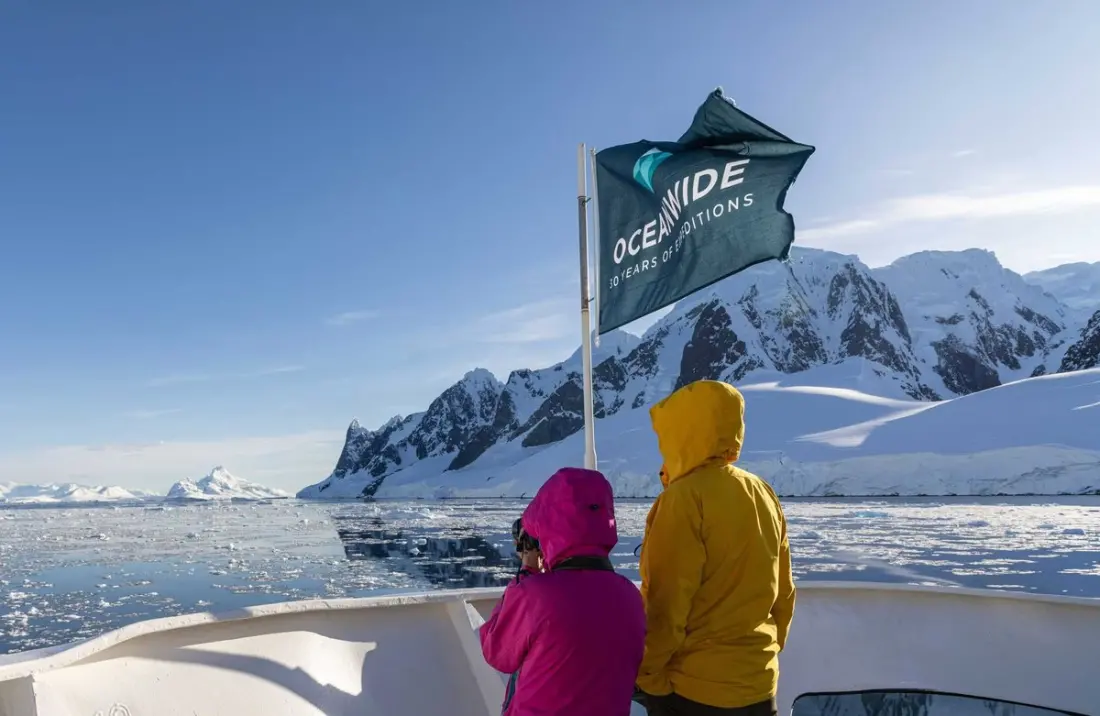
Polar cruise operator Oceanwide Expeditions has released its first-ever ESG report, laying out where the veteran expedition company stands on sustainability — and where it intends to go next. For anyone weighing a trip to Antarctica or the Arctic, it offers a useful window into how one of the industry's best-known small-ship operators plans to keep exploring some of the planet's most fragile environments without trashing them.
The headline commitment: two next-generation eco-sail expedition vessels, under a Letter of Intent signed in 2026 and slated to join the fleet from 2029. The new ships are designed with hybrid technology and energy storage systems to cut carbon intensity, while keeping the small-scale, hands-on style of expedition the company is known for.
In the meantime, Oceanwide is squeezing efficiency out of its current fleet through smarter route planning, engine optimisation, hull maintenance and waste heat recovery. On board, hotel teams have been phasing out single-use plastics, cutting food and energy waste, switching to greener cleaning products and rethinking menus. The company also works with local suppliers and operates under the AECO guidelines in the Arctic and IAATO rules in Antarctica — the two bodies that effectively set the responsible-tourism bar in polar waters.
One of the more unusual initiatives sits far from the ice. In 2023 the company bought more than 1,600 hectares of degraded rainforest in the Brazilian Amazon and started a long-term restoration project, aimed at rebuilding native ecosystems, protecting endangered species, storing carbon and creating work for local communities. It is entirely self-funded, with guests effectively contributing through their expedition bookings.
Oceanwide is also leaning into science. Passengers can take part in citizen science projects during voyages, and the company backs research as well as organisations like the UK Antarctic Heritage Trust and the South Georgia Heritage Trust. It maintains long-standing ties with remote communities, including the tiny South Atlantic island of Tristan da Cunha.
CEO Rémi Bouysset frames the report as a transparency exercise rather than a victory lap: an honest account of the company's impact, a baseline for measuring progress, and an acknowledgment that there is still plenty to improve. He stresses that ESG is woven into everyday decisions — how ships are run, how crews are treated, how landings are planned — rather than a bolt-on programme.
Why does this matter to travellers? Interest in polar cruising keeps climbing, and with it scrutiny of tourism's cumulative effect on wildlife and landing sites. Choosing an operator with published targets, citizen science on deck and a credible fleet transition plan is one of the few levers a passenger actually has. Oceanwide's report gives prospective guests concrete things to ask about — and raises the bar for competitors to publish their own numbers.
Story via Adventure Travel News.