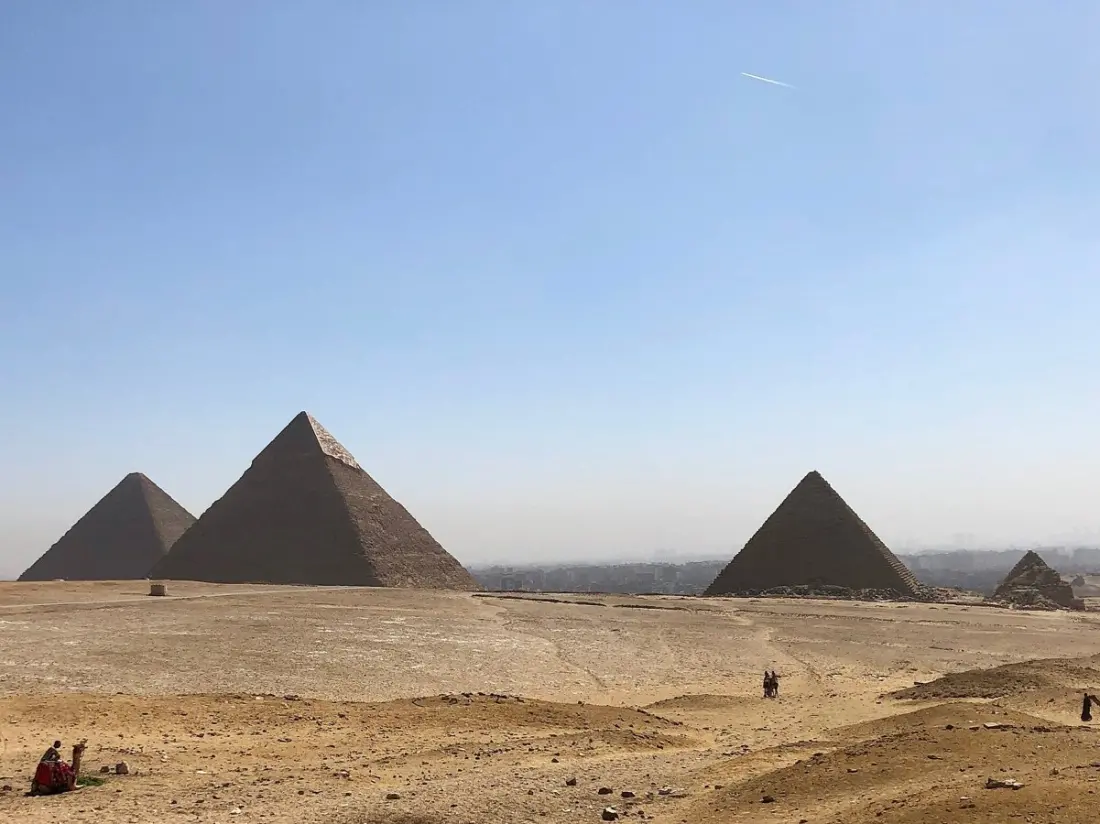
The image of slaves hauling stone under the desert sun has defined the pyramids for generations. Dr. Zahi Hawass and his team say the evidence tells a very different story: Egypt's great monuments were raised by organised, well-fed professional crews.
The latest clue comes from above the King's Chamber in the Pyramid of Khufu, where researchers found red-painted inscriptions naming labour teams and recording work shifts. The chamber sits roughly 14 metres above ground and is only reachable by squeezing through narrow passages, which Hawass argues makes modern forgery almost impossible. The markings line up with papyrus records found earlier at Wadi el-Jarf on the Red Sea coast, which documented stone shipments to the construction site.
Hawass revealed the findings, along with previously unseen photographs, on the Matt Beall Limitless podcast. The same project also sent a camera into the so-called "Big Void" — a 30-metre-long cavity above the grand gallery first detected in 2017 through particle imaging. It was the first-ever visual look inside, and while lab analysis continues, early footage showed only ordinary stone markings, nothing sensational.
The workforce story gets firmer the closer you dig. Graves just south of the pyramid hold the remains of builders buried with tools, statues and inscriptions listing more than 20 job titles — among them "artisan" and "overseer of the side of the pyramid." Animal bones from at least 11 cows and 33 goats point to meat-rich rations that, by Hawass's estimate, could have fed around 10,000 people a day. Excavations of a nearby village uncovered bakeries, dormitories, medical facilities and food-processing stations, all signs of long-term, supported habitation rather than a brutal camp.
Even the engineering is coming into focus. A mud-and-rubble ramp on the pyramid's southwestern side, connected to a quarry only 300 metres away, likely carried the limestone blocks into place. And the crews apparently had downtime: a structured schedule with one day off roughly every ten.
For travellers, this reframes a visit to Giza. The plateau becomes more than a photo stop — the workers' cemetery, the village remains and the ramp are all part of an evolving site where the human story behind the last surviving ancient wonder keeps getting richer. If you're planning a trip, it's worth asking about access to areas beyond the main pyramids, and keeping an eye on news: with camera explorations of hidden voids still ongoing, what visitors can see at Giza may well change in the coming years.
The popular image of whips and chains, these findings suggest, was never accurate. What stood at Giza was something closer to a state construction project staffed by trained specialists — craftsmen, overseers and logistics crews working in rotation, fed on beef and goat, and honoured in death near the monument they built.
Story via Colombia One.